Stretch wrapping machines secure palletized or reel-shaped cargo with 17–23 µm LLDPE stretch film under controlled pre-stretch ratios of 150–300%, while vacuum packaging machines evacuate a sealed chamber to a residual O₂ level typically below 1% to extend perishable shelf life [S3][S4].
Both categories sit on the same factory-floor lineup — World Pack and YUPACK list them side-by-side as standard offerings, alongside shrink wrapping machines and carton sealers [S1][S3]. The selection, however, is driven by fundamentally different physics: tension-and-friction containment versus gas-barrier evacuation.
Operating Principle and Core Function
A [stretch wrapping machine](/encyclopedia/stretch-wrapping-machine.html) wraps a load by rotating either the turntable (common turntable capacity 1500–2000 kg) or the film carriage around a stationary pallet, applying 17–23 µm LLDPE stretch film at 150–300% pre-stretch to build elastic containment force; the EVERROLL ESW-900 platform from Taiwan is a representative auto stretch wrapper cited in current sourcing catalogs [S2].
A vacuum packaging machine instead places product inside a rigid chamber or bag, evacuates air via an oil-lubricated or dry rotary vane pump, and heat-seals the bag under vacuum; Daewon GSI's industrial chamber unit is a current HKTDC-listed example for food and parts packaging [S4].
Decision Criteria: Load Containment vs Gas Barrier
Stretch wrap delivers mechanical load stability — typical pallet wrap tension is 80–120 g/inch web tension, with 4–6 wrap patterns (bottom reinforcement, mid, top cap) producing a unitized load that survives fork-truck handling; it does not seal against oxygen, moisture, or contaminants [S6][S7].
Vacuum packaging delivers a hermetic seal — the residual O₂ inside a properly sealed chamber pouch drops to roughly 0.05–1.0%, and the heat-sealed PE/PA or PE/PET laminate film becomes a gas and moisture barrier; this is the spec that drives the choice for meat, cheese, electronics, and pharma parts where oxidation is the primary degradation path [S4][S5].
Comparison Across Four Decision Criteria
For a buyer comparing the two categories on the four criteria that actually determine capital equipment spend, the matrix reads as follows [S2][S3][S4][S5][S6]:
2) Capital cost: entry-level turntable stretch wrappers in the China-India corridor list at US$3,000 FOB Qingdao at MOQ 1 piece [S9]; external single-chamber vacuum packers sit in a similar entry band, but dual-chamber or belt-type continuous vacuum lines climb sharply [S4][S5].
3) Throughput: a turntable stretch wrapper runs 20–35 pallets/hour; a single-chamber vacuum packer runs 2–4 cycles/min (120–240 pouches/hour) depending on pump size and seal-cool time [S3][S4].
4) Maintenance load: stretch wrap machines are low — daily film-thread check, annual carriage bearing service; external vacuum packers demand daily air-filter cleaning, weekly gasket inspection, and quarterly pump-oil change to prevent liquid ingest damage [S5].
Use-Case Routing: When to Spec Which
Spec a stretch wrapper when the product is a palletized, boxed, or reel-shaped durable good — Krishna Engineering Works and YUPACK both build reel/ring/orbital variants for fabric rolls, paper reels, tires, and coils, where the wrap axis is the diameter rather than the pallet face [S3][S6].
Spec a vacuum packaging machine when the product is perishable, oxidation-sensitive, or particulate — food, medical disposables, electronic sub-assemblies — and the buyer accepts single-use film cost in exchange for shelf-life extension; the chamber-style external unit dominates this segment, and operators must keep the air-nozzle filter clear to prevent liquid carry-over into the vacuum pump [S4][S5].
Limitations, Failure Modes, and Integration Constraints
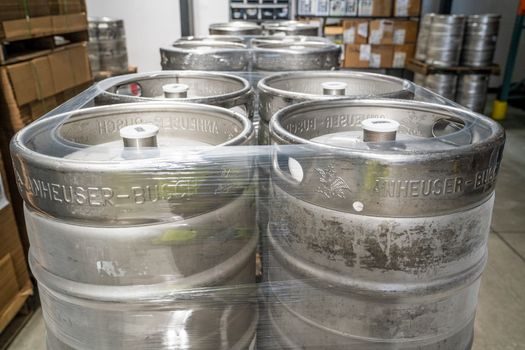
Stretch wrap does not provide a hermetic seal — pallet loads wrapped in LLDPE remain exposed to ambient humidity, dust, and oxygen, so any downstream claim about shelf life or sterility using stretch wrap alone is unsupported; for a sealed-barrier application, the correct reference is the shrink wrapping machine family or vacuum/skin packaging [S7].
Vacuum packaging fails on porous, sharp-edged, or high-vapor-pressure products: bone-in meat pierces the bag, powders trap air in the chamber, and solvents outgas through the seal — these are routed to modified-atmosphere packaging (MAP) or skin-pack lines instead [S4][S5].
Standards, Sourcing, and Vendor Footprint
There is no single ISO standard that universally governs stretch-wrap or vacuum-pack machine performance; buyers typically reference supplier-declared specs and CE/UL electrical conformity, with manufacturer quality systems such as ISO 9001 cited at the factory level (the Jinan-based pallet-wrapper OEM holding ISO 9001 certification is one example) [S9].
India and China dominate the mid-volume supply base — World Pack (India) lists both machines on a single catalog page with shared after-sales coverage, while YUPACK and Sumdapack (China) ship stretch wrappers and vacuum packers together under one commercial channel, and Korean builders such as Daewon GSI hold the higher-end chamber-vacuum segment on HKTDC sourcing [S1][S3][S4][S8].
Buyers cross-shopping adjacent packaging categories should also review the related spec map for shrink wrapping machine vs vacuum packaging machine, since shrink-tunnel units and vacuum chamber units frequently share the same downstream conveyor in a packaged-food line.
Trackable signals for the next spec cycle: (1) YUPACK and Sumdapack both updated their combined product pages on 2026-07-15 and 2026-07-28 respectively, indicating active Q3-2026 catalog refreshes [S3][S8]; (2) the EVERROLL ESW-900 remains the most recently cataloged auto stretch wrapper on the Taiwan CENS platform [S2].