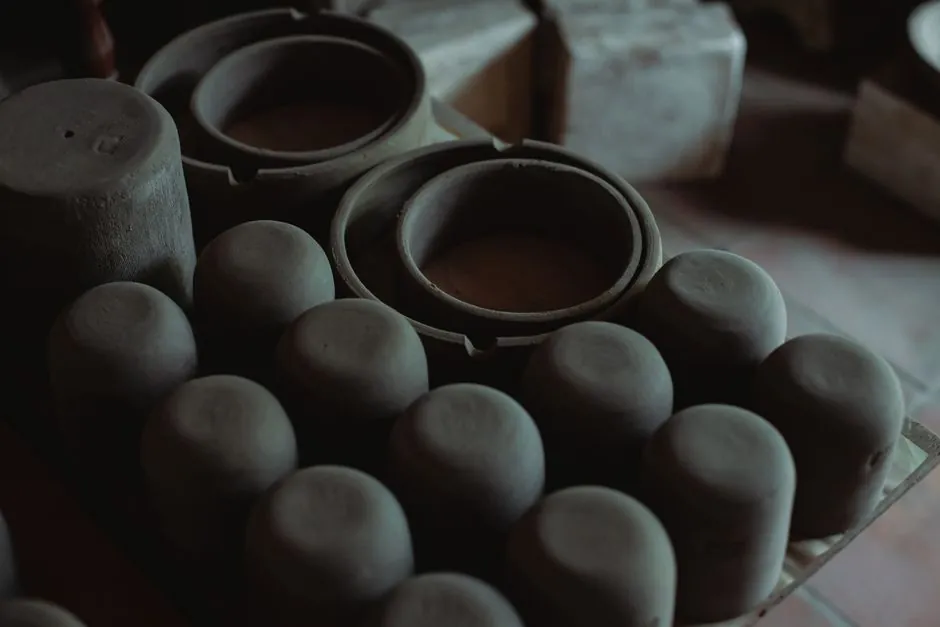
Zinc melts at 420°C (787°F), a temperature low enough that a plain cast iron pot is routinely specified for hobby, prototyping, and small-batch die casting work where total bath mass stays under roughly 50 kg and the furnace is gas-fired or simple resistance [S5]. The cast iron pot is not, however, a scaled-down version of a crucible: it is a different piece of equipment with a different service ceiling, and choosing it for the wrong duty is a common cause of premature failure.
The decision axis that actually matters is temperature headroom, not raw cost. A cast iron pot softens and distorts above approximately 400°C continuous service, so it operates with a margin of only 20-50°C above zinc's liquidus; a clay-graphite crucible, by contrast, is rated to 1000°C and gives the operator more than 500°C of headroom, which translates into longer life under repeated thermal cycling [S1][S5].
Temperature Ratings: The 400°C vs 1000°C Decision Line
The single most important number in this comparison is the service-temperature ceiling of the vessel wall. Cast iron used as a melting pot is generally limited to about 400°C continuous; pushing it higher produces creep, oxidation scaling, and wall thinning that ends in a leak [S5]. Zinc at 420°C sits just above that ceiling, which is why the cast iron pot works for zinc but is unsuitable for aluminum (660°C), brass (around 930°C), bronze, or copper (1084°C) [S5]. Clay-graphite crucibles, in contrast, carry a maximum service temperature comfortably above 1000°C and are explicitly recommended by Foseco for the higher-conductivity, fast-melting duty that gas-fired and electric resistance furnaces demand [S1].
For a shop that runs only zinc and only at the minimum superheat of 420-450°C, the cast iron pot is fit for purpose. For any operation that ever needs to step up to a higher-melting alloy, hold zinc at 500°C+ to improve fluidity for thin-section castings, or run multi-shift cycles, the clay-graphite crucible is the correct specification because the temperature margin, not the alloy, is what determines vessel life.
Material Behaviour: Iron Pickup, Porosity, and Thermal Shock
Cast iron pots are not chemically inert. At 420°C, molten zinc wets and slowly dissolves the iron matrix, which both contaminates the bath with iron and progressively thins the pot wall. Clay-graphite crucibles are graphite-based composites, with the graphite providing thermal conductivity and the clay binder providing shape; the molten metal sits against a carbon-rich surface, so iron pickup is not the failure mode it is with a cast iron pot [S1][S3]. Crucibles are, however, porous on a microscopic scale, and zinc vapour and particles embed in the wall, which is why a pot or crucible that has held zinc must never subsequently be used for aluminum or any other reactive alloy without full relining or replacement [S5].
Thermal shock behaviour is the second axis. Clay-graphite crucibles must be tempered before first use (a slow ramp to drive off residual moisture and stabilise the binder), and they tolerate repeated heating/cooling cycles once conditioned; they are also the practical option for induction furnaces because their graphite content makes them electrically conductive [S3][S5]. A cast iron pot survives thermal cycling only by virtue of the metal's ductility; a fast quench from 400°C into a cold ladle is the typical crack-initiation path, and the failure mode is a crack, not a softening, which is why cast iron pots are usually specified for batch, not continuous, duty.
Decision Matrix: Cast Iron Pot vs Clay-Graphite Crucible
Lining the two options against the criteria that actually drive a procurement decision, the picture is unambiguous once the duty is defined.
On temperature rating, the cast iron pot is rated to roughly 400°C continuous and the clay-graphite crucible to 1000°C+, so the crucible wins for any non-zinc alloy or for high-superheat zinc work. On iron pickup / metal purity, the cast iron pot contaminates the bath with iron over time, while the clay-graphite crucible presents a carbon-rich, low-iron surface and is the lower-purity-risk option. On thermal cycling life, the cast iron pot tolerates only slow, batch-style cycles, whereas the clay-graphite crucible, once tempered, handles repeated gas-fired or induction cycles [S1][S3][S5].
On cost, a cast iron pot is the cheapest vessel available and is appropriate for prototyping; a clay-graphite crucible costs more per unit and is the standard fit for production foundry duty [S3][S4]. On furnace compatibility, the cast iron pot works in simple gas or resistance furnaces below 400°C, while the clay-graphite crucible works in fuel-fired, electric resistance, and induction furnaces above the zinc range [S1][S5]. On recommended bath size, the cast iron pot is suited to under roughly 50 kg zinc batches; clay-graphite is the choice once bath mass or cycle count rises.
Who the Cast Iron Pot Is For, and Who It Is Not
The cast iron pot is the right specification for: hobby and prototyping shops that melt only zinc, lead, tin, or pewter at low superheat, run a few heats per week, and accept pot replacement as a consumable cost [S5]. It is also acceptable for very-low-temperature alloys where a simple steel or cast iron vessel is "often sufficient," per common foundry guidance [S5]. It is the wrong specification for any production foundry, any non-zinc alloy, any induction-furnace duty, and any cycle pattern involving fast quench or repeated thermal shock.
The clay-graphite crucible is the right specification for: small-to-mid foundries running repeated heats of zinc, aluminum, brass, or bronze; operations using fuel-fired, electric resistance, or induction furnace configurations; and any cell where a clay-graphite crucible on a gas-fired crucible furnace is the standard baseline [S1]. The same selection logic extends to dedicated zinc die casting machine cells, where melt cleanliness and cycle repeatability are direct drivers of casting quality.
Sourcing, Standards, and Cross-Contamination Rules
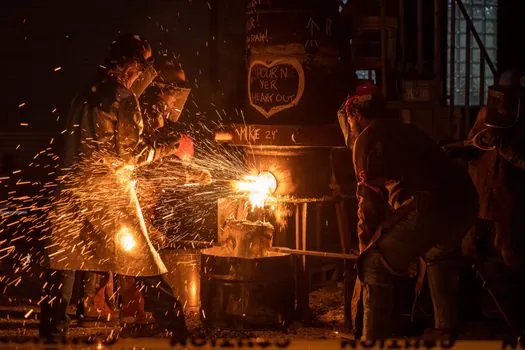
Selection should always begin with a documented assessment of furnace type, alloy range, melt/hold temperature, ramp rate, charging method, fluxes, and dross handling, which Foseco identifies as the nine baseline parameters for any crucible decision [S1]. A second hard rule, often missed in small shops, is one-crucible-per-alloy-family: zinc vapour embedded in a crucible wall will leach into any subsequent aluminum melt and create an unintended, weak zinc-aluminum alloy, ruining the cast and invalidating any chemistry certificate [S5].
On the material side, a vessel quoted as "cast iron" for zinc melting is functionally a cast iron foundry tool, and the same supply chain considerations (grade certification, thermal-cycling test data) apply; clay-graphite is a graphite-composite material, and any procurement specification should reference the supplier's data sheet for maximum service temperature, induction compatibility, and recommended tempering procedure [S1][S3]. For shops already running a gas aluminum melting furnace on the same floor, the same one-alloy-per-crucible rule applies, and a dedicated zinc crucible is the correct specification rather than sharing a pot with the aluminum line.
Trackable next nodes: confirm the exact service-temperature rating on the supplier's data sheet before purchase (cast iron pots vary from 350°C to over 500°C depending on grade), and require a written tempering procedure for any new clay-graphite crucible before first heat; both are inexpensive steps that prevent the two most common field failures, pot softening and crucible cracking on the first ramp.
Background reading: Edge gateway selection for protocol conversion: criteria and pitfalls.