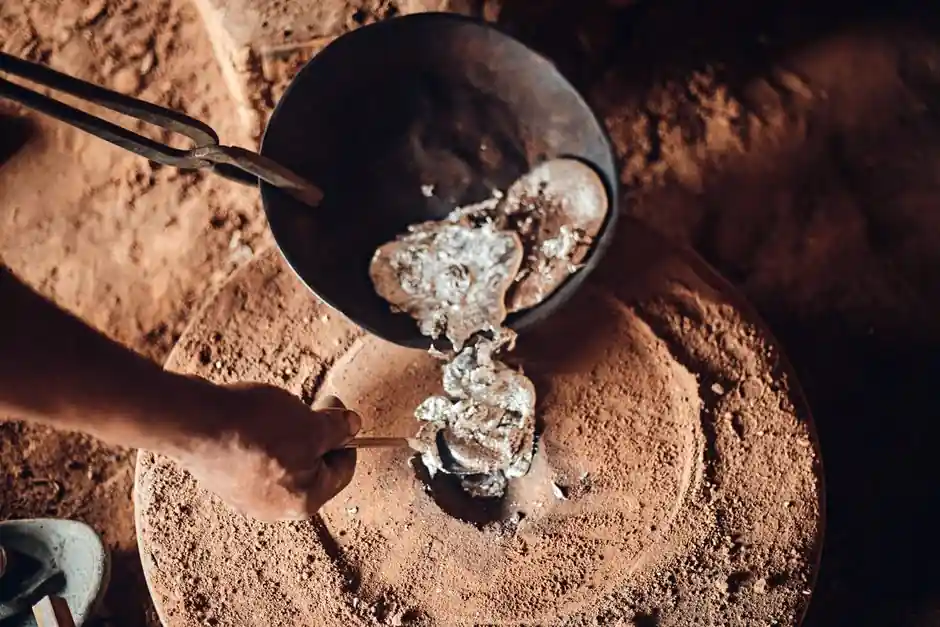
Clay-graphite crucibles are the default vessel for gold, silver, and copper-base alloy melting below roughly 1200°C, while silicon-carbide-graphite (SiC-graphite) variants dominate aluminum, brass, and zinc service where thermal-shock and oxidation resistance dominate the duty cycle [S1][S5].
Both families share a natural-flake graphite backbone bonded with refractory fillers; the difference is the second phase, clay versus silicon carbide, which sets the upper temperature ceiling, flux tolerance, and cost-per-heat envelope. Foundries that pick the wrong grade pay for it in wall thinning, slag pitting, and premature failure inside their crucible furnace [S1][S5].
Material Composition and the Four Commercial Grades
Commercial graphite crucibles split into four families based on the binder system and forming method: pure graphite (fixed carbon above 99.9%, used cautiously in electric furnaces), clay-graphite (natural graphite plus refractory clay and oxidation-resistant additives), rotary-formed SiC-graphite (natural graphite plus silicon carbide and alumina with an anti-oxidation layer), and isostatically pressed SiC-graphite [S1].
Pure graphite is reserved for clean electric-resistance melting where binder contamination is unacceptable; clay-graphite is the workhorse for small foundries and job shops with low melt rates; rotary-pressed SiC-graphite is the mainstream pick for high-temperature non-ferrous work; isostatically pressed SiC-graphite delivers 2-4 times the service life of rotary-pressed material, but the pressing cost effectively rules out small sizes below about #30 (roughly 8 kg aluminum capacity) [S1].
Temperature Ceilings and Service-Life Differentials
Clay-graphite is rated for lower-temperature work, primarily gold, silver, and lower-melt copper alloys, where the combination of natural clay binder and graphite delivers adequate thermal conductivity at lower cost [S5].
SiC-graphite extends the operating envelope by adding silicon carbide grains to the mix, with graphite supplying lubricity and SiC supplying hot strength and abrasion resistance, allowing the crucible to survive repeated thermal cycling above the clay-graphite ceiling, making it the standard for aluminum, copper, and brass [S5]. Isostatic pressing further compresses porosity, and the resulting service life is 2-4 times that of the rotary-formed equivalent at the cost of minimum order sizes and limited size range [S1]. For steel melting, foundry guidance specifies clay-graphite or SiC-graphite as the two common choices for general work, with the binder grade driving the failure mode rather than the graphite itself [S7].
Selection Criteria: Metal, Temperature, Flux, and Furnace Type
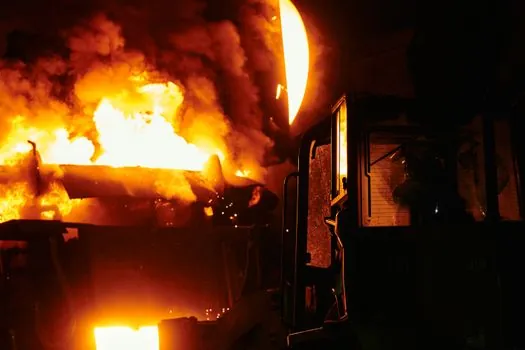
Pure graphite crucibles are recommended only in electric furnaces where no flame impingement occurs, since direct flame cuts the unprotected carbon matrix [S1][S2]. Clay-graphite is recommended for low-labor-cost operations with low duty cycles and is the natural fit for induction melting of gold and silver in the kilo-scale benchtop range [S1].
SiC-graphite is the default for medium-frequency induction melting of aluminum and brass in gas-fired crucible furnaces and induction furnace cells, where the protective anti-oxidation layer extends interval between re-bakes [S1][S2]. Crucible handling and pre-heat protocol is identical across grades: dry storage, gradual bake-up to above 500°C, matched furnace gap geometry, flame aimed at the base, periodic rotation, and continuous use to keep the protective layer intact [S1].
Failure Modes and Operating Constraints
Clay-graphite fails first by oxidation at the outer wall, slag penetration at the inner wall, and thermal-shock cracking if charged cold or heated without a controlled ramp [S1]. SiC-graphite mitigates all three, but the SiC phase is itself vulnerable to certain alkaline fluxes and to attack by zinc oxide in zinc-die service, where a special SiC-graphite formulation is required [S1].
Overuse of any agent (cover flux, drossing compound, deoxidizer) shortens crucible life, as does direct flame on the wall, impact loading, and dropping the crucible during transfer. Tongs must match the crucible geometry to avoid crushing the wall; tap cleaning of coked residue must be light to avoid chipping the protective skin [S1]. These constraints bind for any vessel in holding furnace transfer or casting ladle topping service, where the same graphite/clay matrix is in contact with molten metal.
Side-by-Side Comparison of the Two Main Options
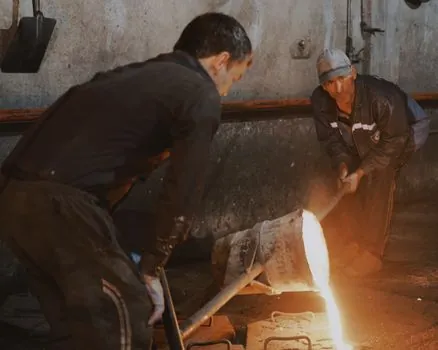
On cost, clay-graphite is the lower-cost entry point, the right pick for job shops running precious metals a few heats per day. On temperature ceiling, SiC-graphite wins, holding aluminum at 700-750°C and brass above 900°C for the full campaign life. On thermal-shock resistance, SiC-graphite is more tolerant due to the carbide phase, while clay-graphite needs a stricter bake-up protocol. On service life under aluminum/zinc service, isostatically pressed SiC-graphite is 2-4 times the rotary-pressed equivalent; clay-graphite is not specified in that comparison [S1][S5].
Quoting foundry guidance: clay-graphite is the "go-to for lower-temperature applications, particularly for casting metals like gold and silver," with the cost advantage coming from natural clay versus silicon carbide as the binder [S5]. The material grade decision therefore sits upstream of any casting mold or die-casting die choice, since melt cleanliness and inclusion load at pour directly track back to crucible erosion.
Spec-Driven Use Cases and Who Each Grade Is For
Use clay-graphite when melting gold, silver, or copper under 1200°C in a small electric or top-fire furnace at low duty cycle; expect the lowest unit cost and accept shorter campaign life. Use rotary-pressed SiC-graphite for aluminum, brass, and copper at higher temperatures or higher daily throughput, with the protective anti-oxidation layer as the differentiator [S1][S5].
Use isostatically pressed SiC-graphite when aluminum or zinc campaign life is the bottleneck and the order size justifies the minimum, since the 2-4x life multiplier is the only meaningful payback [S1]. Avoid pure graphite outside electric furnaces, and avoid clay-graphite in aluminum if the melt rate exceeds a few heats per day or if cover-flux chemistry is aggressive, the wall will oxidize and pit before the metal does. For a deeper cross-check on the zinc-melt use case, see Cast Iron Pot vs Clay-Graphite Crucible for Zinc Melting.
Procurement Specs to Lock Before Order
State the metal, target pour temperature, daily heat count, and furnace type (electric-resistance, gas-fired, medium-frequency induction) on the RFQ, since these four fields fix the binder grade and forming method [S1][S2]. Specify graphite source (natural flake versus synthetic), binder system, forming method, and any required anti-oxidation coating, then require the supplier to publish thermal conductivity, density, and maximum service temperature in the data sheet.
Trackable next signals: watch for supplier data sheets that move from generic "high purity" claims to numeric thermal conductivity (W/m·K) and density (g/cm³) values, since 2026 OEM documentation is moving in that direction [S2]. Also track ISO/ASTM crucible-grade standards alignment, which is currently vendor-specific and remains the main procurement-side transparency gap for both clay-graphite and SiC-graphite SKUs.