
Soda blasting (sodium bicarbonate, NaHCO3) removes paint and surface contaminants without etching or warping the substrate, whereas silica sand remains the higher-aggression choice for cutting through rust and heavy mill scale [S1][S3].
For paint-stripping alone on sheetmetal, fiberglass, composites, wood furniture, and thin-gauge panels, soda is the safer drop-in for a standard pressurized sand blasting machine converted to soda feed; the two are not interchangeable when corrosion products are part of the job [S1][S5].
Media Properties and Why the Difference Matters
Soda blasting media is food-grade sodium bicarbonate (NaHCO3), Mohs hardness around 2.5, which is several steps softer than silica sand (Mohs 7) or aluminum oxide (Mohs 9) and therefore shatters on impact rather than cutting into the substrate [S3][S5]. The decomposition reaction produces sodium carbonate, CO2, and water, so the media cannot be recycled and must be discarded after a single pass [S5].
Because the particle is water-soluble, residual soda simply rinses away with water, leaving no embedded abrasive in corners and crevices, which is the reason it is preferred over a shot blasting machine cycle when the goal is to keep tight geometries and soft substrates intact [S1][S3]. A pressurized sand blasting machine fed soda is essentially a non-destructive cleaning tool; the same cabinet fed garnet or crushed glass is a profiling tool.
Paint Removal Performance: Speed vs Substrate Safety
On heavy multi-layer paint build-up, soda cuts strip time significantly: a full vehicle body that would otherwise take days of chemical or hand sanding can be reduced to roughly 3-4 hours of blast time [S5]. For wood furniture, soda reaches into carvings and crevices that sanding cannot, and the user is warned explicitly not to hold the nozzle too close or surface damage returns [S2].
On rust, the picture inverts. Independent shop-floor tests report soda "will not remove rust" and removes paint more slowly than crushed glass or shot blasting machine cycles on heavy steel [S4]. Users also report soda is "very slow" on frame paint, and recommend it only when the substrate heat input would warp the panel [S6].
Equipment Setup, Media Cost, and Consumables
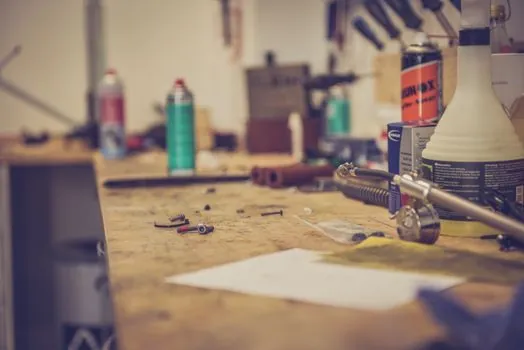
A soda conversion kit, such as Eastwood part number 51360, retrofits a standard pressurized abrasive cabinet; current units run with a soda-specific venturi and moisture trap to keep NaHCO3 from clumping [S1]. DIY furniture work typically pairs a rented soda blaster with a 50-100 cfm air compressor and pressures in the 40-80 psi range; rental runs $100-500 per day, and food-grade soda media is $30-50 per 50 lb bag, with several bags consumed on a vehicle-sized job [S2].
Safety gear is non-optional: goggles, gloves, long sleeves, and a dust mask or respirator are required because the dust load is high even though the media is non-toxic [S2]. Work area must be outdoor or heavily ventilated, and because the media dissolves in water, post-blast cleanup is a sweep-and-rinse rather than a HEPA vacuum cycle [S2][S5].
Where Soda Wins, Where Sand Wins: Selection Matrix
Decision criteria for specifying a media on a paint-removal job: substrate hardness, presence of rust or mill scale, dimensional tolerance on the part, and waste-handling constraints. Against four criteria the split is clear: soda wins on substrate softness (fiberglass, composites, thin sheetmetal, wood), on heat input (no warping of panels), on waste (water-soluble, non-toxic, no silica dust), and on embedded-media risk in tight geometries [S1][S3][S5].
Silica or aluminum-oxide shot blasting machine media wins on aggressive coating removal (thick epoxy, powder coat, rust, mill scale, casting flash), on speed against hard substrates, and on recyclability of the abrasive [S1][S4]. For shop floors already running a resin-sand-line or sand-cooler circuit for foundry reclaim, switching to soda is a dedicated media decision, not a re-use of the existing abrasive loop, because NaHCO3 cannot be reclaimed [S5].
Limitations, Failure Modes, and Standards Reference
Soda blasting has three real failure modes: it will not remove rust, it cannot be recycled, and on heat-sensitive composites the wrong pressure or standoff distance can still erode the substrate [S2][S4][S5]. The Eastwood development engineer quoted in the original 2012 field test puts the rule plainly: "Traditional abrasive blasting is still best for stripping and removing rust from castings or heavy steel parts, but not the best for stripping paint from autobody sheetmetal and certainly not fiberglass" [S1].
Health-and-safety reference points are stable and well documented: silicosis awareness in abrasive blasting has been in force since roughly 1973, which is the original driver for the entire alternative-media category that includes soda, glass bead, coal slag, and sodium bicarbonate [S1]. Soda's own hazard profile is the inverse of silica: food-grade, non-toxic, water-soluble, 100% environmentally friendly, with the practical caveat that operators still need respiratory protection against nuisance dust [S5].
Application Fit: Vehicles, Furniture, Graffiti, Composites
Vehicle and autobody work is the canonical use case: paint and undercoating come off steel, aluminum, chrome, rubber, and glass without damage, and fiberglass body panels can be stripped without print-through [S1][S5]. Furniture refinishing, especially on carved or turned wood with multiple legacy paint layers, is the second strong fit because the media reaches into profiles sanding cannot [S2]. Graffiti removal from brick, stone, concrete, plastered walls, and traffic-sign substrates is a third fit, typically run at lower pressure to protect the underlying masonry or reflective sheeting [S5].
For heavier industrial substrate prep, such as multi-cavity zinc die casting at full tonnage tooling cleanup or structural alloy steel plate descaling, soda is the wrong media: the operator should spec garnet, aluminum oxide, or steel shot in a shot blasting machine instead, because the job requires profile and rust removal, not coating-only stripping [S1][S4].
Trackable next signals: any revision to the OSHA silica standard that tightens permissible exposure limits on abrasive blasting would push more auto-body and refinish shops from silica to soda; conversely, any mainstream OEM release of a faster-cut, recyclable soft media would erode soda's only edge (substrate safety) by closing its speed gap on thick coatings.