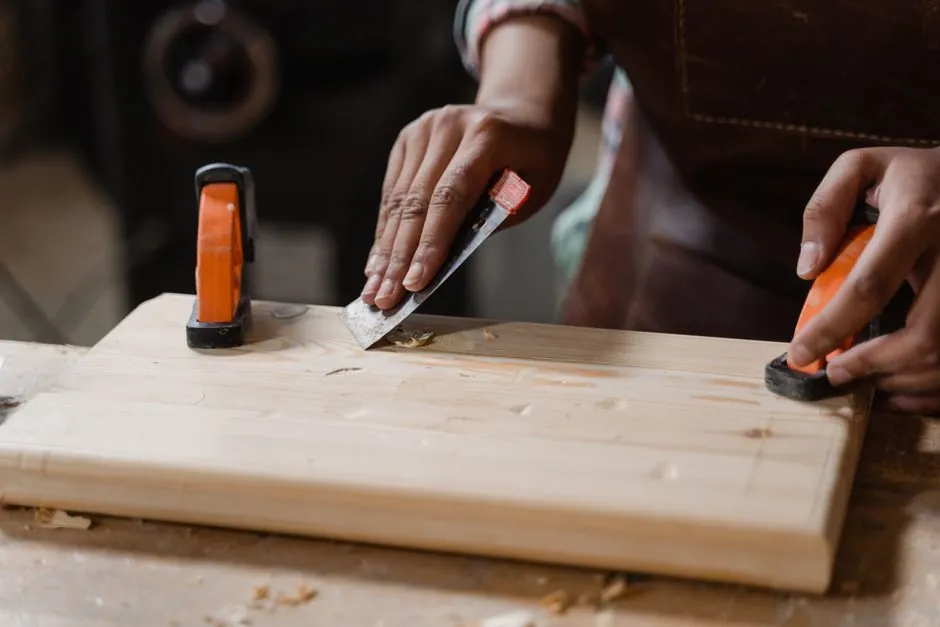
Gray cast iron is suitable for hobbyists or light-duty shops where cost is the main factor, while forged steel is described as solid steel heated and forged into shape [S1].
Material changes the load behavior, not just the price
Gray cast iron contains graphite flakes, which support rigidity and vibration damping but leave the material comparatively brittle under impact or excessive tightening [S1].
Forged steel is described as solid steel heated and forged into shape [S1]. S2 notes that some steel vises were advertised incorrectly and that terms such as "semi-steel" and "arma-steel" were used to denote better iron alloys [S2].
The material families are relevant beyond the vise frame. The broader properties of cast iron explain why graphite-bearing irons suit rigid machine-tool structures, while tool die steel applies to highly loaded tooling and wear surfaces rather than automatically to an entire vise body.
Compare the four practical construction options
Gray cast iron provides good vibration damping, is rigid and affordable, and can crack or fracture if dropped or over-tightened [S1]. It is appropriate for hobby work and light-duty shops where replacement cost is more important than heavy-load life [S1].
These figures describe material-family comparisons, not a guaranteed clamping-force increase. Actual capacity also depends on the vise geometry, screw, nut, slide, handle, mounting, and jaw condition. No reviewed source supports treating a percentage change in tensile strength as the same percentage increase in clamping force.
Use case determines the correct vise material
Use gray cast iron when the budget is the controlling requirement and loads remain light. Its rigidity and damping are useful, but the 2/5 rating assigned in a material comparison correctly signals limited life under heavy loads [S1]. Gray cast iron is rated 2/5 in the supplied comparison and is presented as an entry-level option with a limited lifespan under heavy loads [S1].
Do not select a large steel vise merely because the workpiece is large. Match vise size to the part, then verify the manufacturer-rated clamping force, jaw opening, jaw width, screw stroke, and mounting arrangement. A stronger body cannot compensate for an undersized screw or a vise mounted to an inadequately stiff bench.
Clamping force is a system property
Material strength sets the load capacity of the vise structure, while the screw converts handle torque into axial clamping force. The fixed and moving jaws must also resist separation, bending, and local bearing pressure at the workpiece. A well-designed iron casting can be adequate for individual shop use when casting quality and geometry are sound [S2].
For repeated precision work, specify hardened or serrated jaw inserts and check that their hardness is compatible with the workpiece. For soft materials, the risk is marking rather than structural overload; for thin sections, use jaw protection or a broader contact area. The vise frame and jaws serve different functions, so a cast body can be paired with steel working faces without making the entire vise a steel product [S6].
For comparison against other manual clamping methods, C-clamp versus bar clamp versus spring clamp selection depends on access, pressure, reach, and permanence rather than vise-body material. Once a workpiece must resist sustained high force in a fixed machining position, the vise's screw, jaw geometry, mounting stiffness, and frame material must be evaluated together.
Failure modes and operating limits
Gray cast iron can fracture after a drop, a side impact, or excessive tightening because its graphite-flake structure is brittle [S1]. Forged steel resists shock cracking better, but its lower damping can allow machining vibration to transfer more directly into the workpiece [S1]. Ductile iron reduces, but does not eliminate, the risks of overload, casting defects, and an inadequately mounted vise [S1].
Steel castings can cost several times as much as equivalent iron castings, so the material decision must be based on the design rather than the label alone [S2]. Historical examples also show that terms such as semi-steel and arma-steel were used for better iron alloys, meaning the casting name alone may not identify the actual body material [S2].
Do not use a vise as an anvil. Light work may not damage it, but concentrated hammer blows can break the body or the jaw [S2]. Use a separate anvil for heavy forging and peening, and keep side loading, hammer blows, and extension of the handle beyond its normal working range away from the vise.
What to verify before purchasing
Require the seller to identify the body as gray cast iron, malleable iron, ductile iron, forged steel, cast steel, or a steel weldment. Do not accept “heavy-duty cast” or “all iron” without clarification, because the material distinction controls damping, toughness, and fracture behavior [S1][S2].
Request three verifiable details: the rated clamping force, jaw opening and width, and the material or hardness of the jaw working faces. The reviewed sources support material behavior and relative strength, but they do not establish a universal clamping-force rating for every vise, jaw width, or model. A force value must come from the model-specific datasheet, not from the word “steel.”
For procurement, use ductile iron as the default for a professional machine vise, forged steel for impact-heavy service, malleable iron for an intermediate duty compromise, and gray cast iron for budget-limited light work. Final selection should record the body material, jaw insert specification, rated force, workpiece material, service pattern, mounting base, and expected shock exposure so that the vise is selected as a complete load system [S1][S5][S6].
The next verifiable control is the model datasheet: confirm a stated clamping-force rating, jaw dimensions, body material, and jaw hardness. If those four items are absent, treat the vise as an unverified general-duty tool rather than a defined heavy-duty clamping asset.