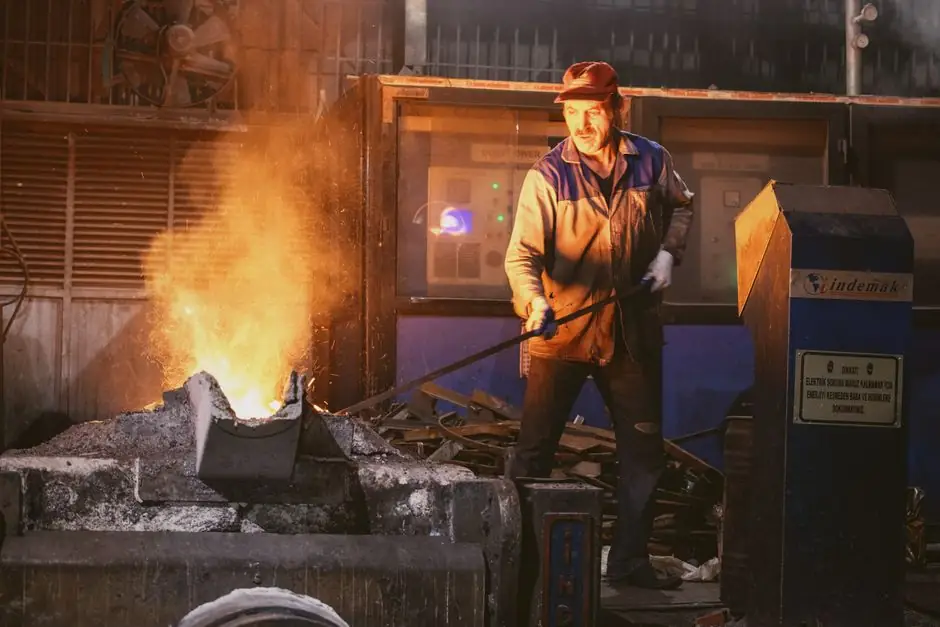
A greenfield mini-plant with a rated output of 10 to 50 metric tons per month starts at $98,500 for a base lost foam package and climbs to $780,000 for an automated lost foam line bundled with machining, with 8 to 12 month payback claimed on a finished-product margin of $1 to $6 per kilogram [S1].
Standalone molding lines span $30,000 for a 420 by 360 mm laboratory unit (10 kW) to $650,000 for a fully automated 30 by 16 m carousel line (60 kW), while die casting machines cover $50,000 for a compact used hot chamber unit to more than $2 million for a large cold chamber system [S1][S5].
Mini-Plant Package Pricing by Output Tier
Modern Technologies publishes an 11-row "from" price list that scales almost linearly with rated monthly output: a 10 t/month lost foam base package is $98,500, the same line at 10 t/month with full commissioning is $130,000, 20 t/month is $260,000, and 30 t/month is $390,000 [S1]. Stepping up to 40 to 50 t/month moves the entry to $390,000 for a mechanized V-process line and $455,000 for the UNIQUE combined process plant, which the vendor rates at a 6 to 8 month payback [S1].
At 50 to 100 t/month, mechanized packages start at $390,000 and $585,000 respectively, and a billet casting line at 200 t/month is $325,000; an automated lost foam line with in-line machining at 40 to 50 t/month reaches $780,000, the top of the published range [S1]. These figures are quoted ex-works with supervised installation, staff training, and ramp-up to rated output included, while delivery and customs clearance are itemized separately per destination [S1].
Standalone Molding Lines: FENIX Range
For a startup that already has melting and finishing and only needs a molding line, the FENIX family gives a five-step ladder: FENIX-Laborator at $30,000 (420 by 360 mm flask, 10 kW) for trials and one-off castings, FENIX Aylin-2026 at $60,000 for two-tooling-set LFC or V-process production, FENIX Diana-2026 at $120,000 (1200 by 900 mm flask, 20 kW) with sand circulation and cooling, FENIX.Farrukh-2026 at $330,000 (22 by 12 m footprint, 45 kW) for up to 10 flasks, and the FENIX-Dilbar automated carousel at $650,000 (30 by 16 m, 60 kW) [S1].
Power draw scales from 10 kW on the lab unit to 60 kW on the carousel line, a 6x swing that drives both the electrical service sizing and the operating cost line item; sand circulation and reclamation on the Diana, Farrukh, and Dilbar units is engineered per project rather than off-the-shelf [S1]. A casting mold selection at this stage sets flask size, binder chemistry, and sand throughput for the next decade, so the line is usually picked before the furnace.
Die Casting Machine Cost Spectrum
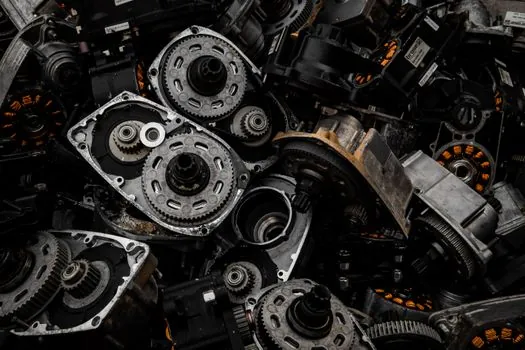
Die casting follows a different price logic, dominated by clamp tonnage and shot chamber design rather than flask area: a 20 ton hot chamber machine for zinc or tin hardware starts at $50,000 to $100,000 new, a 200 ton hot chamber unit for high-volume lock components is around $150,000, and a 400 ton hot chamber from Frech or Italpresse lands between $300,000 and $500,000 [S5]. Cold chamber machines for aluminum, magnesium, and copper begin at roughly $100,000 for a 300 ton model and run $800,000 to $1,200,000 for a 1,200 ton unit; Buhler's Evolution series 1,000 ton cold chamber is reported near $900,000 for EV structural castings [S5].
Vacuum and IoT-equipped variants sit on top of these base prices, and the published market spread is $50,000 to above $2,000,000 across new compact used units to large high-tech systems [S5]. Beyond the press itself, dies, installation, and training add a meaningful layer: a die casting die for a structural chassis component typically carries a 75,000 to 200,000 shot life window, which sets tooling amortisation per part.
Cost Drivers and Total Cost of Ownership
Four knobs move the headline number more than any others: alloy and melt source, certification and process control, volume tier, and lead time. Alloy cost is a world-priced commodity: LME cash settlement on 5 October 2026 showed steel scrap (CFR India) at $407/t, aluminum at $3,107/t, copper at $14,430/t, nickel at $15,470/t, tin at $54,250/t, zinc at $3,774/t, and lead at $1,830/t, so a 10 t/month line running a 70 percent yield on zinc versus a copper-rich alloy sees a several-fold swing in working capital tied up in melt stock [S2].
On top of the press or molding line, installation, training, and dies push the landed figure up, and maintenance plus energy add 20 to 30 percent over the machine's service life, per industry analyst guidance published 12 October 2026 [S5]. A practical TCO model for a small startup therefore looks at: equipment package (the "from" price), freight and customs (5 to 15 percent depending on Incoterms and route), building and utility hookup (often the single largest hidden line), tooling and patterns (frequently a six month payback expectation from buyers, per Dotson/Dotson-style foundry economics commentary) [S3], and a one-year reserve for spares, refractories, and energy.
Decision Map: Who Needs What
A startup targeting under 30 t/month of simple iron or aluminum castings should look at the $98,500 to $260,000 lost foam or V-process tier, where the base package covers installation and training and payback is quoted at 8 to 12 months on a $1 to $6/kg margin [S1]. A job shop aiming at 40 to 50 t/month with mixed alloys is in the $390,000 to $520,000 band, and only a startup that plans to sell machined castings as a finished product should pay the $780,000 premium for an automated line with in-line machining [S1]. For zinc or low-melting alloy work under 200 ton clamp force, a $50,000 to $150,000 hot chamber die casting machine is the rational entry, while aluminum structural parts push the budget into the $800,000 to $1,500,000 cold chamber range [S5].
A casting ladle and a crucible furnace are the two ancillary items a startup under-spends on most often, and both sit downstream of the line choice; undersizing the ladle caps pour rate and undersizing the furnace caps alloy flexibility, so they should be specified to match the molding line's rated output, not the other way round. Reference: Automatic Molding Line Cost per Mold per Output Hour for a unit-economics view of the molding-line side of this same decision.
What the "From" Price Does Not Cover
The published "from" prices assume a standard configuration, a standard destination, and a standard scope of training; in practice, three line items routinely double the headline figure. First, delivery and customs clearance are quoted separately, and on a $390,000 Farrukh-2026 line shipped to a non-treaty-trade destination the freight plus duty can add 15 to 25 percent [S1]. Second, the casting technology training, machine training, and process engineer training are bundled for the rated output but additional shifts, additional alloys, and additional quality procedures are billed as change orders [S1].
Third, on the die casting side, the die itself is a separate capital line that is frequently larger than a small press: structural chassis tooling routinely drives a 75,000 to 200,000 shot die life calculation, and the die cost amortises across that window rather than the press life [S5]. Foundry-economics commentary from the industry makes the same point from the casting buyer's side: large customers demanding 60, 75, or 90 day payment terms force the supplier to invest in receivables instead of new plant, which compresses the supplier's ability to fund the next capacity step [S3].
Trackable Signals and Next Nodes

Two signals are worth watching through Q1 2027. LME base metal prices on 5 October 2026 set the working-capital baseline: aluminum at $3,107/t and zinc at $3,774/t versus copper at $14,430/t mean a 10 t/month zinc line needs roughly an order of magnitude less melt inventory than the same tonnage in copper alloys [S2]. The 8 to 12 month payback window published with the mini-plant configurations is calculated on a $1 to $6/kg margin, so any move in finished-castings selling price or in LME input cost shifts the realized payback by months, not weeks [S1].
Used-equipment pricing for 200 to 400 ton hot chamber die casting machines, currently a primary entry path for sub-$150,000 startups, will tighten or loosen as EV component suppliers retire or refresh their 1,000 ton cold chamber fleets through 2027; the 12 October 2026 industry pricing survey identifies the 1,000 ton Buhler Evolution-class machine at roughly $900,000 as the benchmark for that segment [S5].