For die-cast electronics housings, the practical alloy window is aluminum ADC12 / A380, A360, or magnesium AZ91D, with zinc Zamak 3 / 5 used where wall thickness drops below 1.5 mm [S3].
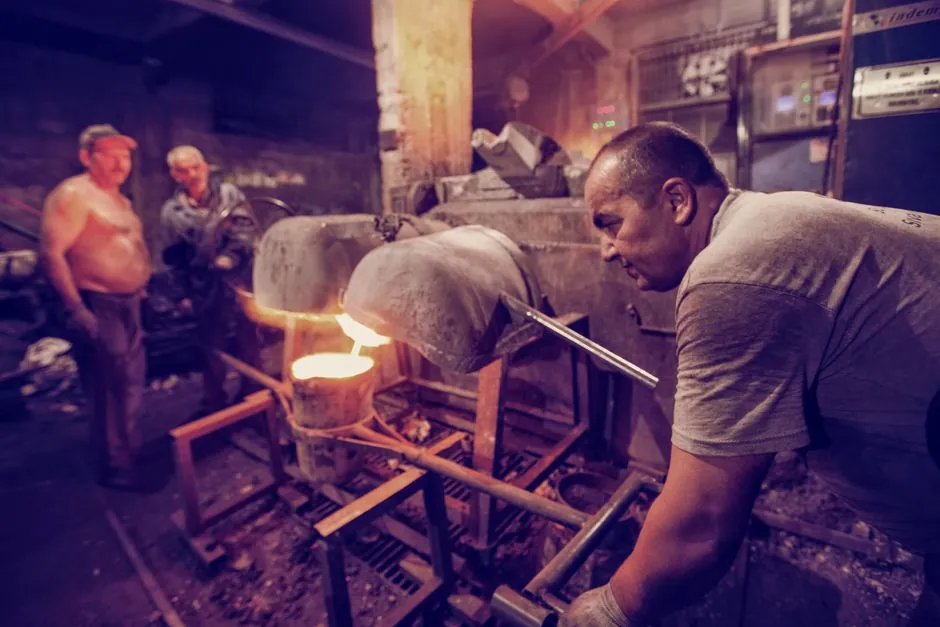
Scope covers portable consumer electronics, LED heat sinks, RF enclosures, and power-supply chassis where mass, thermal conductivity, and EMI shielding all matter; the casting ladle sits between the holding furnace and the cold-chamber shot sleeve, so its volume, lining, and preheat directly govern melt loss and oxide entrainment [S1][S2].
Alloy-to-Housing Function Map
Aluminum ADC12 / A380 is the de-facto default for laptop chassis, set-top boxes, and LED heat sinks: near-eutectic Al-Si content gives it high fluidity for 1.5–3.0 mm walls, and its thermal conductivity sits in the 90–110 W/m·K range that passive heat sinks need [S3]. Where corrosion exposure is heavier (outdoor telecom, marine-grade enclosures), A360 is the swap-in for its lower Cu ceiling (≤0.6%) and tighter salt-spray performance [S3].
Magnesium AZ91D cuts housing mass by roughly 33% versus the same ADC12 geometry, and is the common pick for laptop bottom covers, tablet frames, and handheld instrument shells [S3]. The trade is flammability risk above 400 °C melt, so melt handling and ladle preheat discipline matter more than with aluminum. Zinc Zamak 3 / 5 stays in the picture for ultra-thin walls (down to 0.8 mm) on connector shrouds and small sensor bodies, where its superior cast fluidity beats aluminum on fill of fine features [S3].
For LED and power-supply heat sinks specifically, thermal-grade AlSi9 (high-silicon) variants are the standard route, since higher Si content raises the as-cast volumetric heat capacity and trims post-machining [S3].
Process and Ladle Sizing Gates
Electronics-housing runs land almost entirely on cold-chamber die casting machines sized 160T to 1200T clamp tonnage, with the higher tonnage reserved for large TV back-plates and server chassis [S3]. Ladle payload is set by the shot weight plus a 10–20% heel allowance, so a 1.5 kg shot sleeve typically pulls from a 1.7–1.8 kg capacity hand or robotic ladle.
Automated ladle and spray systems have become the default on multi-cavity production tooling for portable electronics, with cycle times in the 30–90 second band and a holding-furnace setpoint near 680–720 °C for aluminum and 640–680 °C for magnesium [S3]. The same die-cast service page notes real-time process monitoring of shot velocity and intensification pressure as the practical way to keep porosity out of a thin-wall housing.
Tolerance and Secondary Machining Constraints
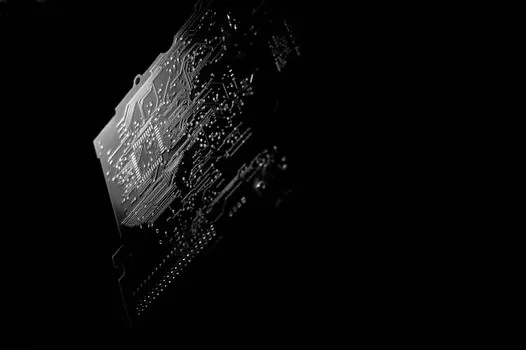
The die-cast surface itself routinely hits ±0.05 mm on small features, but electronics housings almost always need post-machined bores, faces, and connector landing zones; the working tolerance is ±0.01 mm when those features are CNC-finished [S3]. Hole tapping, precision reaming, and tight-tolerance bores are the standard secondary operations on die-cast enclosures.
Draft angle is the single biggest geometric lever: 1° to 3° is the typical window for housing walls, anything below 1° raises die wear and ejection scoring on the cosmetic A-surface. Wall-thickness review is paired with draft, and any local wall over ~4 mm in ADC12 will show shrinkage porosity that the lid or heat-sink interface then has to hide.
For mating surfaces that need a thermal pad or EMI gasket to seat flat, facing for critical mating surfaces is the standard secondary op, since as-cast flatness on a thin-wall cover is not tight enough for a thermal interface material to perform at its rated W/m·K.
Surface Finish and EMI/Corrosion Stack
The common finish stack for an outdoor-rated aluminum housing is chromate conversion under powder coat, or anodizing Type II for cosmetic black / clear finishes, with Type III hard anodize reserved for wear surfaces [S3]. For interior chassis, E-coating gives the most uniform coverage inside ribs and bosses.
Salt-spray resistance is the practical gate: 96 h neutral salt-spray is the typical entry-level acceptance for indoor electronics, with 240–500 h specified for outdoor telecom; chromate conversion under powder is the easiest path to the higher band on A360 or A380 substrates. Cast tooling mold surface finish drives the as-cast cosmetic appearance, with SPI-A3 / A2 being the typical housing-grade starting point.
Failure Modes Engineers Should Pre-empt
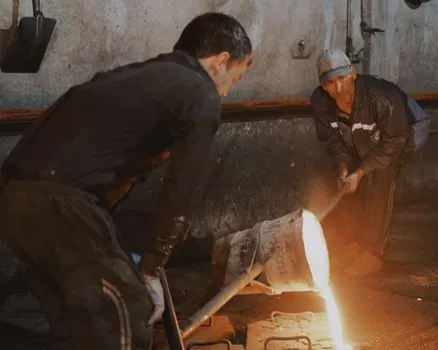
Porosity is the recurring defect, caused by either gas entrapment in the ladle-to-sleeve pour or by over-fast intensification; it shows up as blistering after anodize or as thermal-pad voids on heat sinks. Cold shuts appear when melt temperature drops below roughly 640 °C at the gate for ADC12, so ladle preheat and pour timing are the usual culprits. [S3]
For magnesium housings, the under-rated failure mode is flux or oxide inclusion, which acts as a crack initiator when the housing is dropped; a 50–80 µm filter in the ladle is the standard mitigation. Die wear on thin-wall production tooling is the slow-burn failure mode that shows up as dimensional drift at roughly 80,000–120,000 shots on A380, and as a step change in ejector-pin sticking once the cosmetic surface starts to score.
Standards, Sourcing, and Specification Language
ISO 9001 is the baseline quality system cited for production die-casting suppliers, and most portable-electronics OEMs layer in-house Cpk gates on top (typically 1.33 minimum on cosmetic dimensions) [S3]. Material acceptance is keyed to the named alloy designation (ADC12 / A380 / AZ91D / Zamak 3 / 5), not to generic "aluminum" or "magnesium", and certificates per EN 10204 3.1 are the standard mill-doc pattern.
Mold-flow analysis is the first-line design check on a new housing geometry; suppliers run Magma or AnyCasting simulations before steel is cut, specifically to predict shrinkage porosity and air entrapment in thin-wall zones [S3]. Gate and runner optimization is paired with that simulation, and a well-run DFM review is the cheapest place to catch a wall-thickness problem that would otherwise show up as scrap at the die tryout.
When comparing a housing-grade aluminum ADC12 part against a magnesium AZ91D part on the four engineering axes that matter (mass, thermal conductivity, casting minimum wall, and corrosion sensitivity), the practical pattern is: ADC12 wins on thermal and corrosion, AZ91D wins on mass and stiffness-per-kg, and Zamak 3 wins on minimum wall thickness and surface-as-cast finish. Casting tooling life also differs, with the softer magnesium alloy generally extending die life by a factor of 2–3 over an equivalent A380 production run.
Closing node: when a housing spec lands on the desk, lock alloy designation and temper in the print title block, define the cosmetic surface and its draft angle explicitly, and require ISO 9001 plus EN 10204 3.1 from the caster; for further casting auxiliary equipment sizing on adjacent lines, track the ladle cycle time and the holding-furnace setpoint as the two measurable process signals, and confirm a tight-tolerance secondary machining plan is in scope before release. For a parallel read on the ladle and batch-side decisions that overlap with pump and valve work, see Casting ladle selection for pump and valve production: alloy, batch, and process gates, and for the aerospace-side lining and qualification logic on the same equipment, see Aerospace casting ladle selection: alloy, lining, and qualification gates.