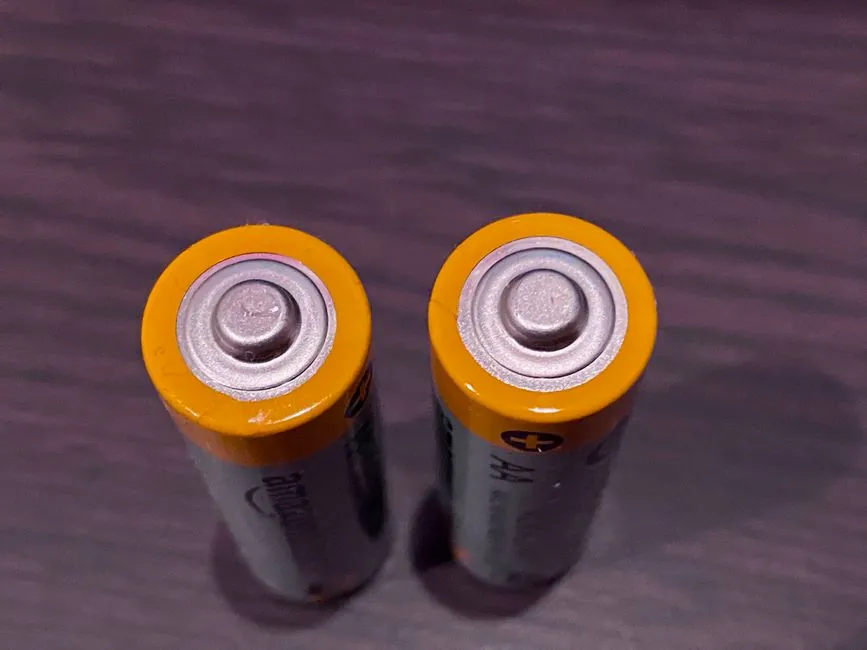
Solid-state battery programs in 2026 split cleanly between two engagement models: OEM, where the buyer supplies the cell or pack design and the factory only manufactures it, and ODM, where the factory contributes the formulation, cell format, BMS firmware, and pack housing, and the buyer brands the result. The commercial consequence is direct, because OEM projects need 6-12 months of internal cell qualification before any production order, while ODM projects can ship reference designs in 8-16 weeks [S2][S3].
Chemistry choice still dictates which model is even available. Most full solid-state lines are in pilot or R&D; semi-solid lines are the only format shipping at industrial scale in 2026, and most Spanish, Chinese, and Korean lines will only run OEM on a customer-supplied cell spec, not on a co-developed one [S1][S4]. For a broader view of the 2026 sourcing landscape, see this solid-state battery capacity planning map.
What OEM and ODM actually mean on a solid-state line
OEM, in solid-state manufacturing, means the contract factory runs customer-owned tooling, customer-specified cathode and electrolyte chemistries, and customer-defined formation cycles, then ships cells or modules under the buyer's part number. The factory contributes line capacity, dry rooms, and isostatic pressing capability, but does not own the formula. This is the model CEGASA and Avepower use for European storage customers who already hold a tested LiFePO4 or sulfide-electrolyte cell design and only need scalable throughput, with Avepower's published 20,000 m² facility, 15 production lines, and 50+ R&D engineers serving that contract-run role [S4].
ODM goes further: the factory designs the cell format, picks the electrolyte family, writes the BMS firmware, and lays out the pack, and the buyer only customizes the cosmetic shell, label, and connector. In 2026, ODM in solid-state is effectively limited to semi-solid chemistries, because the full SSB cell stack (anode, sulfide or oxide electrolyte, cathode) does not yet have a standardized ODM platform that can be re-branded without re-qualification [S1][S3]. Power-bank ODM lines in Shenzhen, Dongguan, and Guangzhou illustrate the mature version of this model, with 5,000 mAh basic units at roughly $2.80-3.50 at MOQ 1,000 and 10,000 mAh display units at $5.00-7.00 at MOQ 500, and the same factories are now extending ODM to semi-solid prismatic cells [S3].
Decision matrix: OEM vs ODM on 4 buyer criteria
Four criteria separate the two models in practice: IP ownership, time-to-first-shipment, unit cost at scale, and qualification risk. On IP, OEM keeps all cell and pack IP with the buyer; ODM transfers it to the factory unless explicit assignment clauses are negotiated, and at 2026 power-bank benchmarks, premium cells from LG, Samsung SDI, or Panasonic add 15-25% over standard EVE, Highstar, or BAK cells inside an ODM BOM [S3]. On time-to-first-shipment, OEM needs cell validation (formation cycling, rate test, abuse test) for 6-12 months before any meaningful run; ODM on semi-solid can reference an existing factory data pack and ship in 8-16 weeks [S1][S2].
On unit cost at scale, OEM is cheaper per kWh once volumes clear roughly 2-5 MWh per month, because the buyer is paying only for conversion, not for the chemistry license; ODM carries a built-in NRE and royalty-style markup that is hidden in the per-unit price, and the factory will not break that out without an explicit request [S2][S3]. On qualification risk, OEM forces the buyer to own every UN38.3, IEC 62619, and UL 1973 test report, which is expensive but controllable; ODM lets the factory reuse its existing certifications, but any buyer-side change to the cell format, BMS, or pack housing invalidates that reuse and forces re-cert [S3][S4]. For a deeper look at the test and measurement stack behind these qualifications, the 2026 solid-state process control map covers the sensor and formation side.
Who each model is for, and who should avoid it

OEM is the right model for vertically integrated cell developers, EV and eMobility OEMs building a captive cell supply, defense or aerospace programs that cannot share electrolyte IP, and storage integrators who already run their own IEC 62619 and UL 1973 qualification [S4]. ODM is the right model for consumer-electronics brands entering power-bank or small-format storage, drone integrators who need a flight-tested semi-solid pack fast, and any B2B buyer that wants a private-label product on a factory's existing data sheet [S1][S2][S3].
OEM is the wrong model for a startup with no in-house electrochemistry, because the qualification cost will exceed the cap table, and the factory will not accept an OEM run of fewer than roughly 100,000 cells in 2026 [S2][S3]. ODM is the wrong model for any program where the buyer needs to own the cell IP long-term, or for any chemist outside the factory's catalog, because no ODM partner in 2026 will sell a full solid-state (sulfide or oxide) cell as a private-label SKU; those are still joint-development or licensing programs [S1][S4].
Semi-solid versus full solid-state: which actually ships as ODM
The chemistry split is the single biggest constraint on the 2026 menu. Semi-solid cells, which combine a solid electrolyte framework with a reduced liquid phase, are the only solid-electrolyte format shipping in industrial volumes; they are widely positioned as the bridge between Li-ion and full SSB, and they have demonstrated field performance in UAV, robotics, and stationary storage programs [S1]. The trade-off is captured in the published comparison: solid-state offers very high theoretical energy density and extremely high safety but complex manufacturing and high cost, while semi-solid delivers high practical energy density, high safety, and moderate cost, and is already actively deployed [S1].
Full solid-state cells in 2026 are still in R&D, pilot production, and automotive-focused development, and mass commercialization remains limited by manufacturing complexity and cost, so the only realistic OEM programs on full SSB are co-development with cell-IP owners, not catalog orders [S1][S4]. Basquevolt in Spain is a representative example: a solid-state cell specialist focused on R&D, EV, and future ESS, not a turnkey ODM partner [S4]. For a macro view of how semi-solid production is scaling while full SSB stays in pilot, the Industry 4.0 adoption piece tracks the line-level split.
2026 verification signals and factory red flags
The published 2026 factory-screening criteria for Chinese power-bank lines translate directly to solid-state: ISO 9001 plus BSCI or SEDEX social audits, in-house SMT and injection molding, a 50,000+ units-per-month line capacity, a dedicated English-speaking project manager, and at least three verifiable Western brand references [S3]. The same sources flag the consistent warning signs: claims of "any product" with no chemistry specialization, refusal to share a BOM with component brands, MOQ offers below 100 units, no production-floor video within 24 hours, and quotes 30%+ below market average, all of which usually indicate a trading company fronting as a factory rather than a real OEM or ODM house [S2][S3].
Trackable signals through the rest of 2026: any new semi-solid ODM SKU with a published cycle-life and abuse-test data sheet, because that would mark the first catalog-style ODM on a solid-electrolyte format; any full SSB contract announcement naming a non-automotive off-taker, because the existing pipeline is dominated by EV programs [S1][S4]; and any revision to the 15-25% premium-cell surcharge rule, since that gap is what currently keeps OEM on premium cells and ODM on standard cells in the same factory.
For the relevant spec sheets and selection criteria, see additive manufacturing material, pressure transmitter, and flow meter.