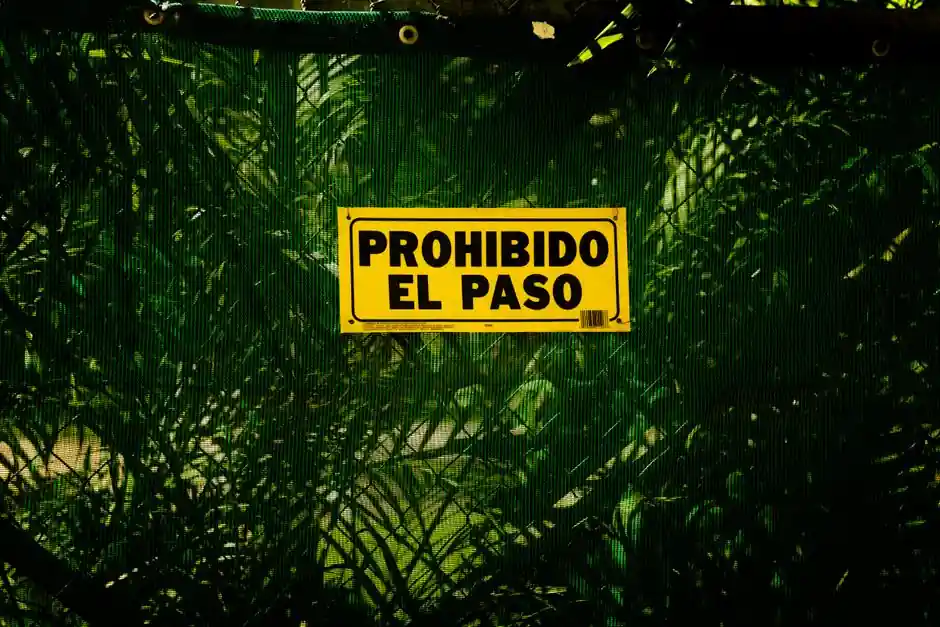
OSHA 29 CFR 1910.145(d)(4) sets the caution-tape color specification: yellow background, black panel with yellow letters, and any letter against the yellow background must be black, with chromaticity tied to ANSI Z53.1-1967 or ANSI Z535.1-2006(R2011) [S1]. Danger signs under 1910.145(d)(2) draw from red, black, and white opaque glossy samples, and 1910.145(c)(1)(ii) requires employers to instruct workers that danger signs indicate immediate danger requiring special precautions [S1]. The federal rule is narrow, covering only two colors (red and yellow) for these two hazard classes.
ANSI Z535.5-2022 extends that floor into a full barricade-tape taxonomy, classifying tapes by signal word and color so that DANGER tapes mark hazardous situations that will, if not avoided, result in serious injury or death, while CAUTION tapes mark situations that may result in minor or moderate injury [S2]. Field practice tracks that hierarchy: yellow caution tape delineates general work zones and low-level risks (cables on the ground, light overhead work, slippery surfaces), whereas red danger tape seals off immediate, high-consequence hazards such as open holes, suspended loads, confined-space entries, and exposed live wiring [S3][S4].
Color and Wording Specification per OSHA 29 CFR 1910.145
OSHA 29 CFR 1910.145(d)(2) requires danger signs to use the colors red, black, and white, with chromaticity defined in Table 1 of ANSI Z53.1-1967 or ANSI Z535.1-2006(R2011) [S1]. Caution signs under 1910.145(d)(4) require a yellow background, a black panel with yellow letters, and black letters on any yellow background, again tied to the same ANSI color tables [S1]. Both sign classes also require rounded or blunt corners and no sharp edges, burrs, splinters, or other projections per 1910.145(d)(1) [S1].
Signal-word instruction is mandatory: 1910.145(c)(1)(ii) obliges employers to train workers that danger signs mean immediate danger and require special precautions, while 1910.145(c)(2)(ii) requires training that caution signs indicate a possible hazard against which proper precaution should be taken [S1]. The OSHA color rule for safety color generally sits at 29 CFR 1910.144, which is referenced in industry guidance as the narrow federal floor limiting mandatory colors to red and yellow [S3]. Anything beyond those two (orange, blue, green, purple) is voluntary under ANSI Z535.1 and is not independently enforceable as federal law [S3].
ANSI Z535.5-2022 Hierarchy: Danger, Caution, and Notice
ANSI Z535.5-2022 organizes safety tags and barricade tapes by signal-word panel and color, pairing DANGER with red-white-black, CAUTION with yellow-black, and NOTICE (used for important information not related to personal injury) with blue-white [S2][S6]. The signal word must be readable from a safe approach distance, and the message panel must state the hazard and the consequence of non-compliance [S2].
For barricade tapes, the consensus industry reading is: yellow/black tape is CAUTION and potential hazard, while red tape is DANGER and indicates an immediate hazard that could cause serious injury or death [S6][S7]. A second, less common split separates "warning" (orange, often used for active construction or machine-operating zones) from "danger" (red), so that red is reserved for the most severe hazards and orange signals a serious but lower-than-immediate risk [S3][S5]. Tape wording typically mirrors the color: "CAUTION" in black on yellow, "DANGER" in black or white on red, often with secondary wording such as "DO NOT ENTER" on red, and "ENTER WITH CAUTION" on yellow [S4][S5].
Side-by-Side Comparison: Yellow Caution vs Red Danger Tape

The two-tape system can be lined up against four decision criteria: hazard severity, required action, color/lettering spec, and typical applications. On hazard severity, yellow caution covers potential or minor hazards where injury is possible but not likely to be severe, while red danger covers immediate or high-potential hazards where serious injury or death is the realistic outcome if the boundary is crossed [S1][S2][S4]. Required action differs in the same direction: yellow tape communicates "enter, but proceed with caution," whereas red tape communicates "do not enter without permission from the controlling area supervisor" [S4].
Color and lettering under OSHA 1910.145 are tightly specified for caution (yellow background, black panel, yellow letters on the black panel, black letters on the yellow field) but are stated only as red/black/white for danger signs, with ANSI Z535.5-2022 filling in the convention of black DANGER lettering on a red field [S1][S2]. Typical applications diverge cleanly: yellow is used for low-clearance areas, hose/cable runs on floors, light overhead work, slippery surfaces, and accident-scene cordons; red is used for open excavations, suspended loads, confined-space entries, chemical or biohazards, exposed live electrical parts, and structurally unstable zones [S3][S4][S5][S7].
Beyond Red and Yellow: Orange, Magenta, Blue, and Green
Industry practice layers additional colors on top of the OSHA floor, but none of them carry federal force on their own. Orange barricade tape is widely used for active construction zones, road work, and areas where machines or equipment are operating, signaling a serious but not necessarily life-threatening hazard [S3]. Magenta or purple on yellow is the common convention for ionizing-radiation area markings, while plain magenta is used in some plant environments to flag radiation-administrative areas or radioactive-contamination control points [S6].
Blue and green are non-hazard informational colors under ANSI Z535.1: blue denotes informational or mandatory-action messages (for example, "hard hat required"), and green marks safety-equipment locations such as first-aid stations, emergency eyewash, or emergency exits [S3]. Confusing these roles, e.g. using yellow to seal off a confined space that should be red, or using red for a low-risk wet floor, is what creates the citations and the $40,000-plus enforcement cases that OSHA publishes annually [S3].
Wording, Lettering, and Placement on Site

Wording has to match the color. Yellow caution tape is most often printed with the word "CAUTION" in bold black letters, frequently accompanied by "ENTER WITH CAUTION" or a short hazard phrase such as "WET FLOOR" or "CONSTRUCTION AREA" [S4][S5]. Red danger tape is printed with "DANGER" in bold black or white letters, often paired with "DO NOT ENTER" or a hazard-specific phrase such as "HIGH VOLTAGE," "CONFINED SPACE," or "CHEMICAL SPILL" [S4][S5]. The repeated text along the tape length must remain legible for the life of the roll, and Garco's site guidance requires replacing tape immediately when lettering is no longer readable [S4].
Placement rules are practical, not just visual. The tape must be installed by a competent or qualified person; workers must be instructed not to cross over or under it; and a sign identifying the hazard, a point of contact, and a contact number should be posted at or on the tape [S4]. Caution tape used as a controlled-access line must support at least 200 lb, distinct from a warning line that must be strong enough to physically stop a worker backing into it [S4]. On the broader site, construction machinery and equipment is routinely cordoned with red danger tape when in maintenance, and yellow caution tape when merely operating in a defined lane, and the warning tape used for that lane needs to keep its yellow color contrast so that the CAUTION panel stays readable from the operator's sight line.
Inspection, Replacement, and Compliance Cost
Barricade tape is a maintenance item, not a one-time install. Site programs typically require that worn, torn, or faded tape be replaced immediately, that unauthorized removal is treated as a safety violation, and that the tape be fully removed and disposed of once the underlying hazard is closed out, so that residual tape does not devalue the meaning of red or yellow elsewhere on the site [S4]. A second practical rule is that a caution line serves only as a visual warning, while a warning line must function as a physical stop, so specifying the wrong tape (for example, lightweight yellow caution tape where a warning line is required) is a common root cause of near-miss reports [S4].
The financial exposure for getting color or wording wrong is concrete. OSHA's published maximum penalty for a serious violation reached $16,550 per violation in 2025, and the public record includes hundreds of cases each year with fines above $40,000 when hazards are not properly marked or barricaded [S3]. That figure is the single best reason to align the barricade-tape spec to OSHA 1910.145 for color and to ANSI Z535.5-2022 for signal-word wording, rather than improvising a site-specific color scheme. When tape is part of a checking and testing apparatus lockout, e.g. around a color mark sensor calibration cell or a lamps and light fittings maintenance point, the same red/yellow split applies and the same lettering legibility rules apply, so the spec can be reused across the site's lockout program without modification.
Selection Guide: Which Tape Goes Where
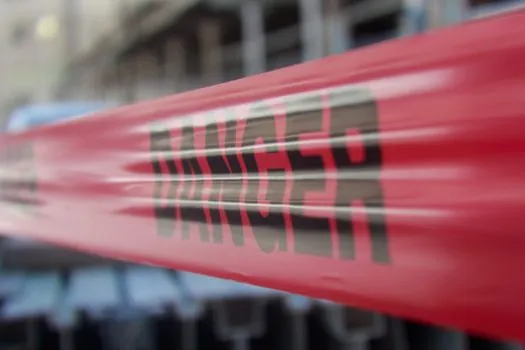
Use red danger tape when the hazard is immediate, life-threatening, or will result in serious injury if the boundary is crossed: open excavations deeper than the standard guardrail threshold, suspended or overhead load lifts, confined-space entries, exposed energized electrical parts above 50 V, chemical or biological spills, and structurally unstable surfaces [S3][S4][S5]. Use yellow caution tape for potential or moderate hazards: cable and hose crossings on the floor, freshly mopped or waxed floors, light overhead work with no suspended load, low-headroom clearances, accident-scene cordons by emergency response, and any area where the worker needs to be alert but authorized entry is expected [S3][S4][S5][S7].
Use orange warning tape when the hazard is between yellow and red, typically active construction zones and machine-operating envelopes where a strike or entanglement is possible but not necessarily fatal [S3]. Use blue or green tape only for informational and safety-equipment marking; do not substitute them for caution or danger. As a final check, confirm that the tape carries a legible repeated signal word ("CAUTION" or "DANGER"), matches the underlying hazard class, and is supported by a posted sign listing the hazard, point of contact, and contact number [S4]. For broader project planning, site safety leads running large temporary works or demolition should cross-reference the construction machinery and equipment exclusion zones and the lighting equipment and electric lamps layout so the caution and danger perimeters do not overlap sight lines or emergency egress.
Either would shift the federal-vs-voluntary line that currently keeps orange, blue, green, and purple in the ANSI-only column.
See also our earlier report, Busbar and Breaker Temperature Monitoring: Sensors, Standards, and 2026 Field Data.