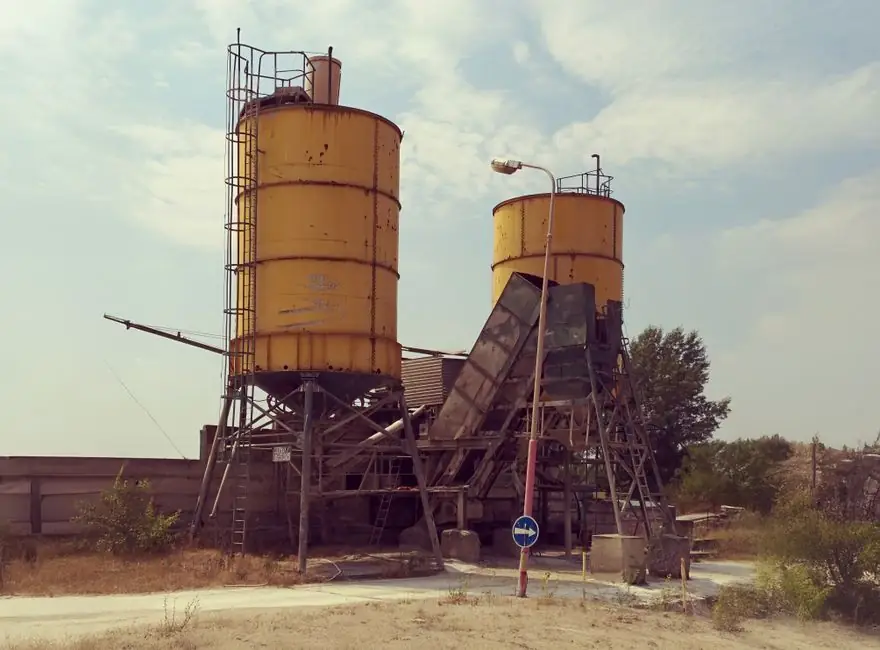
Cement plants are punishing environments for electric linear motion, with airborne raw-meal and clinker dust, ambient temperatures up to 60°C near preheater towers, and constant vibration, so spec gates start at 6,000 N minimum thrust, IP65+ sealing, and a stainless or hard-anodized extension rod, not at brand selection [S2][S5].
Selection of an electric linear actuator for kiln damper, cooler, bag-filter, and bucket-cone duties is a load-and-environment calculation, not a catalogue browse: most cement-plant valve and damper applications demand 6,000 N peak thrust, 100-300 mm stroke, 24V DC supply (with 12V accepted on light gate duties), and IP66/IP69K protection for wash-down zones [S1][S2][S5].
Force calculation with safety factor
Working load should be multiplied by a 1.5-2x safety factor before sizing an actuator, the standard cement-plant practice: a 500 kg kiln-damper load equals 4,905 N, and at 1.5x that becomes 7,358 N, so the next standard rating up (8,000 N, "C-series" heavy-duty) is the floor, not the 6,000 N B-series [S3]. Industrial Type-B actuators are commonly rated 6,000 N (600 kg / 1,300 lbs) at the slowest 3.5 mm/s speed, with 8,000 N Type-C and 12,000 N Type-F tiers above for heavier damper and louver duties [S2][S1].
Duty cycle and thermal limits
Continuous-on cement applications such as cooler under-grate dampers and blending-bed gates typically need 25-100% duty-cycle rated units, while intermittent damper modulation can run 10-25%; exceeding either rating trips the internal thermal switch and stops the line, a common field failure mode [S5]. For continuous positioning, ball-screw actuators with efficiency above 90% outperform ACME/trapezoidal screw units, which rely on sliding friction and self-lock but generate more heat under cycle [S5].
Stroke, speed, and synchronous control

Stroke options from 10 mm to 2,000 mm cover almost every damper, gate, and louver geometry on a cement line, with 100 mm, 150 mm, 200 mm, 300 mm, and 600 mm as the most commonly stocked sizes [S2][S4]. Speed is inversely tied to force: an industrial 6,000 N unit runs 3.5 mm/s at full load and up to 38 mm/s unloaded, so high-cycle blending gates can finish a stroke in roughly 8 seconds while a high-thrust damper takes 40+ seconds [S2]. Multi-actuator gates, such as a 2-leaf or 4-leaf cooler damper, are typically driven by one-control-eight synchronous control kits (24V/50A PSU, 0.51 A no-load per actuator at 24V, Hall-sensor feedback) so the leaves stay in plane [S4].
Environment: IP rating, materials, corrosion
Preheater, cooler, and packing-zone installations should specify IP66 or IP69K housings (dust-tight + high-pressure water-jet resistant), while indoor MCC and control-room mounts can accept IP54-IP65 [S5]. Where raw-meal or cement dust settles on the rod, stainless-steel extension tubes and aluminum-alloy outer housings (Type-A6 stainless or Type-B industrial with hard-anodized rod) outlast painted carbon-steel by years, and 304/316 grade is widely offered for outdoor and wash-down service [S1][S2]. Shaft diameter on industrial Type-B is 24 mm with 10 mm front/rear mounting holes, a useful interchangeability fact when retrofitting legacy damper hardware [S4].
Comparison: ACME vs ball-screw vs rod-style options
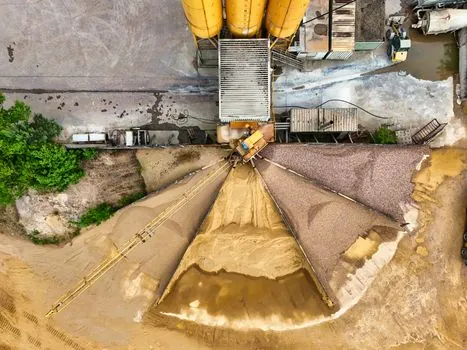
For typical cement-damper and gate duties, the practical trade-off between the three common architectures lines up as follows: ACME/trapezoidal screw units give self-lock (important for vertical damper holds) and lower unit cost, but top out near 20,000 N with 10-25% duty and IP66/IP69K; ball-screw units deliver above-90% efficiency and 25-100% continuous duty for high-cycle blending gates, but lose self-lock unless a brake is added; rod-style 12V/24V DC actuators (Type-A through Type-F) cover 100 N to 12,000 N at IP54-IP65, suiting low-cost, low-cycle, indoor damper retrofits, and are the most widely stocked [S1][S2][S5]. Stroke range is 10-300 mm for rod-style, 50-800 mm for ball-screw, and 100-1,000 mm for heavy ACME units [S5].
Where electric linear actuators win in cement
Electric rod actuators replace hydraulic and pneumatic systems on most new cement-plant damper and louver builds because they cut energy use (no compressor or hydraulic packer running), remove oil-leak fire risk near the kiln, and integrate directly with PLC/DCS position feedback via built-in Hall, potentiometer, or reed-switch sensors [S2][S6]. A well-specified industrial unit integrates a dimensionally stable frame, a rotary-to-linear drive matched to the duty, a low-friction linear guide that supports the load for the actuator's full service life, and a feedback element (Hall or potentiometer) for closed-loop position control [S6]. For OEM system builders and field retrofitters, the same selection logic that governs mining linear actuator selection applies: force first, then IP, then duty cycle, then feedback protocol.
Selection checklist and watch-outs
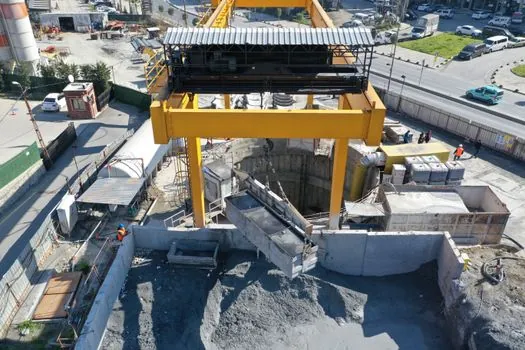
Run the load-plus-safety-factor calculation first (500 kg × 9.81 × 1.5 ≈ 7,358 N, so pick the 8,000 N Type-C, not the 6,000 N Type-B), confirm stroke against the damper's geometric travel with at least 10% mechanical margin, match the supply (24V DC is the cement-plant default; 12V only on light gates), and verify the IP rating against the zone's dust and wash-down exposure [S1][S2][S3]. Watch for two field traps: specifying no-load speed as the working speed (load slows the rod materially at 6,000 N), and ignoring ambient temperature near preheater and clinker-cooler exhausts, where standard grease and motor windings derate above 60-65°C [S2][S5]. For higher-precision kiln-feed slide gates, the ball screw spec map for agricultural and industrial machinery covers the lead-vs-accuracy-vs-sealing decision tree that overlaps with cement slide-gate practice. Trackable signals to watch on the next sourcing cycle: vendor published IP69K validation reports for full stainless Type-A6 rod-style units, and 24V brushless-DC options above 8,000 N that cut thermal trips on continuous-duty blending gates [S5][S1].
Component reference pages worth checking: linear bearing.