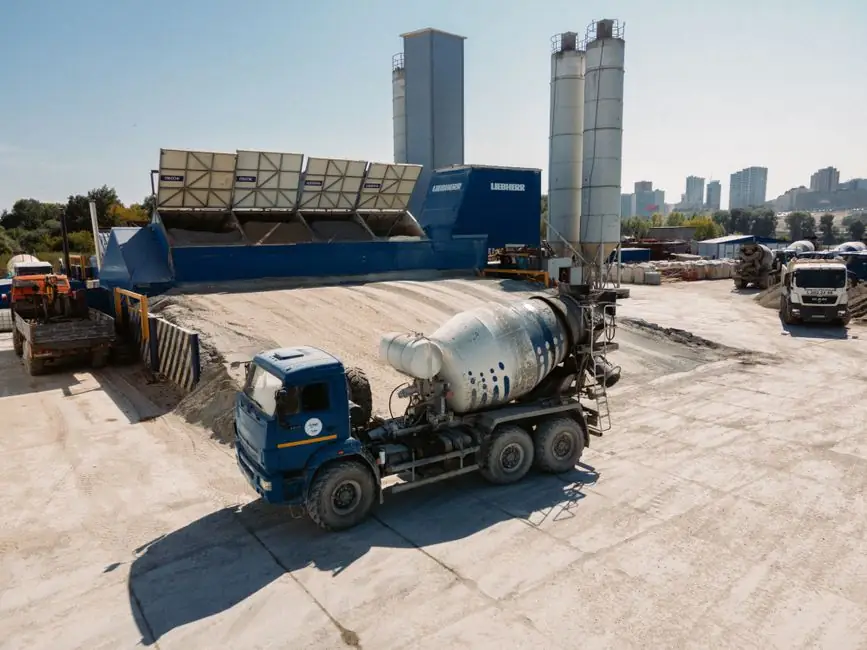
For greenfield or retrofit cement lines, a variable speed drive must be specified against the kiln's torque curve, the motor efficiency class, the dust/temperature ambient, and the plant's harmonic-mitigation budget, not against nameplate kW alone [S1].
Cement is now one of the named target verticals for the large-scale VFD market, alongside mining, oil and gas, petrochemical processing, and large pumping systems, in both air- and liquid-cooled product classes [S3]. The main-shaft motor on a rotary kiln is the most punishing single load: kilns 100 m or longer rotate at 0.5-5 rpm, demand 3-5x running torque to break static friction, and run continuously at 60-80% of rated capacity where partial-load efficiency and not full-load efficiency decides the energy bill [S1].
Load taxonomy: four motor duty profiles drive four VFD selections
Specifying a single VFD family across a cement plant is the most common mistake buyers report: kiln main drive, raw mill, cement mill, and ID/FD fans have fundamentally different torque-speed curves and braking demands [S1][S2].
Kiln main drive is constant-torque with extreme starting overload (3-5x) and slow speed (0.5-5 rpm through a heavy-duty gearbox), so it needs a low-voltage or medium-voltage VFD with regenerative braking, vector or direct torque control, and harmonic filtering sized for the worst-case locked-rotor current [S1]. Raw mill and cement mill are constant-torque but with high inertia and frequent inching; they tolerate standard AC drives but benefit from regenerative units to handle deceleration energy from the large grinding mass [S1]. ID fans, FD fans, and raw-mill separators are quadratic-torque (affinity-law) loads, where a VFD on a 0.76 MPa compressed-air loop or a kiln-preheat fan typically pays back fastest because power scales with speed cubed [S2]. Conveyors, bucket elevators, and packing-line motors fall into constant-torque with low starting overload, where any general-purpose industrial drive suffices [S4].
Motor class selection: IE3, IE4, IE5 SynRM, or PM at 60-80% load
Pairing the VFD to the motor efficiency class is now a documented specification step, because kiln drives spend most of their life at 60-80% of rated capacity where the gap between IE3 and IE5 widens [S1].
Published efficiency values at 50% load are the relevant numbers for a kiln duty: standard induction (IE3) drops to 91.2% at half load and 0.85 power factor; premium induction (IE4) holds 93.8% at 0.88 PF; synchronous reluctance (SynRM, IE5) holds 95.2% at 0.95 PF; permanent-magnet (IE5) reaches 96.0% at 0.97 PF [S1]. For a slow-running kiln main drive, SynRM offers the best efficiency-per-dollar at partial load without the demagnetisation risk of PM motors in high-ambient conditions, and pairs cleanly with vector-controlled VFDs [S1]. For high-speed mill and fan motors, PM IE5 wins on frame size and power density, provided the drive is rated for the motor's back-EMF and the inverter has proper sine-filter or dU/dt protection [S1]. Buyers should also confirm the VFD's motor-control algorithm (V/Hz, sensorless vector, or closed-loop vector with encoder) matches the chosen motor class, not just the kW rating [S4].
Ambient, enclosure, and cooling: where the VFD is mounted decides the IP and the coolant
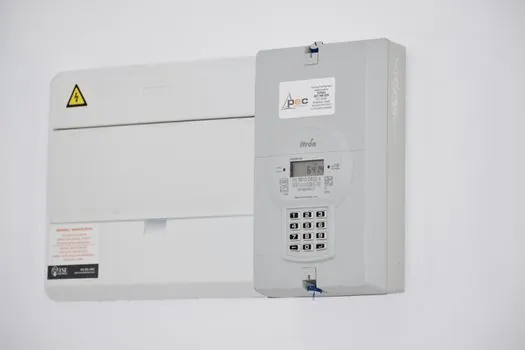
Cement plants punish VFDs with dust, ambient heat, and voltage-quality problems; the enclosure rating and cooling architecture are not optional extras [S1].
For raw-mill and preheater-tower electrical rooms, where summer ambient regularly exceeds 40 deg C and dust loading is high, a wall-mounted or cabinet-integrated liquid-cooled VFD reduces volume by roughly 50% versus an air-cooled unit of the same rating, supports both horizontal and vertical mounting, and can derate only above 46 deg C when filled with low-GWP refrigerants such as R1234ze or R513a [S5]. For outdoor or canopy-mounted fan VFDs in desert or tropical cement plants, IP54 enclosures with 3C4-conformal-coated boards (per IEC 60721-3-3 chemical/biological exposure classes) are the documented minimum, since dust ingress and condensation are the two dominant field-failure causes [S5]. Air-cooled VFDs remain acceptable for clean control-room installations but require derating above 40 deg C and a clearance envelope for filter maintenance, which must be priced into the bid [S5]. The same 110-400 kW liquid-cooled platform that suits a fan VFD also covers pump controllers in the raw-water and dust-suppression loops, which lets buyers consolidate spares across a single plant [S5].
Harmonics, regeneration, and grid compliance
A cement plant's main substation feeds large thyristor-driven DC drives, slip-energy recovery systems, and modern VFDs all at once, so harmonic mitigation is a specification gate, not a footnote [S1].
Active front-end (AFE) or low-harmonic VFDs with integrated LCL filters typically achieve a total demand distortion under 5% at the PCC, satisfying IEEE 519 limits at the point of common coupling without external multi-pulse transformers [S1]. For kiln main drives and large mill drives that decelerate high-inertia loads, regenerative VFDs feed braking energy back to the medium-voltage bus instead of dumping it into brake resistors, which both reduces heat load in the electrical room and gives the plant an additional 5-10% energy recovery on stop-and-inch cycles [S1]. Buyers should also specify the communication protocol stack up front (PROFINET, PROFIBUS, EtherNet/IP, or EtherCAT) so the VFD drops directly into the plant DCS without a gateway, and should require built-in condition-monitoring for capacitor bank health, fan runtime, and IGBT junction temperature to feed the plant's predictive-maintenance system [S1][S4].
Procurement reality: market size, vendor concentration, and lead time
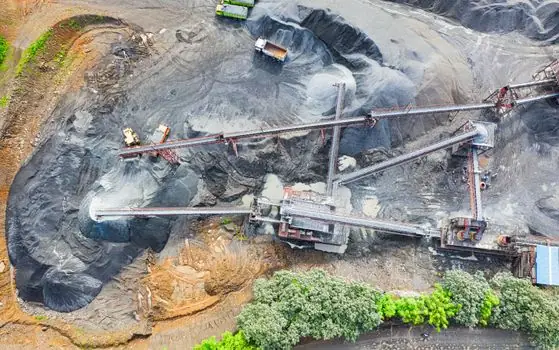
The large-scale VFD market is consolidated enough that buyers should expect a known vendor shortlist rather than an open tender, and supply-chain conditions now govern delivery dates more than price [S3].
Global large-scale VFD market value reached USD 2.2 billion in 2025 and is forecast to reach USD 4 billion by 2035 at a 6% CAGR, with Asia Pacific as the largest region and North America and Europe as the fastest-growing [S3]. ABB led with over 10% market share in 2025, and the top five players (ABB, Siemens, Schneider Electric, Rockwell Automation, Yaskawa) collectively held 34% of the market, so most cement-plant tenders will receive bids from at least three of these five [S3]. Industrial motor systems consume roughly 45% of global electricity, which is why regulatory pressure for variable-speed control is one of the three named structural drivers of this market (alongside industrial infrastructure investment and emission-reduction mandates) [S3]. Main-shaft kiln VFDs above 1 MW commonly run 16-26 week lead times even from the top five, so procurement decisions made 6-9 months before a planned outage are the norm; buyers should confirm the vendor's local service footprint and stocking policy on power-cell spares before signing [S3][S5].
Commissioning and life-cycle verification
The commissioning checklist, not the data sheet, decides whether a VFD delivers its promised 15-25% energy savings and 40% gearbox-life extension, and it should be written into the purchase contract [S1].
A documented commissioning sequence covers four steps: (1) full-cycle torque and speed profile capture with power-quality analysers, (2) motor-type verification against the actual nameplate, (3) VFD integration including harmonic filter, regen unit, and DCS protocol hand-shake, and (4) no-load and full-load tests with VFD parameter tuning for optimal efficiency and torque control [S1]. For new cement-plant builds, this sequence should be run before the kiln is charged, with a baseline kWh-per-ton-of-clinker reading that becomes the warranty reference for the VFD supplier [S1]. For retrofits, the same sequence establishes the pre-conversion baseline so the energy-savings claim is auditable rather than modelled. A variable-area flowmeter on the cooler exhaust and a special cement recipe log on the mill are useful cross-checks because they isolate whether throughput changes (not VFD performance) are driving the energy numbers. Process engineers running these retrofits should also be aware of how cement and concrete production-line VFDs differ from mining duty, where dust, shock, and hazardous-area classifications push the spec toward a different platform entirely [S1][S2][S3].
Track three signals over the next two quarters: (a) whether the top-five VFD vendors publish updated 110-400 kW liquid-cooled platforms with R1234ze or R513a refrigerants, since the EU F-Gas phase-down continues to push alternatives; (b) whether IEEE 519 compliance is being demanded at the PCC contractually on new Asian cement orders, not just European ones; (c) whether any second-tier Chinese VFD maker (such as STEP, with a stated 500,000-unit annual capacity) wins a reference order on a kiln main drive above 1 MW, which would be the first credible challenge to the top-five in this segment [S3][S5].
See also our earlier report, Die casting mold selection for electronics housings: alloy, tolerance, and shot-life gates.