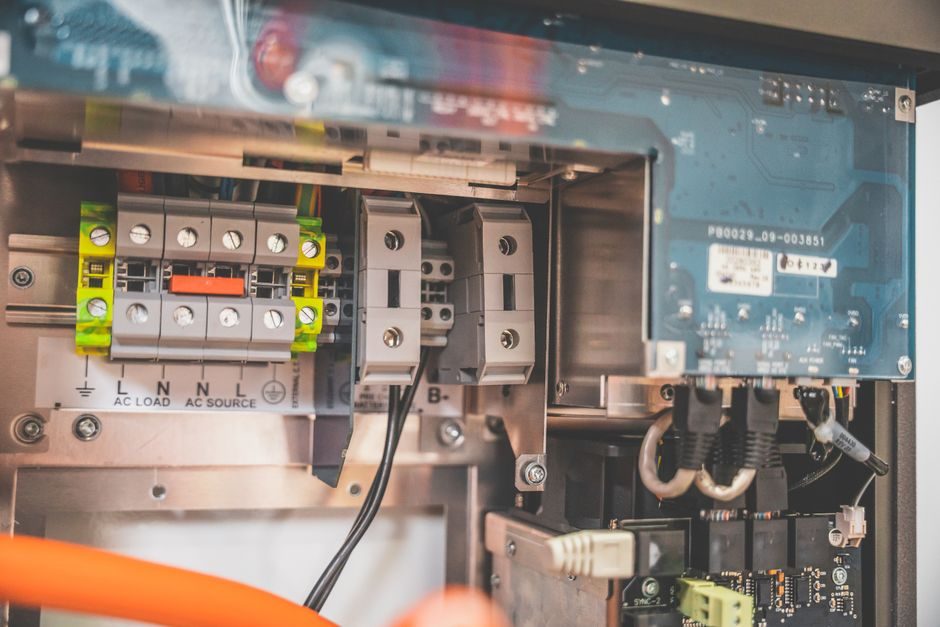
Four evidence pillars are non-negotiable: a named ceramic chemistry (ZrO2, Si3N4, SSiC or Al2O3), an ISO 9001:2015 quality-management certificate, an ISO 14001:2015 environmental mark, and an ISO 45001:2016 occupational health and safety mark [S6].
The supply base for full-ceramic and hybrid-ceramic ball bearings now lists full-ceramic lines in ZrO2, Si3N4 and SSiC, plus hybrid 440 / 304 / 316 stainless steel races paired with Si3N4 or ZrO2 balls as standard catalogue options [S1]. Miniature 4×7×2.5 mm Si3N4 full-ceramic units with SGS paperwork are stocked in the consumer channel [S5], but MCC build applications need industrial-grade evidence trails — not fidget-spinner data sheets.
Why Material Chemistry Drives the Whole Certificate Chain
Zirconia (ZrO2) and silicon-nitride (Si3N4) are the two default race/ball choices for industrial ceramic bearings, with sintered silicon carbide (SSiC) and alumina (Al2O3) used where chemical attack or extreme wear is the dominant failure mode [S1]. Si3N4 typically wins on fracture toughness and thermal-shock resistance, ZrO2 on corrosion and electrical insulation, SSiC on hardness and chemical inertness, Al2O3 on cost and dielectric strength.
Each chemistry has its own standards chain: ZrO2 ball tolerances often reference ISO 3290 grade 3/5, Si3N4 thermal-shock ratings are quoted against ASTM E1461 (laser flash diffusivity) figures, and SSiC chemical compatibility is judged against ISO 28706 or supplier datasheets. Without a named chemistry on the test report, the certificate is functionally incomplete — auditors will treat the lot as "unidentified ceramic" and reject it for mcc cabinet builds that sit under IEC 61439-1 type-test programs.
Core Documents Auditors Actually Want to See
The minimum paper-trail stack for an MCC-resident ceramic bearing is: (1) material declaration with chemistry and density values, (2) dimensional inspection to ISO 15 or ISO 492 as applicable, (3) ISO 9001:2015 QMS certificate in scope of "bearing manufacture", (4) ISO 14001:2015 EMS certificate, (5) ISO 45001:2016 OH&S certificate [S6]. Suppliers also commonly carry ISO 9001:2008 in legacy paperwork while transitioning, so both versions may appear in a multi-year file [S6].
Where the cabinet sits in a hazardous-area plant (Zone 1/21 or Class I Div 2), two more marks come into scope: ATEX 2014/34/EU for the equipment group, and IECEx via the IEC 60079 series for non-European jurisdictions. A typical industrial supplier's Honour page lists ISO 9001:2015, ISO 14001:2015 and ISO 45001:2016 together as a triple stack [S6], which is the audit-friendly configuration.
Dimension, Tolerance and Test-Report Numbers Buyers Should Demand

For deep-groove ball bearings in the 608 / 620 / 626 size family — the most common sizes that turn up in MCC fans and small pumps — bore tolerance is P0 / P6 / P5 / P4 / P2 per ISO 492, with ABEC-1/3/5/7/9 the North American equivalent. Radial runout is typically ≤ 10 µm for P6 (ABEC-3), dropping to ≤ 4 µm at P4 (ABEC-7). V10 vibration and noise limits follow ISO 15242. [S1]
For miniature 4×7×2.5 mm full-ceramic bearings used in low-load MCC panel fans, ball grade is usually Si3N4 G3 / G5 (≤ 0.3 / 0.5 µm sphericity deviation) and the SGS inspection certificate covers dimension, visual and a basic radial-load rating, not a full dynamic-life calculation [S5]. Push back if a supplier offers only a commercial invoice and a sales-spec PDF; the control cable loom and the two-hand control wiring loom in the same cabinet will both be audited to IEC 60204-1, and the bearing stack must clear the same documentary bar.
Common Failure Points at MCC Audit
Three rejection patterns dominate. First, the certificate scope does not name "bearing manufacture" — it covers "general trading" or "industrial components", which an inspector can call out in a single line. Second, the lot has no traceable heat number or batch ID on the box label, breaking the link between the test report and the part. Third, the chemistry on the report says "ceramic" without specifying ZrO2 / Si3N4 / SSiC / Al2O3 — auditors treat this as unverified. [S1]
A fourth, subtler failure: the RoHS / REACH declarations are missing. Even though ceramic bearings contain no lead solder and no PBB/PBDE flame retardant, RoHS 3 (EU 2015/863) and REACH SVHC ≤ 0.1 % w/w are still requested on incoming-goods paperwork across most EU and US OEM supply chains. Without them, the MCC end-item can ship, but the bearing lot is held in quarantine until the supplier re-issues the declarations.
Ceramic vs Hybrid vs Steel — Decision Map for MCC Applications
Use full-ceramic (ZrO2 or Si3N4) when the bearing must be electrically insulating (drive-end of a VFD-fed motor, encoder input shaft) or chemically inert (panel-cooling fan in a wash-down MCC). Use hybrid (440 / 316 stainless races, Si3N4 balls) when the housing is steel and you need electrical isolation of the rolling element only, at lower cost than a full-ceramic set. Use 440C or AISI 316 stainless bearings in non-insulated, non-corrosive spots where ceramic is over-spec [S1].
Cost-wise, 608 full-ceramic skateboard bearings sit in the US$ 3.30 – 3.50 range per piece at 100-piece MOQ [S6]; miniature industrial Si3N4 4×7×2.5 mm with SGS paperwork sits lower; engineered 6204-2RS hybrid with full ISO 9001:2015 documentation typically lands several times higher.
Standards Reference Card
ISO 9001:2015 — quality management system, scope must include bearing manufacture [S6]. ISO 14001:2015 — environmental management [S6]. ISO 45001:2016 — occupational health and safety [S6]. ISO 3290 — rolling-bearing balls, dimensional and grade. ISO 492 — radial ball bearings, dimensional tolerances. ISO 15242 — vibration measurement. ATEX 2014/34/EU — equipment for explosive atmospheres. IEC 60079 series — electrical installations in hazardous areas. RoHS 3 (EU 2015/863) and REACH SVHC (EC 1907/2006) — substance compliance. NACE MR0175 / ISO 15156 only matters when the MCC sits on a sour-service oil & gas site and the bearing contacts the process atmosphere — usually it does not.
A "Design and Manufacture of Bearings" line is acceptable; "Sales of Industrial Parts" is not. For context on the broader distribution cabinet certification chain, the same CB-accreditation rule applies to the enclosure's IEC 61439-1 type-test report.
Quick Pre-Ship Checklist for the Buyer
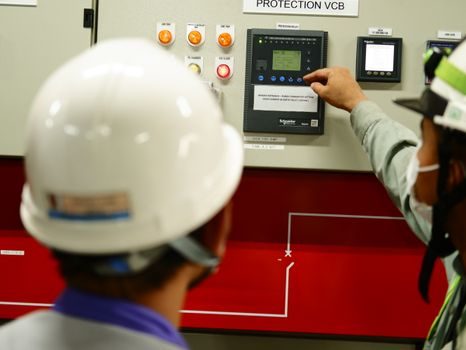
Before signing the PO: confirm chemistry is named (ZrO2 / Si3N4 / SSiC / Al2O3), confirm ISO 9001:2015 + ISO 14001:2015 + ISO 45001:2016 are all current and in scope, request RoHS 3 + REACH SVHC declarations, and for hazardous-area MCCs confirm ATEX / IECEx coverage of the parent assembly. For control valve actuator linkages sharing the same panel, apply the same checklist in parallel — the auditor will not differentiate bearing lots from actuator lots when they sit inside one cabinet. [S1]
Track these signals over the next procurement cycle: (a) the supplier's ISO 9001:2008 paperwork should phase out entirely in favour of ISO 9001:2015 only [S6]; (b) the RoHS 3 declaration will need a refresh as the four新增phthalate substance list expands; (c) any new ZrO2 versus Si3N4 pricing shift will signal a raw-powder supply change worth probing before locking the next 12-month forecast.
Background reading: Sandwich Panel Selection Guide: Core, Steel, Fire, Cert.