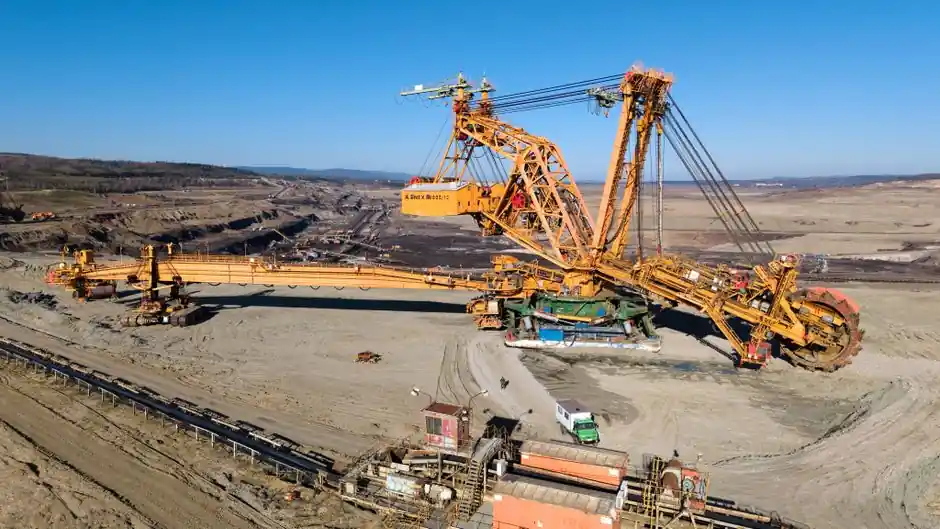
Hybrid ceramic ball bearings pair silicon nitride (Si3N4) or zirconia (ZrO2) rolling elements with steel raceways, cutting centrifugal load by roughly 60% versus all-steel sets and dropping thermal expansion to about 25% of steel, a clear fit for mining conveyor idlers, crusher drums, and slurry pump shafts where shock load and contamination coexist [S2].
Process engineers specifying for iron-ore, copper, coal, and aggregate plants should anchor selection on temperature, contamination, electrical-isolation, and dry-run tolerance, then match the material to the duty, because 52100 chrome steel starts softening above 150°C and standard mineral grease oxidizes past 120°C, both of which mining service routinely exceeds [S2].
Why Mining Duty Stresses Standard Bearings
Mining equipment combines three load patterns that punish conventional bearings: high radial shock from crusher and shovel feeds, abrasive particle ingress from dust and slurry, and sustained heat from gearboxes, motors, and hot-ore conveyors. Standard 52100 chrome steel retains hardness only up to about 150°C, beyond which load capacity and fatigue life both erode quickly [S2].
Conventional mineral greases oxidize and carbonize above 120°C, forming deposits that abrade raceways and accelerate spalling, while polymer or stamped steel cages deform or melt in the same window [S2]. The combination of lost hardness, lost lubricant film, and lost cage integrity is the dominant failure mode in mining gearbox and conveyor idler bearings, which is why hybrid ceramic sets with high-temperature cages and solid lubricants are moving from aerospace and electric motors into heavy industry [S1].
Material Options: Si3N4, ZrO2, Al2O3, and Hybrid Builds
Ceramic ball bearings are most commonly built from silicon nitride (Si3N4), zirconia (ZrO2), or aluminum oxide (Al2O3), with Si3N4 dominating high-speed, high-load duties because of its fracture toughness and roughly 60% lower density than steel [S1][S2]. ZrO2 is specified where corrosion resistance and electrical insulation outweigh ultimate speed, while Al2O3 serves lower-load, lower-cost applications where its hardness and chemical inertness are sufficient [S1].
For most mining service, a hybrid build (ceramic balls, steel inner and outer rings) is the practical choice: full-ceramic sets are reserved for chemically aggressive, electrically sensitive, or very high temperature niches because full-ceramic rings carry a cost and brittleness penalty that rarely pays back in bulk conveyor or crusher service.
Temperature, Lubrication, and Cage Selection
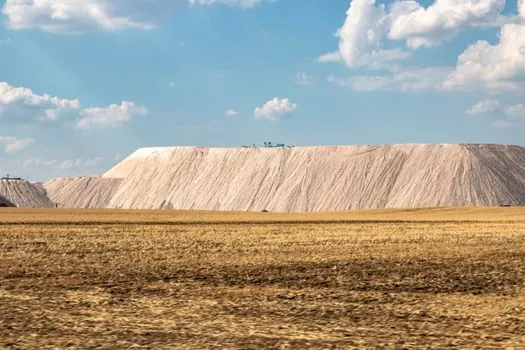
Bearings are classed as high-temperature once continuous service exceeds 120°C, with medium-high covering 120–250°C, high temperature 250–500°C, and extreme temperature above 500°C up to 1000°C+ in specialized ceramic variants [S2]. At 200°C a standard bearing may retain only 5–10% of its room-temperature L10 fatigue life, so any mining gearbox or hot-ore idler running above 150°C needs an explicit high-temperature design [S2].
Lubrication and cage material move together: PFPE (perfluoropolyether) greases cover roughly 200–260°C, while solid lubricants such as MoS2 or graphite extend dry-run tolerance in kiln-car and conveyor service; PTFE or PEEK cages replace standard polyamide or steel cages above 200°C to prevent cage-driven failure [S2]. For a deeper look at wear-resistant structural ceramics used in adjacent sliding and plain-bearing duties, see industrial ceramic and alumina ceramic.
Contamination, Corrosion, and Electrical Isolation
Ceramic balls are chemically inert to most process water, acidic slurry, and wash-down chemistries, which makes them a strong fit for copper concentrator and tailings pump service where steel balls suffer pitting and premature fatigue. [S1]
Where contamination is unavoidable, specify non-contact or low-contact seals (2RS, 2RSR) matched to a full-fill or tailored-ball complement, and pair hybrid ceramic balls with industrial ceramic retainer options where chemical attack on polymer cages is expected. For rotating equipment mounted near dump-truck wheel ends and haul-truck gearboxes, the same logic applies to plain and spherical-plain bearings; see Spherical Plain Bearing Selection for Wind Power for the comparison framing, even though mining shock loads are a separate envelope.
Decision Matrix: Steel vs Hybrid Ceramic vs Full Ceramic
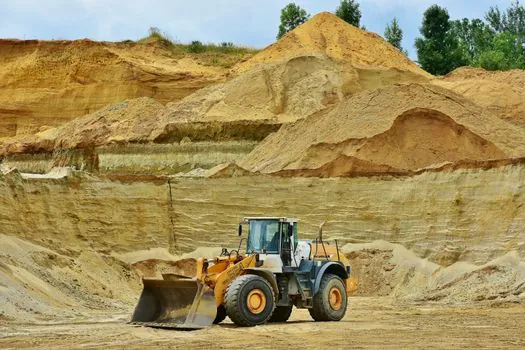
On the four criteria that drive mining selection, steel 52100 is cheapest but loses hardness above 150°C and is vulnerable to corrosion and electrical damage; hybrid Si3N4 (ceramic balls, steel rings) is the mainstream mining choice, offering 60% mass reduction, 25% thermal expansion versus steel, electrical isolation, and corrosion resistance at roughly 2–4× the steel price; full-ceramic sets (Si3N4 or ZrO2 rings and balls) win on chemical inertness and dry-run tolerance but trade higher cost and lower fracture toughness, so they are reserved for aggressive acid, food, or semiconductor duty rather than bulk crushing [S1][S2].
For the broader mining-haul context, mining dump truck drivetrain bearings follow the same hybrid-ceramic logic once duty temperatures exceed 150°C.
Verification Signals for Specifying Engineers
Trackable signals worth monitoring through the rest of 2026: published ISO 15 and ABMA STD-20 updates for high-temperature rating factors, supplier release of high-temperature hybrid kits sized 6204 through 6330 (the dominant mining conveyor and gearbox envelope), and any mining-OEM field reports on VFD-bearing current mitigation after a ceramic-ball retrofit. For plant-floor equipment used in adjacent duties such as Core Making Machine Selection for Agriculture Machinery or heavy maintenance gear, the same temperature, contamination, and isolation logic applies, even where the loading profile is gentler.