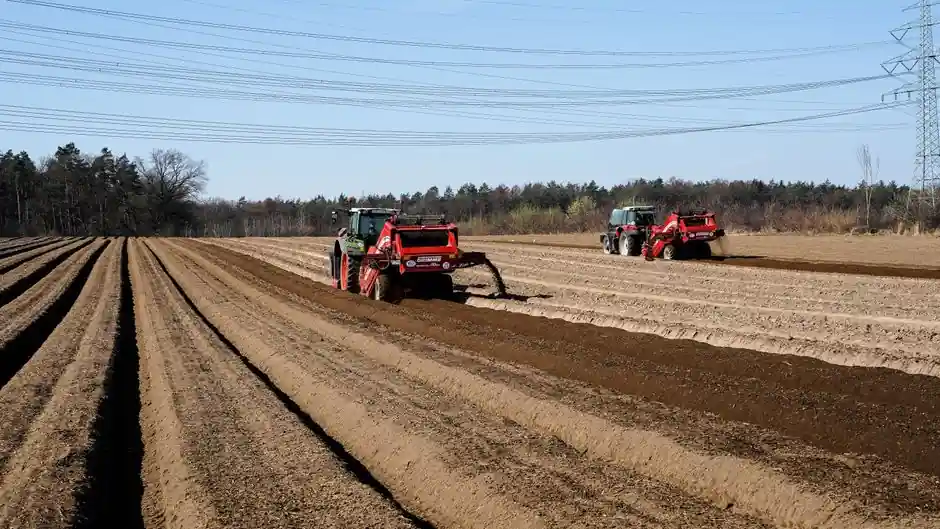
Agriculture-machinery castings span a 1–80 kg part-weight band and a 200–20,000 piece annual volume band, which forces the choice of core-making process into three lanes: cold-box cores above 500 parts per year, shell cores for mid-volume housings, and hot-box cores for thin-section gearbox covers [S3].
Process choice is anchored to the same design review used for chassis and driveline work, where HSLA steel grades and Tier 4 Final / Stage V engine-bay constraints are validated against finite-element models before any metal is cut [S2].
Where Core Making Actually Sits in an Ag-Machinery Bill of Materials
A typical 200–400 hp tractor or combine uses 18–35 cast-iron or ductile-iron components, of which 9–14 are core-bearing: engine block, gearbox housing, differential case, flywheel housing, axle supports, wheel hubs, and plough/share inserts [S3].
Process selection gates on three hard numbers: annual volume per part number, core weight (0.3–25 kg), and minimum wall section (4–6 mm for thin-section gear covers, 12–20 mm for gearbox cases) [S3].
At under 500 parts per year a shell-core shooter with heated platen 200–260 °C and resin-coated sand still beats a cold-box line on capital payback, because the dosing and amine-gas train are not amortised across low volume.
Process Comparison: Cold-Box, Shell, Hot-Box Against 2026 Specs
Across the four main options the decision rests on four criteria, and a structured comparison helps the purchasing and foundry team agree on the same page.
Cold-box (PU resin + amine gas): the dominant process above 500 parts per year and 5 kg core weight. Tolerances of ±0.3 mm and surface Ra 6.3–12.5 µm are standard. Tooling cost USD 8,000–25,000 per core box, cycle time 30–90 s per core, amine gas consumption 30–60 g per kg sand [S2].
Shell (resin-coated sand + heated pattern): best for 200–8,000 parts per year at 0.3–6 kg core weight, plus a clean 30–60 s cure and no amine gas handling. Tolerances ±0.5 mm, surface Ra 12.5–25 µm, tooling USD 3,000–10,000 per box [S3].
Hot-box (furan/phenolic resin + heated core box): used for thin-wall gear covers 4–6 mm, 1–4 kg core weight, volumes 1,000–20,000/yr; tighter cure window and higher scrap rate on start-up push many plants toward cold-box for the same volume [S3].
For an in-house coding/box-repair loop, a dedicated coding machine station is a common side-spec, but the cold-box core machine itself is the throughput bottleneck on most ag-machinery foundry lines.
Volume Bands and Tooling Payback for Ag Castings
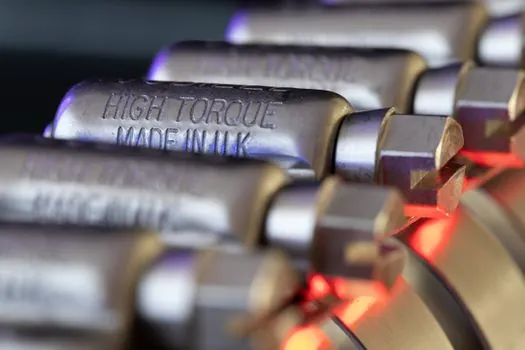
Annual volume drives tooling payback directly: a cold-box core box pays back in 10–14 months at 1,500 parts per year, 18–22 months at 600 parts per year, and is uneconomic below 350 parts per year [S2].
Shell core boxes pay back in 6–9 months at 800 parts per year, and remain viable down to 200 parts per year because resin-coated sand and a single heated platen eliminate the amine scrubbing and amine-purge interlocks of a cold-box cell [S3].
Hot-box sits between the two: payback 8–12 months at 1,200 parts per year, and scrap rates of 4–8% on cold-start make it a poor match for seasonal ag castings that run 6–9 months per year [S3].
The same payback logic is now being applied to ag castings as OEMs shift from unit sales to software and service revenue: customers want the existing fleet retro-fitted, not replaced, and the foundries that supply core sets for retro-fit part numbers tend to choose shell or core machine cells that hold minimum order quantity around 200 pieces [S5].
Core-Making vs the Rest of the Ag-Machinery Foundry
Outside core making, the ag-machinery design cycle is dominated by chassis FEA, HSLA-steel grade selection, and Tier 4 Final / Stage V after-treatment packaging, with digital-twin tooling reducing physical-prototype cost up to 40% [S2].
Inside the foundry, the same digital-twin logic is migrating to core boxes: simulation of sand flow, gas flow, and cure front is now part of the cold-box and shell-cell quote, especially for the thin-wall 4–6 mm sections used in gearbox and differential housings [S2].
Ag-machinery foundries are also tightening tolerance and surface-finish specs as a knock-on effect of precision-ag retro-fit demand: each 1,000-hour service interval on a GPS-guided tractor implies tighter bearing-seat concentricity, which the core shop must hold before the casting reaches the machine shop [S4].
Selection Checklist for an Ag-Machinery Foundry Buyer
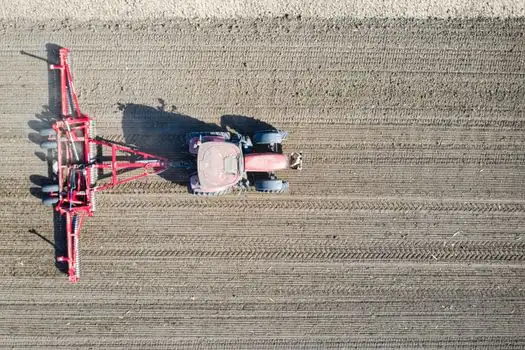
Step 1, classify each part number by annual volume (under 500, 500–5,000, 5,000+) and core weight (under 1 kg, 1–6 kg, over 6 kg); the matrix collapses to shell, cold-box, and hot-box in that order [S3].
Step 2, set the tolerance target (CT7–CT9 per ISO 8062) and minimum wall section (4–6 mm, 8–10 mm, or 12–20 mm) on the drawing before talking to a machine builder, so the cure-time and gas-train numbers are quoted against the same spec [S2].
Step 3, decide on amine-gas handling on site: cold-box cells above 1,000 cores per day usually justify a closed-loop amine scrubber; below that, shell or hot-box cells avoid the gas-handling permit entirely [S3].
Failure Modes and Sourcing Signals to Track
The most common failure on a cold-box ag-machinery cell is amine overfeed at start-up, which cracks the core on stripping; the fix is a PLC-capped gas dose of 30–60 g/kg sand and a 5–10 s purge before ejection [S2].
On shell cells, the failure mode is plate-end overheating at the 200–260 °C setpoint, which burns the resin and shortens tooling life by 30–50%; a thermocouple per zone plus 5–10 °C tolerance is the standard fix [S3].
For shell core machine buyers, the most reliable sourcing signal is the post-2024 retro-fit cycle in the US ag-machinery market, where a USD 50,000 per-tractor retro-fit is more common than a USD 400,000 autonomous-ready replacement and keeps mid-volume core demand high through 2031 [S5].
The comparable spec map for automotive hollow castings follows the same volume-versus-tolerance logic and is a useful cross-check; see Core Making Machine Selection for Automotive Hollow Castings: 2026 Spec Map for the auto-side numbers.
Track the next two nodes: any new US precision-ag retro-fit incentive announced after 2026-08-20 that would lift mid-volume core demand, and any cold-box amine regulation revision that would push buyers from cold-box to shell or hot-box cells.