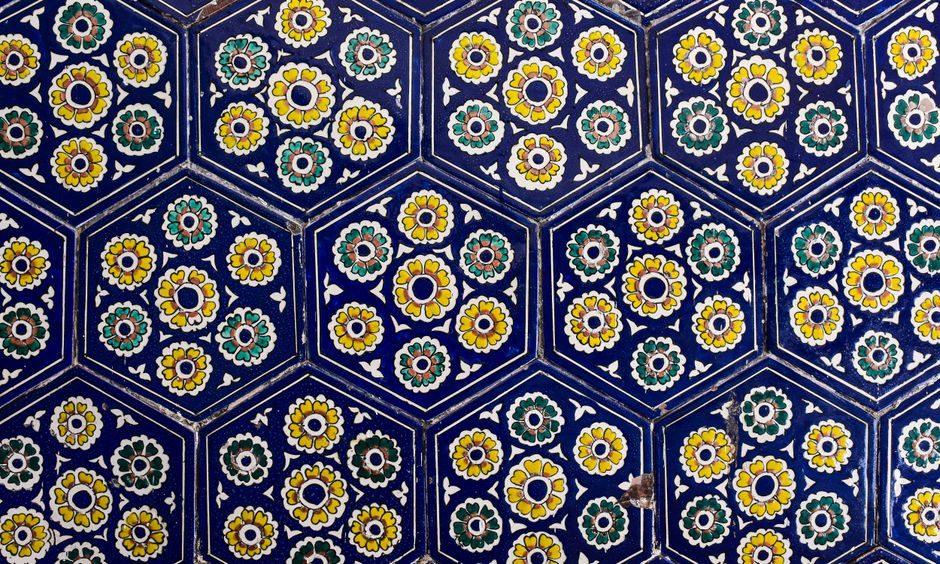
The same matrix classifies forming method (dry-pressed Group A vs extruded Group B), surface (glazed GL vs unglazed UGL), and intended use, so a specifier reads one body group and locks down format, thickness, and PEI abrasion rating in a single step [S1][S5].
Body group and water-absorption cut-offs
Body group classification by water absorption is the primary axis: Group B Ia porcelain holds ≤0.5% by mass, B Ib sits at 0.5–3%, B IIa at 3–6%, B IIb at 6–10%, and B III (non-vitreous) above 10% [S1]. Fujian Nokani Ceramic lists its wall-tile line at 75×300 mm with a glossy glazed finish typical of B III, while its 300×600 mm inkjet stone-look porcelain at US $3.58–3.78/m² FOB is a B Ia product aimed at floor traffic [S2].
Edimax Astor (Italy) offers PTV36-rated 3D-crafted porcelain in 15×15 to 120×120 formats, with slab sizes 120×280, plus 8 mm 160×160 large square tiles, all falling inside the B Ia bracket [S1]. AcquarioDue (Veneto) operates at the artisan end of the same matrix, hand-glazing B Ia/B Ib bodies for custom color runs [S1].
Glazed vs unglazed, polished vs matte
Surface treatment drives both aesthetics and slip performance: a glossy glazed (GL) finish is standard for wall tile and decorative floor lines, while polished porcelain (mechanically lapped after firing) delivers a mirror surface with lower slip resistance unless an anti-slip treatment is added [S1][S5].
Rustic, matte, and high-shade-variation finishes are the practical choice for commercial floors, and Edimax Astor publishes PTV36 options specifically in 3D-crafted technology for that duty [S1]. Geotiles' range enumerates the standard finish set: super polished, polished, semi-polished, gloss, matte, and high shade variation, each tied back to a body group rather than sold as a free-floating cosmetic option [S1].
Format range and thickness
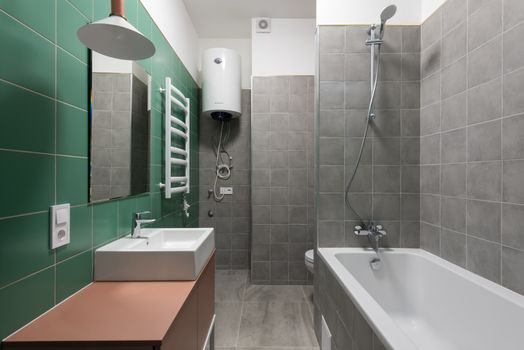
Format size dictates installation method and substrate prep: the wall-tile band runs 5×25 up to 40×120 cm in the Geotiles catalogue, while porcelain floor formats run 15×15 to 120×120 cm, with slabs at 120×280 cm [S1]. Nokani's 200×1000 mm rustic matt wood-look plank at US $4.35–4.55/m² is a long-format B Ia product that demands a more rigid substrate than 300×600 mm standard tile [S2].
Thickness steps with format: 8 mm is achievable for 160×160 cm large square tiles in advanced lines, but standard 600×600 mm floor tile bodies typically sit at 9–10 mm, and the long-format 200×1000 mm rustic plank trends to 8.5–9.5 mm for the same fired body [S1][S2].
Use case matrix: wall, floor, outdoor, commercial
The body group locks the use case: B III is wall-only due to >10% absorption; B IIa/B IIb cover light residential floor; B Ia/B Ib handle commercial and outdoor duty [S1][S5]. Ceramic Tile Center (US) lists outdoor slab stone tile, bath, kitchen, living, laundry, and pool as distinct application lines, each backed by a different body group or surface treatment, not a single 'porcelain' SKU covering all of them [S6].
Adhesive selection scales with body and format: MAPEI (founded 1937, Milan) supplies the polymer-modified cementitious (C2) and reaction-resin (R) adhesive classes that pair with each tile group, including substrate prep, waterproofing, and grout systems used in commercial installations [S8]. The 30-year design life of a porcelain tile body only materialises when the adhesive system matches the substrate and the traffic class.
Comparison: porcelain vs ceramic vs artisan vs SPC

Decision criteria across the four main options a specifier sees: water absorption, typical format, slip/abrasion rating, and price band. Porcelain (B Ia) leads on ≤0.5% absorption, formats 15×15 to 120×280 cm, PEI IV–V with optional PTV36, and a US $3.58–4.55/m² FOB band on bulk Chinese lines [S1][S2].
Artisan Italian (AcquarioDue) trades price for hand-glaze customisation at the same B Ia/B Ib bodies; Edimax Astor adds 3D-craft technology and PTV36 slip options for commercial projects at premium pricing [S1]. Materia SPC sits outside the ceramic matrix entirely as a stone-polymer composite floor, marketed for installation speed over a heavy fired body [S1].
Installation-side signals: what the trade is sourcing
Complete production lines for ceramic tile are now standard equipment offerings, with intelligent conveyor and multi-layer 3D storage structures for continuous kiln feed published as new product modules in 2026 [S4]. Kiln auxiliary equipment, complete glazing lines, and large storage machines are the three sub-systems most commonly quoted alongside the press and kiln, per current supplier catalogues [S3][S4].
Sourcing signals worth tracking in the next 90 days: PTV36 anti-slip rated porcelain stocked in 120×280 slab format, 8 mm large square tile (160×160) production running at scale, and the share of new listings tagged 200×1000 mm rustic matt wood-look at sub-US $5/m² FOB — each of which is a leading indicator of where commercial-spec demand is moving [S1][S2][S4].
For component-level specifications, see ceramic tile, alumina ceramic, and ceramic bearing.
Related analysis: Metal Curtain Wall Panel TCO: 40-Year Lifecycle Cost Stack and Driver Map.