
Cerium oxide is the single most important commercial form of cerium, accounting for approximately 77% of the global cerium market value in 2026, with catalysts at about 38% of end-use demand and glass and optics at roughly 31% [S2].
Two separately published 2026 baselines put the global cerium market between US$156.3 million and US$360 million in 2026, reflecting different scopes; both are dwarfed by an industry analyst projection that total demand for cerium-bearing materials (including cerium IV oxide products alone) will reach US$0.799 billion in 2025 and US$1.567 billion by 2035 at a 6.97% CAGR [S1][S2][S3].
Glass polishing is the largest end use in 2026
Glass and ceramic polishing held 48.6% of the cerium IV oxide market in 2025, the single largest application, with a 7.4% CAGR driven by LCD and OLED display fabs that need 0.5 to 3 μm surface finishes [S3].
Cerium oxide is preferred for precision glass finishing across optics, flat-panel displays, semiconductor wafers and aerospace mirrors, and the chemical-mechanical action works by oxidizing stubborn surface impurities into more easily removable compounds, which is why slurry formulators keep ceria in their core chemistry [S5][S6]. For a deeper look at the abrasive science and the way cerium oxide displaces older rouge and alumina slurries in optical shops, see the industrial solvent selection guide by evaporation rate and flash point for the parallel logic on slurry carrier fluid choice.
Technical-grade cerium oxide at 99.5% purity captured 72.1% of the 2025 grade mix, confirming that high-volume polishing demand still relies on bulk powder rather than ultra-high-purity nano material [S3].
Catalysts and the oxygen-storage mechanism
Catalyst applications represented about 25.4% of cerium IV oxide demand in 2025, the second-largest segment, with three-way catalysts (TWC) requiring roughly 90% NOx conversion as the main pull, and a 7.1% CAGR projected through 2035 [S3].
Cerium oxide is favoured in catalytic converters because of its oxygen-storage capability: the Ce4+/Ce3+ redox pair lets the catalyst buffer oxygen partial pressure during lean-rich cycling, which is why tightening vehicle emission rules continue to support cerium demand even as electric vehicles scale [S1]. A wider view of the supply base sits in the global cement demand and capacity utilization split into three regional tracks in 2026, which covers the same kind of regional-demand concentration problem.
Industrial and heavy-duty engines also rely on cerium-containing catalysts, and in October 2025 researchers at Oak Ridge National Laboratory published work showing improved ceria catalyst performance through engineered oxygen-vacancy structures, a development that points toward higher-value cerium products beyond commodity slurry [S1].
Alloys, metallurgy and the smaller but growing tier
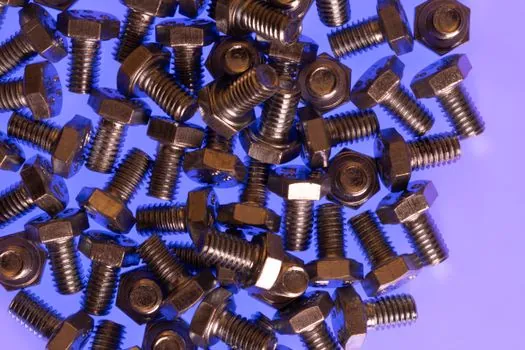
Metal alloying is the fastest-growing application tracked in the cerium IV oxide dataset, although it still sits below glass polishing and catalysts in absolute volume, and uses cerium as a nodulariser in ductile iron, a desulphuriser in steel, and a grain-refining addition in magnesium and aluminium alloys [S3][S4].
Alloys plus a residual "other" bucket make up roughly 31% of the broader cerium market by application, the third pillar after catalysts and glass, and the global cerium market is forecast to grow from US$164.4 million in 2026 to US$276.0 million by 2034 in one of the more conservative published forecasts [S4].
The same properties that make cerium oxide a polishing abrasive (chemical stability, oxygen affinity) translate into metallurgical value: cerium scavenges sulphur and oxygen in molten iron, improving ductility, and acts as a flame-sparks alloying addition in lighter flints and in aluminium alloy grain refinement [S2].
Purity grades and particle-size split
The 2025 purity split for cerium IV oxide was 99.9% at 68.4% of volume (typical 1 to 5 μm particles for general polishing) and 99.999% at 22.1% (sub-100 nm particles for advanced catalysts and CMP slurries), with technical grade (99.5%) controlling 72.1% of the grade mix [S3].
Submicron cerium oxide at 55.2% of particle-size share dominates CMP slurry formulations for 300 mm semiconductor wafers, while nanoparticle cerium oxide at 28.6% of share is the preferred feed for high-activity catalyst supports and for some specialty optics [S3].
High-purity cerium oxide polishing products are sold by companies such as Solvay for precision optics and semiconductor applications, while Treibacher supplies conventional cerium oxide alongside engineered Auerpol polishing materials, and Chinese producers have expanded micronized, nanoscale and application-specific grades [S2].
Regional supply and demand concentration

Asia Pacific accounts for about 43.2% of cerium product market share in 2026 in one dataset, and for 60% of cerium IV oxide demand in 2025, with China controlling about 85% of global cerium supply, and Taiwan, Korea and Japan hosting the largest display and auto-catalyst end markets [S1][S3].
China is at the centre of mining, separation and downstream manufacturing, with China Northern Rare Earth controlling substantial light rare earth mining and separation capacity, while Lynas operates integrated mining and processing across Australia and Malaysia, and MP Materials is expanding separated rare earth production in the United States [S2].
The dominant application of cerium in glass fiber production, where cerium oxide improves UV resistance in specialty glass, overlaps the polishing market, and the same cerium feed that flows into optical polishing also supports the optical glass value chain for high-index lenses and prisms [S1].
Who cerium oxide 2026 demand is for, and who it is not for
Cerium oxide is for: precision optical shops, flat-panel display fabs, semiconductor CMP lines, automotive three-way-catalyst manufacturers, ductile-iron and steel foundries, and specialty lighting equipment and electric lamps using Ce:YAG phosphors. [S3]
It is not a substitute for: alumina or silica slurries in cost-driven architectural glass (where cerium's price premium is not justified), for heavy rare earths such as dysprosium in neodymium-iron-boron magnets, or for platinum-group metals in diesel oxidation catalysts, where cerium only acts as an oxygen-storage promoter on top of the precious metal [S1][S2].
End-user demand by industry in 2025 is led by electronics at 42.3% and automotive at 28.7%, with 300 mm wafer CMP and gasoline direct-injection engine catalysts as the two named demand drivers [S3].
Limitations, constraints and failure modes

Cerium oxide slurry is mildly alkaline and reacts chemically with the work-piece; over-aggressive polishing can leave haze on soft optical glass, and recycled slurry loses cut rate as fines saturate, so most precision lines run with single-pass or controlled reclaim rather than open-loop reuse [S6][S7].
Supply concentration is the dominant macro risk: with Asia Pacific at 60% of demand and China at roughly 85% of supply, any export-quota tightening, separation-line outage or environmental enforcement action in Inner Mongolia or Sichuan can move the global cerium price within weeks [S2][S3].
Technically, cerium oxide's Ce4+/Ce3+ redox pair is sensitive to sulphur and phosphate poisoning in catalyst service, which is why three-way-catalyst formulations use ceria-zirconia solid solutions rather than pure ceria, and polishing slurries used in semiconductor CMP require tightly controlled aggregate size to avoid micro-scratches on the wafer surface [S1][S3].
Sourcing and standards watch points
Procurement teams should specify cerium oxide by purity band (99.9% for general polishing, 99.999% for CMP), by particle size (submicron for slurry, sub-100 nm for catalyst washcoat), and by tap density or surface area where the end use is sensitive, since these four parameters together determine cut rate, surface finish and catalyst activity more than the brand name [S3][S6].
Several glass and optics production lines, including some glass quartz crucibles and lamp envelopes, are also significant downstream users of cerium oxide for UV-blocking and polishing stages, and the same supply chain that feeds display fabs in Korea and Taiwan also feeds lighting-grade lamps and light fittings production in Europe and Japan [S1][S5].
Verification points to request from suppliers: a lot-level ICP-MS assay for rare-earth impurities (La, Nd, Pr), BET surface area in m²/g, D50 particle size in μm, and a sample of the slurry at working pH (typically 8 to 10) to confirm colloidal stability before production trials are committed [S3].
Trackable signals for the next 90 to 180 days: any revision to Chinese light-rare-earth export quotas after the usual autumn review, the next quarterly read on bastnäsite concentrate output from Lynas and MP Materials, and any disclosed capacity expansion from Chinese separation hubs that would shift the Asia Pacific 60% concentration figure [S1][S2][S3].