
Chain conveyor selection for a material handling line is fundamentally a load-deflection calculation: a specifier must align bulk density, particle size, incline angle, and chain breaking strength to the rated throughput before locking in motor power and frame enclosure.
The SZK series from Selis, published on 2026-07-09, covers seven model sizes — SZK 3018, SZK 318, SZK 4323, SZK 4330, SZK 4334, SZK 4345, and SZK 5045 — with wheat-equivalent capacities of 25, 50, 100, 150, 200, 250, and 300 t/h respectively, and motor power calculated per unit length [S3]. That single table is the cleanest shortlist template a buyer will find for bulk-solids duty, and it lines up with the conveyor-chain family referenced in the conveyor chain encyclopedia entry.
Duty Class and Particle Character
Chain conveyors split into two functional classes: pallet-chain (en-masse / continuous-flow) for bulk solids, and chain conveyor configurations for unit loads such as cartons, totes, and pallet drums. The Selis SZK line falls into the first class, with tempered steel chains carrying pallets between flights to drag product through a fully closed body, making it suitable for light particles, heavy particles, and dry/floury products on both horizontal and inclined runs [S3].
For unit-load duty, the Hytrol 199-CRRC chain driven live roller curve drives packages through 30°, 45°, 60°, and 90° alignments at carton-grade live-roller speeds, illustrating how a different chain topology (CDLR with sprocketed rollers) handles the same conveying keyword but a fundamentally different load profile [S4]. The two classes share a chain element but differ in chain breaking strength, pallet spacing, and allowable pull load — specifiers should treat them as separate shortlist branches.
Throughput Mapping and Frame Geometry
Selis publishes frame-geometry values alongside capacity: the SZK 3018 carries 25 t/h at a 180 mm A-dimension, while the SZK 5045 reaches 300 t/h at a 450 mm A-dimension, with B ranging 300–500 mm and double-strand D reaching 470–780 mm [S3]. The progression is roughly geometric — each step up in throughput multiplies the cross-section rather than the chain pitch alone, which is why motor power is calculated per length and not selected from a fixed kW table [S3].
For light-package lines, Progress Material Handling publishes chain driven live roller (CDLR), belt driven live roller (BDLR), and chain conveyor variants as a standard custom offering for manufacturing, distribution, warehousing, and shipping facilities — with an explicit small-to-medium-quantity turnaround window (2025-08) [S2]. That positioning matters for a buyer: a custom CDLR cell can ship faster than a built-to-order bulk-solids SZK, even at a similar quoted capacity.
Incline, Enclosure, and Cleanability
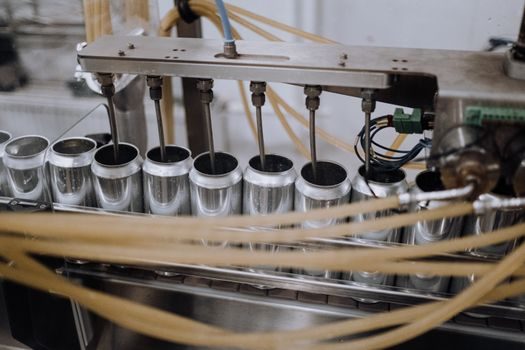
Inclined chain conveyors impose a derate on the horizontal-rated tonnage; Selis specifies SZK units for "horizontal and inclined with certain angle" without publishing a numerical derate factor, so a buyer must request a project-specific calculation from the OEM [S3]. The fully closed body design — all surfaces specified not to retain carried product — is the cleanability advantage over open-trough screw or belt conveyors in food, feed, and plastics lines [S3].
Options change the safety integrity of the line. Selis offers an optional chain revolution control sensor that detects chain stoppage or slack before a stalled drive burns the motor or shears a pin [S3]. For zones with combustible dust, the same enclosure strategy that keeps product inside also keeps dust clouds outside, which simplifies the ATEX or IECEx zoning argument but does not replace it — the certifier still needs the motor and junction box rated to the zone.
Chain Topology and Drive Selection
Three chain topologies dominate the spec map: en-masse (pallet flights on twin strands), roller chain drive for live-roller curves, and silent chain for low-noise packaging cells. Drag-chain and cable-driven variants cover the lower-capacity, longer-pitch end — see the cable drag chain reference for inverted-floor and scrap-handling duty where articulation matters more than throughput. [S1]
Interroll publishes its material-handling catalogue around roller-driven platforms (RollerDrive, drum motors, MCP, HPP, MPP) — not chain — but their Conveyor Systems literature is the most-cited benchmark for conveyor sorting line throughput per metre and is a useful cross-check when a chain cell feeds a sortation spur at the discharge end [S1]. The cross-reference pattern is the same one used in mesh-belt and V-ribbed belt cells — compare the upstream chain capacity against the downstream sorter's rated ppm before sizing the takeaway.
Selection Criteria Comparison

Buyers who treat the four main chain-conveyor variants as a single buy will over-spec the motor or under-spec the chain. A side-by-side: Selis SZK pallet-chain (25–300 t/h bulk solids, closed body, inclined-rated, motor per length) [S3]; Hytrol 199-CRRC chain driven live roller curve (unit loads, 30°/45°/60°/90° alignment, carton speed ranges) [S4]; Progress Material Handling CDLR/BDLR/chain conveyor (small-to-medium custom runs, manufacturing/warehousing/shipping fit-out, short lead times) (2025-08) [S2]; cable drag chain (low-capacity, long-pitch, scrap/inverted-floor duty, articulation-prioritised). The decision pivots on bulk density (above ~0.5 t/m³ favours pallet-chain), unit load vs bulk (cartons/totes go to CDLR), cleanliness (enclosed body), and incline (en-masse can take a moderate angle where belt would slip).
For bulk solids buyers, the shortlist logic is: confirm wheat-equivalent capacity (or run a density-corrected t/h), pull frame geometry from the A/B/D table, request a motor-kW per metre curve from the OEM, and spec the chain revolution control sensor where a stalled drive would damage product or upstream feeders [S3]. For unit-load buyers, the shortlist is the reverse: pick the curve angle first (30°/45°/60°/90°), then the live-roller speed class, then the chain pitch to match the carton footprint — and only then close the throughput figure.
When NOT to Specify a Chain Conveyor
Chain conveyors are wrong for three common duties. First, high-speed parcel sortation at above ~2 m/s — roller-driven belt curves and MDR cells take that speed class with less wear [S1]. Second, sanitary washdown in meat, dairy, or pharma — the chain and pallet joints are a harborage point and pull CIP time up dramatically; stainless fabricated belt or tubular drag systems are better fits. Third, very long overland runs above ~80 m where a chain conveyor would need intermediate drives — belt or en-masse with dual drives is the conventional answer. The cost of getting the topology wrong is not just capital: it is the recurring chain stretch, sprocket wear, and unscheduled stoppages that compound across a 24/7 line.
Track two signals before locking the spec: the OEM's revised SZK cross-section table (Selis publishes A/B/D dimensions on the public datasheet, and any change to the largest-frame geometry would shift the 300 t/h ceiling) [S3], and the next Hytrol curve catalogue update that may extend the 199-CRRC angle set or pitch options for heavier pallet loads [S4]. Either delta resets the shortlist above.
See also our earlier report, Copper Material Selection for Electronics: Grade, Form, Spec Map.