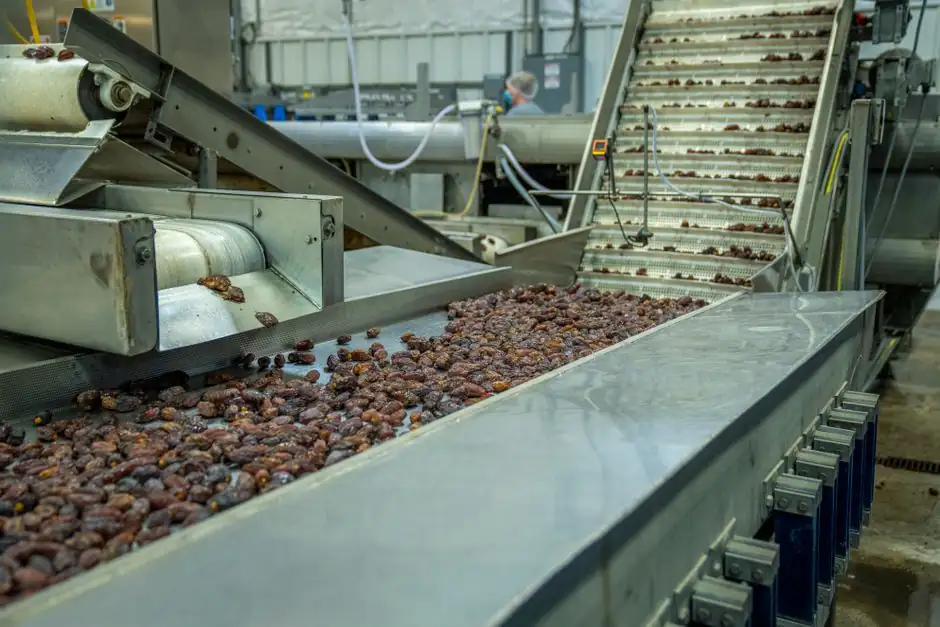
A bucket elevator uses buckets on a belt or chain to lift material vertically, while a tube chain conveyor moves product inside an enclosed pipeline through horizontal, inclined, and vertical sections [S1][S2].
The correct selection depends on material properties, required throughput, route geometry, dust control, impact tolerance, sanitation, and maintenance access, rather than conveyor type alone [S2][S3].
Two Distinct Functions for One Transfer Route
Bucket conveyors use an interconnected loop of buckets to pick up and discharge bulk material. Fixed buckets characterize conventional bucket elevators, while pivoting bucket or Z-type conveyors remain level through combined horizontal and vertical sections [S1].
A tube chain conveyor is a fully enclosed system that transports powders and granules through a sealed pipeline using a chain-disc mechanism. It can route powders and granules through horizontal, vertical, and inclined runs in one enclosed system, making it suitable where several directional transfers would otherwise require separate conveyors [S2][S5].
This distinction matters. A conventional bucket elevator is optimized for lifting, whereas a tube chain conveyor can distribute a product across multiple directions. The enclosed chain system also provides gentler handling, lower breakage, and stronger dust containment [S2].
Decision Matrix by Material and Operating Priorities
For heavy, coarse, abrasive, hot, or dirty bulk solids, a bucket elevator generally provides the more appropriate vertical-lift path. Bucket elevators are used for ore, fertilizer, grain, pellets, aggregates, clinker, coal, ash, and mineral products, and chain-bucket designs can also operate horizontally or on an incline [S1][S3].
For fine powders, fragile granules, food ingredients, pharmaceutical powders, chemicals, and cosmetics, an enclosed tube chain conveyor is usually the stronger choice. Its sealed pipeline controls dust leakage, while the chain-disc movement reduces product impact and degradation compared with bucket pickup and discharge [S2].
The comparison should be made against the actual duty, not a generic capacity figure. Tube chain conveyors are selected for directional flexibility, hygiene, and product protection, while bucket elevators are selected for efficient vertical lifting of large volumes of heavy bulk material [S2].
Bucket Elevator Types and Their Discharge Behavior
Three principal bucket-elevator discharge principles are centrifugal, continuous, and positive-discharge designs. Centrifugal elevators use the head pulley or sprocket to throw free-flowing material through a discharge throat, continuous elevators discharge under controlled positive movement, and positive-discharge elevators use controlled discharge for materials that do not flow freely [S1].
Conventional bucket elevators load at the lower boot section and discharge at the head section. Z-type or pendulum bucket conveyors can discharge at designated stations because their buckets pivot to remain level through horizontal and vertical runs [S1].
That operating difference controls the layout choice. Specify a conventional vertical elevator for a single high-capacity lift. Consider a pivoting bucket conveyor only when the route must combine horizontal and vertical movement and the material can be discharged predictably at the required station [S1].
Failure Modes, Materials, and Operating Constraints
Wet or sticky slurries are generally unsuitable for bucket conveyors because buildup in the buckets impairs pickup and discharge. Powders, granules, aggregate, and dense bulk materials can be suitable, but the discharge design must match material flow behavior [S1].
A bucket elevator can suffer carryback when material does not leave the bucket cleanly. The centrifugal arrangement minimizes carryback by using the rotating head to direct material into the throat, but poor loading, buildup, or unsuitable material characteristics can defeat that advantage [S1].
A tube chain conveyor introduces different constraints: the tube must remain clear, the product must enter and leave without bridging, and the chain-disc system must suit the particle size and flowability. Its enclosure improves hygiene and dust control, but an inaccessible line can make inspection, cleaning, and jam removal more difficult [S2][S5].
For both systems, verify loading points, discharge geometry, material retention, access for inspection, and the effect of product build-up before freezing the route [S1][S3].
Where Each System Fits in Real Plants
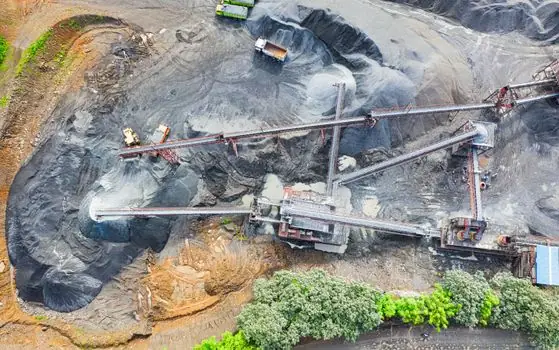
Bucket elevators fit cement, construction-material, grain, agricultural, fertilizer, mineral, mining, coal, ash, power-generation, glass, and paper duties where the primary requirement is vertical bulk-solid movement [S1][S2][S3].
Tube chain conveyors fit food, pharmaceutical, chemical, nutraceutical, and cosmetic plants where powders or fragile granules need enclosed transfer, low dust exposure, and limited product damage [S2].
For a combined route, the practical recommendation is conditional. Use one enclosed tube chain conveyor when the material is light, fragile, dusty, hygienic, or must follow a three-dimensional route. Use a bucket elevator when the material is heavy or abrasive and the main duty is a high-capacity vertical lift. If the route requires substantial horizontal movement before or after the lift, evaluate whether the bucket elevator should discharge into a separate chain conveyor or whether a single tube chain conveyor offers simpler integration.
Procurement Checklist for a Defensible Selection
Specify material name, maximum particle size, bulk density, flowability, abrasiveness, moisture, temperature, and friability. State required throughput, lift height, horizontal run, elevation change, number and location of discharge points, and usable floor area [S1][S2].
Then request a duty-based comparison covering the drive rating, chain or belt construction, bucket attachment method, inlet loading arrangement, discharge type, enclosure, dust collection interface, cleaning access, and replacement-part availability. The bucket elevator option should show how the selected discharge principle matches the material, while the tube chain option should demonstrate the complete route and access points.
Use recognized equipment standards and project-specific codes for structural, electrical, safety, and hazardous-area requirements. The cited material establishes equipment principles and application limits, but it does not provide the project data needed to assign a throughput, motor size, safety factor, or standard compliance class.
For the next engineering node, request two layouts using the same measured duty: one vertical bucket-elevator solution and one enclosed tube chain route, then compare installed footprint, transfer points, dust exposure, maintenance access, energy demand, and expected wear exposure.