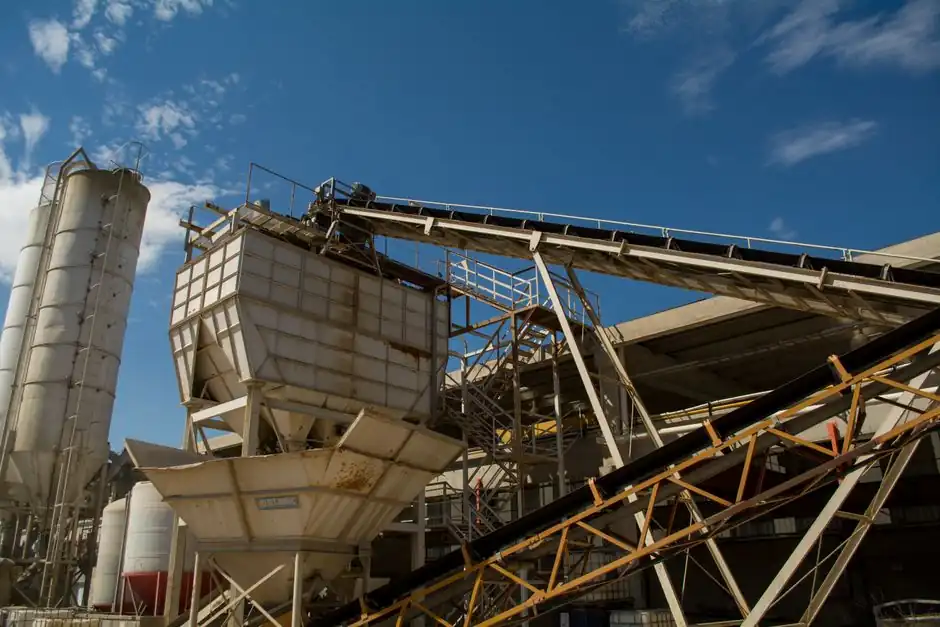
For high-temperature material transfer, chain conveyors are the stronger default when loads are heavy, impact-prone, or require positive drive, while belt conveyors remain practical for lighter flow with heat-resistant belting.
The decision depends on actual material temperature, contact area, payload, impact, accumulation, incline, and belt or chain rating, not on the generic label “high temperature.”
Core Mechanical Difference
A chain conveyor transfers motion through direct mechanical engagement between metal chain and sprockets, so drive force does not depend primarily on friction between the carrying surface and the material. Products can ride on the chain or on attached slats, pallets, and fixtures. This positive-drive arrangement suits heavy parts, pallets, tooling, irregular loads, and indexing operations [S1][S2].
A belt conveyor uses a continuous loop across pulleys, with pulley traction and belt tension providing the drive force. Common forms include slider-bed, roller-bed, incline or decline, and modular belt systems. Belt tracking, tension, pulley alignment, and the friction coefficient between belt and product remain critical to performance [S1][S3].
The practical distinction is not simply “metal versus rubber.” A chain transfers high point loads through articulated steel components, while a belt distributes contact through a continuous carrying surface. The better system is the one whose load path, traction method, and heat exposure match the material and duty cycle.
Temperature and Material Compatibility
High-temperature suitability must be assessed at the actual hot-material contact point, not by ambient plant temperature. Chain conveyors are used in metalworking, steel processing, forging, heavy scrap, and abrasive transfer duties where components can be specified for high heat, continuous impact, and heavy loads [S2][S6].
No defensible universal temperature limit can be assigned from the supplied research because the material, chain grade, attachment, lubrication, speed, duty cycle, and cooling exposure are unspecified. Ask the chain supplier for the selected chain, attachment, sprocket, and lubricant ratings at the maximum material temperature and the maximum operating duration.
A belt can still be correct where the product is light, uniform, nonabrasive, and loaded smoothly. Belt conveyors typically use belts made from rubber, fabric, or composite materials to carry items smoothly across flat or inclined surfaces. For a broader review of belt conveyor configurations, evaluate the carrying surface and pulleys as one thermal system.
Selection Criteria and Comparison
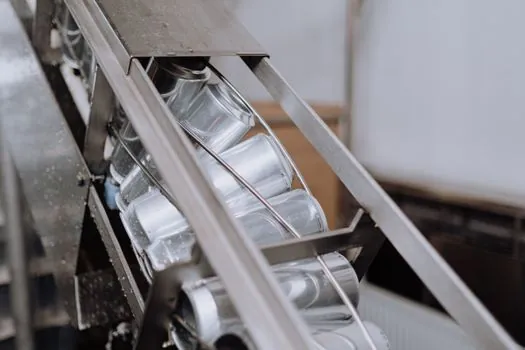
On load capacity, a chain conveyor generally has the advantage for heavy, point-loaded, palletized, or irregular material because its positive drive and metal chain carry load without relying on belt friction. Chain and belt conveyors serve different purposes depending on the workflow, product type, and project requirements.
On temperature resistance, neither architecture is automatically heat-proof. A metal chain may tolerate a hot zone while still being limited by lubricants, seals, bearings, attachments, and thermal expansion. A belt may perform well if a rated elastomer or fabric carcass is used, but surface wear, heat aging, stretch, and tension loss become principal concerns [S1].
On maintenance, chain conveyors require attention to chain stretch, lubrication, sprocket wear, alignment, and attachment condition. Belt conveyors require tension control, tracking, pulley inspection, and replacement of worn or heat-damaged belts. On product protection, a belt can provide a softer, more uniform carrying surface, while an appropriately designed chain attachment can isolate or support a part without relying on sliding friction [S1][S3].
On integration, a chain conveyor is more complex because it adds sprockets, articulated links, attachments, and drive guarding. A belt conveyor generally offers lower initial complexity for continuous, non-impact transfer. These are qualitative design differences because the research provides no comparable purchase price, service life, energy consumption, or temperature-rating table.
Application Fit and Exclusions
Specify a chain conveyor for hot metal parts, heavy scrap, pallets, skids, fixtures, high-impact loads, irregular products, accumulation, and indexing. Positive drive maintains motion when loads are large, while reinforced frames, robust chain assemblies, and heavy-duty drives address the duty described by industrial chain-conveyor suppliers [S2][S6].
Specify a belt conveyor for small-to-medium products, regular flow, low impact, clean loading, and cases where a continuous surface is beneficial. Belt conveyor systems may use slider beds or rollers and can be configured for incline or decline applications. They are a poor assumption for sharp heavy impacts, severe abrasion, difficult accumulation, or hot cutting edges that could cut the belt [S3].
A roller chain is not automatically the correct chain for a high-temperature line. Polymer modular chains offer configurable layouts, but a plastic chain may not be suitable for the maximum contact temperature. Likewise, stainless steel does not establish a complete high-temperature rating because creep, fatigue, corrosion, lubricant compatibility, and attachment performance still require verification.
Failure Modes and Engineering Controls
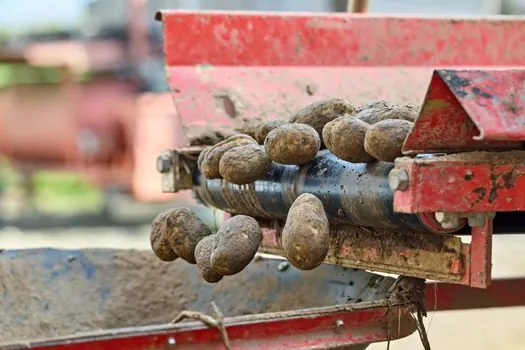
Chain failures typically begin with wear at an identifiable interface: stretched chain, worn sprocket teeth, misaligned shafts, overloaded attachments, inadequate lubrication, or thermal damage to a polymer component. Inspect chain elongation against the chain manufacturer’s limit, verify sprocket engagement, and confirm that the drive can start against the specified hot load [S1][S2].
Belt failures typically involve tracking drift, loss of tension, surface abrasion, thermal aging, pulley misalignment, or slip between belt and product. A belt tensioning system should therefore be selected as part of the thermal design, not added after installation. A belt tensioner must retain usable tension despite belt elongation, temperature variation, and pulley wear [S1].
Both systems need thermal guarding, emergency-stop coverage, sprocket or pulley nip-point guarding, and access for inspection. The maximum design temperature should be established from component ratings, while heat shielding, insulation, cooling, or reducing direct contact may extend belt or chain life. Do not extrapolate a polymer belt or lubricant rating beyond its specified range.
Sizing and Procurement Evidence
Write the procurement specification around five measurable inputs: maximum material temperature, maximum part weight, impact energy or load class, required throughput, and the longest uninterrupted operating period. Add the contact footprint, material shape, hot-material residence time, incline, curve direction, accumulation requirement, and surrounding atmosphere [S2][S3].
Require separate rated-temperature confirmation for the chain, sprockets, pins, attachments, reducer, bearings, seals, lubricant, and protective components. For a belt system, request the belt grade, carcass construction, working-temperature range, pulley lagging, tension method, and splice design. This avoids approving a conveyor based only on its frame material or drive enclosure.
For hot, heavy, abrasive, or impact-sensitive transfers, the recommendation is a positive-drive chain conveyor with a heat-rated metal load path and protected components. For lighter, smooth, high-throughput flow without accumulation or impact, use a belt conveyor with a specifically rated belt and controlled tension. Track the selected chain or belt part number, serial revision, maximum rated temperature, payload, duty cycle, and lubricant specification before purchase approval.