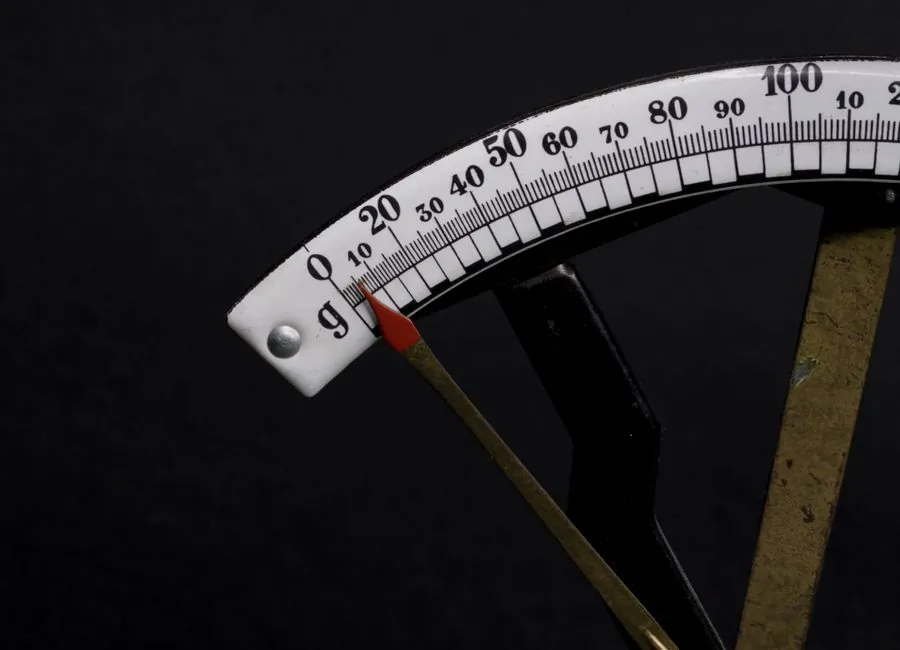
Inline systems weigh, classify, and divert products by preset weight zones, providing 100% inspection of the production line rather than intermittent offline sampling [S2].
How Checkweigher Accuracy Controls Weight Zones
A checkweigher weighs every item passing through the line, compares the measured value with programmed weight zones, and ejects or sorts the product according to its classification [S2]. This closed-loop process separates acceptable products from underweight and overweight units, rather than merely displaying a weight for an operator to interpret.
The acceptable limits still depend on the target fill weight, the product characteristics, line speed, calibration, and the physical limits selected for the installed system.
The engineering choice is therefore not simply to select the smallest numerical error. The selected accuracy must be materially tighter than the narrowest product tolerance, while the rejection boundaries must account for natural process variation, tare, product motion, and the consequences of false rejects [S1][S4].
Underweight and Overweight Decision Thresholds
Underweight and overweight decisions are made by comparing each measured weight with a target weight or acceptable range stored in the checkweigher controller [S5]. An item inside the configured range can remain in the line; a unit outside the range can trigger an alarm, rejection, diversion, reweighing, or another line-specific corrective action [S5].
A practical configuration needs at least three values: the target nominal weight, the lowest acceptable weight, and the highest acceptable weight. The tolerance must be narrow enough to detect out-of-specification packs but wide enough to prevent normal fill variation from generating unnecessary rejects. Fortress Technology identifies calibration, line speed, product characteristics, environmental conditions, operator configuration, and maintenance as factors that can reduce measurement reliability [S4].
Using more than one weight zone provides better process information than a single accept or reject decision. Checkweighing guidance describes using 5 or more zones to obtain detailed fill-weight information, as well as monitoring total count, total weight, production speed in items per minute, and standard deviation for out-of-tolerance conditions [S2]. This turns the system into a process-control instrument rather than only a pass or fail gate.
Accuracy Specifications Compared

Checkweigher accuracy is important in food production because these systems weigh each item, classify products, and remove items that fall outside specified limits.
For packaging lines, the checkweigher should be evaluated against the tightest legal or customer limit, not the widest observed production variation. For laboratory or QA use, a bench scale may support controlled checks, but it does not provide the continuous inline classification and automatic diversion function of a production checkweigher.
Line Speed, Product Dynamics, and Throughput
Production speed reduces the time available to stabilize and measure each product, increasing the risk of measurement error when the line is not designed for the selected rate [S4]. Industrial checkweighers can achieve high accuracy at throughputs up to 350 packages per minute for food and non-food applications in dry, wet, and harsh environments.
Throughput alone is not an acceptance criterion. An inline system must maintain repeatability at the product rate, on the actual conveyor, with the actual package and fill characteristics. Irregular or unstable products are more difficult to weigh because movement can transfer force into the weighing system before the product settles [S4]. These applications may require more advanced handling and measurement technology than a stable carton presented at a controlled orientation [S4].
For products that must be batched by weight, a weigh-feeder may form controlled portions before filling, while the checkweighter verifies the final packaged result. That division of responsibility is useful because it separates feed control from finished-package inspection rather than using one instrument for two different measurement tasks.
Calibration, Environment, and Maintenance Constraints

Regular calibration is required to maintain checkweigher accuracy, while temperature changes, humidity variation, and vibration can interfere with the electrical signal and its stability [S4]. The installed environment therefore forms part of the measurement system, particularly on high-speed lines and in wet or harsh processing areas.
Routine maintenance protects measurement performance and equipment life, and loss of maintenance can allow performance to decline [S4]. An accuracy trial should include zero verification, test weights spanning the operating range, simulated line conditions, and challenge products with representative mass and handling behavior. A single static test weight does not establish performance on unstable seafood, loose powder, or irregular packages [S4].
Operational errors also affect results. Incorrect configurations or manual adjustments can create false underweight or overweight decisions, so recipe changes should be controlled and recorded [S4]. Configuration control is especially important when a supplier changes target weight, acceptable limits, product recipe, conveyor speed, or rejection logic.
Where Inline Detection Fits, and Where It Does Not
Inline checkweighing is appropriate when every package must be inspected, when out-of-limit product must be removed before it leaves the process, and when fill data is needed for process optimization. A checkweigher can also detect missing labels, lids, coupons, ingredients, or other components through weight loss, and it can verify count-by-weight for cases containing cartons, bottles, bags, or cans [S2].
It is not a substitute for a shipping scale when the legal or commercial control point is the complete shipment rather than each packaged unit. Truck-scale data and pallet totals answer a different question from package-by-package classification. For large shipping loads, the selection basis is handled separately in Select a Case Checkweigher for 25 kg Shipping Loads.
It is also not a general-purpose instrument for low-volume manual inspection. A filling-weighing-scale can support formulation or batch preparation, but only an inline checkweigher can continuously compare and divert every moving package against programmed zones [S2].
Sourcing and Acceptance Evidence
A defensible purchase specification should identify the product, target nominal weight, lower and upper limits, statistical basis of the accuracy claim, maximum line rate, acceptable product characteristics, rejection sequence, and required output data. The source document should also define whether accuracy applies to the weighing system, the complete line, a specific product recipe, or a laboratory test condition. [S4]
Published capabilities provide useful benchmarks but are not installation guarantees. The comparison set includes 3σ accuracy and 0.03% error margin, ±0.1 g measurement accuracy, operation up to 350 packages per minute, 5 or more diagnostic weight zones, and 100% inline sampling [S1][S2][S3][S6]. These figures should be carried into commissioning tests rather than accepted without product-specific verification.
For procurement review, require three acceptance results: measured repeatability across the operating range, demonstrated rejection of controlled underweight and overweight samples, and verified data and rejector interlocks at the specified throughput. Track two production signals after installation: the share of units in each weight zone and the frequency of false rejects. A rising reject rate at constant line speed indicates that product dynamics, calibration, or machine condition has shifted before it becomes visible in aggregate fill data [S2][S4].