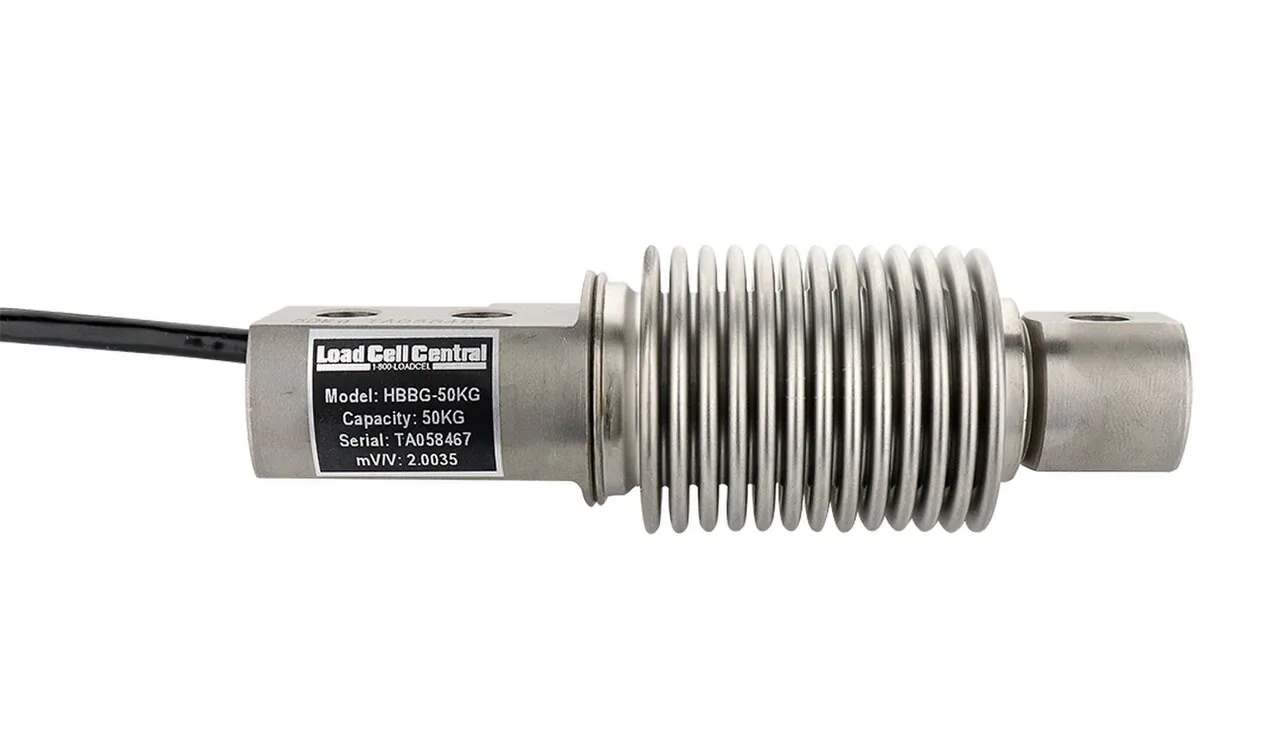
A weigh feeder, also written weighfeeder, is a continuous gravimetric feeding machine that meters bulk solids by weight: material travels on a short belt or apron whose carry load is measured by load cells under one or more weigh idlers while a speed sensor reads belt velocity, and the controller multiplies the two into instantaneous feed rate, then closes the loop by trimming belt speed or the upstream pre-feeder to hold the rate at setpoint. Unlike a volumetric feeder, which dispenses by volume and drifts with bulk density, the weigh feeder measures the mass actually delivered and holds accuracy classes of plus or minus 0.25 to 1 percent of rate over turndown ranges of 5:1 to 10:1 and wider on two-screw or variable speed designs. Belt versions serve medium and high rates from grams per second to thousands of tonnes per hour family, and apron versions, with steel pans instead of a belt, take hot, lumpy, and abrasive materials that destroy a belt.
Procurement engineers meet these machines at every continuous process that blends or burns by weight: cement raw meal and fuel feeding, power plant coal to the mill, iron ore sinter feed, glass batch, animal feed rations, and plastics compounding extruders. The decision this page settles is what the machine must guarantee on paper: the accuracy class and the material test that proves it on your material, the turndown against the process's real rate range, the inlet and pre-feeder arrangement that keeps the belt loaded through that range, and the calibration model the plant will live with. The answer lands as an RFQ line set covering material, rate and turndown, accuracy, geometry, environment, and calibration, and every chapter below feeds that line set so the recipe is held by measurement rather than by hope.
This page treats the weigh feeder as a purchasing object: how load and speed sensing become mass flow, what accuracy classes mean and how they are proven, how turndown and inlet geometry decide whether the class holds at low rate, and how materials, calibration, and environment combine into a defensible RFQ. It is written for engineers who issue purchase specifications, not for readers who want a brochure summary.
Chapter 1 / 06
What a Weigh Feeder Is and What Is Being Decided
The problem being solved is continuous proportioning by weight. Batch processes weigh a hopper on a scale and discharge it; continuous processes mix streams that each flow all shift, and the only way to hold a recipe is to measure at least one thing that is genuinely mass per time. A weigh feeder makes the conveyor itself the instrument: the belt section over the weigh idler is a live weighbridge, the speed sensor makes the time base, and the integral controller drives the drive toward the setpoint, so the machine is simultaneously the feeder, the scale, and the flow controller in one purchased unit. That triple identity is why the purchase is more than a conveyor with a sensor bolted on, and why the specification has to carry weighing language, accuracy classes and calibration, alongside mechanical language, geometry, and materials.
What is actually being decided in this purchase is four guarantees. First, accuracy on your material: the class, plus or minus 0.25 to 1 percent of rate family, means nothing until the basis is stated, over what turndown, verified how, and the strong supplier offers a material test, an acceptance run on your actual solid, before the class is contractual. Second, turndown with kept accuracy: processes run at 30 percent for hours and at 110 percent in campaigns, and the accuracy class must hold across that range, which is an inlet and pre-feeder problem as much as a sensor problem. Third, mechanical survival in the material: hot, abrasive, sticky, or dusty solids attack belts, idlers, and seals in ways the datasheet's mass-flow rows never mention, and the material behavior section of the RFQ, density, particle size, temperature, flowability, decides the construction more than the rate does. Fourth, calibration life: static weights and chain rolls prove the weighbridge, but only a material test against a checked reference scale proves the system, and the calibration model, who does it, how often, with what reference, is part of the purchased scope.
Against its neighbors the weigh feeder occupies deliberate ground. A belt conveyor transports without measuring; adding a belt scale to a conveyor creates a weighing conveyor, and that family, scales on long process belts, shares the physics but not the control loop, since a weigh feeder trims its own rate while a scale only reports it. A screw conveyor or a rotary airlock moves and roughly meters volumetrically, and a volumetric screw feeder with speed control by a PID controller is the economy answer where density drift is tolerable; the weigh feeder is the gravimetric answer where it is not. The loss-in-weight feeder, a hopper on load cells discharging through a screw or vibratory trough, is the other gravimetric technology, strongest at low rates and batch-critical recipes, weakest at high tonnage where the hopper becomes a building; the comparison belongs in the selection chapter. The weighing components underneath are their own products: the load cell as sensor, the weighing indicator as the electronics, and at the end of lines the checkweigher and filling weighing scale, which verify packages rather than meter a process. The weigh feeder takes the narrow territory of continuous gravimetric metering at process rates, and no neighbor holds it.
Standards context for these machines is the weighing framework plus the machinery practice around it. Accuracy classes and verification language lean on OIML R 50 for continuous totalizing automatic weighers and its EN equivalent, with contractual material tests written per supplier standard, and the control integration rides on the plant's PLC and bus world. Mechanical construction follows bulk machinery practice, materials certificates where audited, ATEX or IECEx dust zone packages where the material demands, and food contact materials statements on hygiene duty. A datasheet that quotes an accuracy class with no basis and no test offer is a price tag, not a specification, and a quotation that has never seen your material's name should be read accordingly.
The RFQ should also name the station so the package checks out as a system. Upstream, material arrives from a silo or day bin through an isolation knife gate valve and a pre-feeder, a rotary airlock on dusty fine solids or a screw or vibratory feeder on others, whose job is to load the belt across the rate range without flooding or starving it; the pre-feeder is often inside the weigh feeder supplier's scope and should be. Around the machine, dust collection ties to an industrial filter or bag filter at the transfer points, a cyclone separator where the coarse load justifies it, and level transmitter or level switch devices on the feed hopper keep the head available. Downstream, the process receives at the discharge, sometimes directly into a pneumatic conveyor. The drive carries a VFD for speed control, and the controller integrates to the plant through the weighing indicator or its own electronics with 4 to 20 mA and bus. Stating the whole station in the RFQ lets one supplier check geometry, dust, and control compatibility in a single pass.
Chapter 2 / 06
How Load and Speed Measurement Becomes Mass Flow
The arithmetic is simple and worth stating plainly: mass flow equals belt load, kilograms per meter, multiplied by belt speed, meters per second, and the total is the integral over time. The engineering is in making both factors honest. Belt load is measured by one or more strain gauge load cells supporting a weigh idler or a live deck, the section of belt whose material weight lands on the sensing idler; the mechanical arrangement, the number of weigh idlers, the distance to the adjacent fixed idlers, the belt tension and its variation, decides how much of the load the cells actually see and how repeatably. Belt speed comes from a digitizer on the tail pulley or a wheel riding the belt, and the error pairing is instructive: a 0.1 percent load error and a 0.1 percent speed error contribute comparably, but belt slip between drive and belt shows up only in speed, which is why the speed sensor rides the belt or the pulley closest to the weigh section, never a remote motor encoder alone.
Accuracy class is a system statement, and the basis makes or breaks it. A class of plus or minus 0.5 percent of rate, the common industrial contract figure, is claimed over a stated turndown from maximum rate, commonly 5:1 or 10:1, on a stated material, verified by a stated test, and every one of those qualifiers is load bearing. Below the calibrated floor, the belt load falls toward the tare-dominated region and percentage error climbs; above maximum rate, the belt overloads and the curve departs. Within the range, the error budget divides among load sensing, speed sensing, belt tension effects, and material profile, how uniformly the solid sits across the belt width and along the weigh span, and the profile term is why the inlet and pre-feeder are part of the accuracy story: a belt fed in surges or off center sees profile error no load cell can subtract. The strongest specifications demand the class over the actual process rate range, not the catalog maximum.
The control loop turns measurement into metering. The controller reads rate, compares to setpoint, and acts on the drive, belt speed on the classic designs, with the pre-feeder slaved to keep belt loading in its working band on the modern two-loop arrangements; rate trimming is deliberately slow, seconds to minutes, because the process wants a steady mass flow, not a twitchy one. Setpoint comes from the plant, recipe system, or operator, through 4 to 20 mA or the bus, and the feeder reports rate, total, alarms, and status back; the PID controller in the feeder or in the plant DCS closes the loop, and the division of control responsibility belongs in the specification, since a feeder trimmed by a DCS that also owns the pre-feeder is a different integration than a self-contained machine. Two-speed or dual-range machines extend turndown by switching calibration ranges, and straightness of the plant's expectations about low-rate accuracy should be settled with the supplier's curve, not its brochure.
Calibration is where the number stays honest, and the methods form a ladder. Static calibration places certified weights or a chain on the belt and checks the load channel; it is quick, traceable, and blind to speed and profile errors. The material test runs the feeder against a reference, a checked hopper scale or truck scale, over a timed catch and adjusts the span until the feeder total agrees with the reference mass within tolerance; it is the only method that proves the class on the real solid, and OIML-family acceptance leans on it. Between tests, electronic linearity checks and zero checks, running the belt empty and confirming the tare, monitor drift. A plant that accepts a class without pricing the material test and the reference scale behind it has bought a number, not an accuracy. A worked example: a cement raw meal feeder at 100 tonnes per hour, class 0.5 percent, turndown 5:1, is proven by catching 10 minutes of feed, 16.7 tonnes, on the plant's checked weighbridge and correcting span until agreement sits inside 0.5 percent; the same test at 20 tonnes per hour proves the floor of the range, and the two points together are the acceptance file.
Turndown and profile deserve the closing look because they carry the callbacks. The inlet geometry, skirt boards, gate height, and pre-feeder speed, sets the material bed on the belt, and a machine trimmed to hold rate by belt speed alone reaches a floor where the bed is too thin to weigh well; the two-loop designs hold the bed by trimming the pre-feeder and keep the belt speed in band, which is how 10:1 and 20:1 turndowns are honestly achieved. Sticky materials ride the belt past the discharge and return as tare error; scrapers and belt cleaning are accuracy maintenance, not housekeeping. And dusty solids lose mass between weigh section and discharge, windage, which the class absorbs only if the test conditions matched the installation's; the transfer point design and dust collection are therefore inside the accuracy conversation, exactly the sentence a mechanical datasheet never writes.
Chapter 3 / 06
Types, Construction, and Duty Boundaries
Three machine families cover the catalogs. The medium-rate belt weigh feeder, the industry standard, is a short troughed belt on a fabricated frame with a live weigh deck, one to three weigh idlers, a head drive with VFD, inlet skirts, and a controller, feeding rates from about 1 to 500 tonnes per hour family by width; Qlar's MULTIDOS E class and Thermo's WB500 class live here. The high-rate belt weigh feeder scales the same architecture to 650 to 2,000 millimeter belts and thousands of tonnes per hour for mining and sinter duty, MULTIDOS H class territory, with heavier frames, multi-idler weigh decks, and engineered transfer points. The apron weigh feeder replaces the belt with steel pans on chains and takes hot clinker, lumpy ore, and abrasive dross that would shred a belt in weeks, at some cost in tare weight and cleaning, and it is the specified answer above roughly 150 deg C material or large lump size.
Within the families, construction choices carry the warranty. Belt specification is a materials decision: cover grade for abrasion and oil, hot service covers to the material temperature, cleats and skirts for steep inclination, and food grade belts with cleanability statements on hygiene duty. Frames and idlers follow the tonnage, with sealed bearings rated for the dust load and idler concentricity stated, because idler runout is tare noise. The weigh deck is the heart: load cells in alloy or stainless, hermetically sealed on dusty duty, protected by overtravel stops against the shovel and the dropped wrench, with the alignment of weigh and adjacent idlers within the tolerance the supplier states, commonly fractions of a millimeter, and jacks or checkrods to hold the deck during shipment and belt changes. Drives are gear motor plus VFD as standard, and enclosures run IP65 class on electrics with ATEX or IECEx dust packages where the zone applies.
Boundaries are worth stating bluntly. A weigh feeder is not a belt conveyor with a scale added: the conveyors transport and the scales report, while the weigh feeder controls its own rate, and a buyer who orders a conveyor-plus-scale expecting closed loop metering owns the gap. It is not a loss-in-weight feeder, which weighs a whole declining hopper and meters through its discharge, the better technology below roughly a few tonnes per hour and the wrong one at high rates where the hopper scale leaves the building; the selection chapter draws the line. It does not measure liquids or slurries, and it does not forgive an unsuited material: a fine, flushing powder floods belts, a hot material destroys them, and the correct machine for those duties is apron or loss-in-weight, respectively. And it cannot hold its class without its test: every accuracy claim is conditional on the calibration program, and the machine that never sees its material test will drift unproven until the recipe fails. The duty map below pairs the common stations with the construction that survives them.
Station
Machine to specify
Choice that generates callbacks
Cement raw meal to mill
Medium-rate belt feeder with pre-feeder and dust tie-in
Belt-only turndown where 10:1 was promised
Power station coal, 500 t/h
High-rate belt feeder, multi-idler deck, engineered chute
The table below decodes the datasheet lines that decide whether a quoted machine matches the station. Each row is a purchase defining parameter; the paragraphs after the table explain what to demand and what a weak answer looks like.
Attribute
Typical range or options
What it decides
Rate and turndown
1 to 2,000 t/h family; turndown 5:1 to 20:1
Machine size and whether the class holds at floor
Accuracy class
Plus or minus 0.25 to 1 percent of rate
The recipe guarantee, conditional on basis and test
1 to 3 weigh idlers, sealed cells, overtravel stops
Load sensing quality and survival in the plant
Speed sensing
Belt-riding digitizer or tail pulley encoder
Immunity to slip and the speed error budget
Inlet and pre-feeder
Skirts, gate, airlock, screw, or vibratory feeder
Profile across the range, hence kept accuracy
Belt or apron spec
Cover grade, hot service, cleats, food grade
Wear life and the material's survival of the machine
Drive and control
Gear motor, VFD, onboard controller, 4 to 20 mA, bus
Loop ownership and integration effort
Environment
Dust zone ATEX or IECEx, washdown, outdoor
Certification scope and enclosure hardware
Calibration model
Static weights, zero checks, material test schedule
Whether the class stays true after commissioning
The accuracy row deserves a paragraph of its own because it is the row the whole purchase turns on. Demand the class with its basis written out: percent of rate, over what turndown from maximum, on whose material, verified by what test, and offer the supplier a material test at acceptance against a checked reference scale as the contractual proof. The honest curve shows error versus rate; the brochure point shows one flattering operating point. The same discipline applies to turndown: a machine honestly at 10:1 through two-loop control is a different purchase from one trimmed to 5:1 by belt speed alone, and the low-rate end of your process, not the maximum, decides which you need.
The material and inlet rows decide construction and kept accuracy together. Give the supplier the material's numbers, bulk density, particle size distribution, temperature, moisture, and a flowability description, flushing, free flowing, or cohesive, and require the construction response in the quotation: belt grade or apron, liner materials, seal design, pre-feeder type, and skirt geometry. Then require the inlet arrangement that holds profile, center feeding, gate or pre-feeder control, because accuracy at the floor is bought at the inlet, not at the load cell. The comparison table below compresses the evidence checks into the form a specification meeting can argue from.
Evidence demanded
Strong answer
Weak answer
Accuracy basis
Class over stated turndown, test offered
Class quoted with no basis or test
Material response
Construction named per material data
Standard machine for every solid
Turndown mechanism
Two-loop pre-feeder control described
Wide turndown by belt speed alone
Calibration scope
Material test at acceptance, schedule priced
Static weights only, test extra and vague
Cell protection
Overtravel stops, hermetic seals, jacks
Bare cells in a shovel environment
Zone certification
ATEX or IECEx package with files
Standard machine with a grounding note
The drive and calibration rows close the specification. The control split, feeder-resident controller or plant DCS loop, changes commissioning and fault-finding ownership, and the quotation should name where the loop lives and what the integration carries, signals, bus, interlocks. The calibration model is priced scope: certified test weights or chain in the package, the material test procedure with the reference arrangement, and the recommended interval between tests in the maintenance plan. The quotation that quotes the machine and leaves calibration, pre-feeder, and dust tie-ins as site exercises is not a complete quotation.
Chapter 5 / 06
Selection Decision Factors and RFQ Language
The decision sequence is short enough to run as a checklist in a specification meeting, and each step eliminates a class of quotations before price comparisons begin.
Profile the material first: bulk density, particle size, temperature, moisture, and flowability class, because the material eliminates machine families, apron for hot and lumpy, loss-in-weight for fine flushing powders at low rate, belt for the free flowing middle, before any rate arithmetic.
Fix the true rate range: normal, minimum, and campaign maximum in tonnes per hour, and buy turndown to the minimum plus margin, since the class must hold where you actually run, not at the catalog maximum.
Set the accuracy requirement from the process, recipe tolerance or combustion control, and price the class honestly, remembering that 0.25 percent costs real money and 1 percent serves most blending duties.
Choose the control architecture: two-loop machines with pre-feeder control for wide turndown, single-loop belt-trim for steady rates, and fix where the loop lives, feeder controller or DCS.
Specify the inlet station: pre-feeder type matched to the material, skirt and gate geometry, and the upstream isolation knife gate valve, with the pre-feeder inside the supplier's scope where possible.
Match construction to environment: dust zone certification, washdown stainless, outdoor covers, and belt or apron specification for the material's temperature and abrasion.
Scope the calibration program: test weights or chain, material test at acceptance against a checked reference, zero check automation, and the interval the maintenance plan will enforce.
Fix the evidence set: accuracy basis, material response, turndown mechanism, calibration scope, and certification files, all named in the quotation.
Against the neighboring technologies, the comparison a specifier actually needs runs as follows, and it belongs here in the selection chapter rather than in the page title. The volumetric feeder, a screw or vibratory trough on speed control, costs a fraction and drifts with density; where the solid is consistent and the recipe forgiving, it is the honest economy, and the weigh feeder earns its premium the day density shifts. The loss-in-weight feeder meters from a weighed hopper, exact at low rates and on batch recipes, and its hopper scales out of practicality at high tonnage; the crossover sits in the low tonnes per hour, decided by hopper size and refill logistics, not by price tags. The conveyor with a belt scale reports mass on transport belts and controls nothing; the rotary airlock meters volumetrically under small differentials. The weigh feeder wins the continuous mid and high rate gravimetric territory outright, and every alternative either measures less or meters less. Choose from the material profile and the rate range, not from the family a supplier leads with.
The application map below turns that comparison into a table the project file can carry.
Application
Machine and scope to specify
Check before order
Cement kiln feed and fuel
Belt feeder, two-loop, dust collection tie-in
Material test at acceptance
Coal to power plant mill
High-rate belt feeder with engineered chute
Turndown at low mill load
Sinter or clinker, hot lumpy
Apron weigh feeder with heat service
Pan wear life and tare stability
Glass batch or feed rationing
Multi-feeder gravimetric lineup, shared DCS
Class across each feeder's real range
Fine additive at 50 kg/h
Loss-in-weight feeder instead
Hopper size and refill cycle
Flour or sugar hygiene line
Stainless belt feeder, food belt, washdown
Cleanability and material statements
Zoned dust silo discharge
Certified feeder package, grounded belt
ATEX or IECEx files complete
The RFQ block should be written once and reused. A complete block reads: material with bulk density, particle size distribution, temperature, moisture, and flowability description; feed rates, normal, minimum, and maximum, in tonnes per hour, with required turndown; accuracy class with basis, percent of rate over stated turndown, proven by material test at acceptance against a checked reference scale; machine family, belt or apron, with belt width, troughing, and cover or pan specification; inlet arrangement, pre-feeder type and control, skirt geometry, and upstream knife gate valve interface; weigh deck details, idler count, load cell type and protection, overtravel stops; speed sensing method; drive with VFD and control architecture, onboard controller or DCS loop, signals and bus; environment, dust zone certification, washdown or outdoor, with enclosure ratings; dust collection tie-ins at transfers; calibration scope, test weights or chain, material test procedure and interval, zero check automation; and the evidence set as named lines in the quotation. A quotation returned without the accuracy basis, the material response, or the calibration scope is incomplete at any price.
Chapter 6 / 06
Installation, Standards, Failure Modes, and Maintenance
Installation quality decides whether the class survives commissioning. Set the machine level and bolted, with the weigh deck free of piping, platform, and ladder loads, because a deck that carries a scaffold's weight carries it into the tare; keep the belts and structures around it from transmitting vibration, and respect the alignment tolerance between weigh and adjacent idlers that the supplier stated. Feed the inlet centered, with the pre-feeder commissioned before the accuracy conversation starts, since profile errors are inlet errors. Wire the speed sensor at the belt, not a remote motor guess, and bring the signals, rate, total, alarms, through the agreed path to the DCS with scaling proven. Belt tension set per the manual matters twice, for drive slip and for tare variation, and the first zero check after tensioning is part of installation, not maintenance.
Commissioning practice is the material test. Calibrate the load channel with certified weights or chain, zero the belt empty over several revolutions, then run the material test: catch a timed delivery against the checked reference, correct span, repeat until agreement sits inside the class, and file the runs as the acceptance record at both the normal rate and near the process floor. Prove the control loop with setpoint steps across the range and log settling; verify totalizer reset and alarm behavior, rate deviation, cell fault, speed loss; and train the operators on the zero check, because a drifted tare is the quietest accuracy killer the machine has. The commissioning file, calibration curves, material test runs, loop records, becomes the baseline every service interval is read against.
The standards context is the weighing framework plus machinery practice. OIML R 50 and its EN equivalent frame continuous totalizing automatic weighers, their classes and verification, and contractual material tests run per the supplier's acceptance standard against reference scales traceable to the national standard; machinery practice covers the rest, drives, guarding, EMC on the electronics, and dust zone packages under ATEX or IECEx where the silo bay is zoned. Food duty draws material contact statements. A specification that cites the class framework, the test basis, and the certification scope by name transfers the burden of proof to the supplier, which is where it belongs.
Failure modes in service follow a short and predictable list. Tare drift: material stuck to the belt, a scraper gone quiet, or idler buildup shifts the zero, and the class erodes a few hundredths of a percent a week until the recipe shows it; the scheduled zero check with auto-zero where fitted is the countermeasure, and belt cleaning is accuracy maintenance. Load cell damage: overload from the shovel, the dropped liner plate, or the flood event, and overtravel stops plus hermetic seals are the purchased insurance; a drifted cell announces itself as span error at the next weight check. Speed sensing faults: slip, a fouled digitizer wheel, or encoder drift read directly as rate error, caught by the cross-check between belt revolutions and total, and the sensor location at the belt is the prevention. Profile degradation: a worn skirt, a misaligned pre-feeder, or an inlet change off-centers the bed, and low-rate accuracy walks away while high-rate looks fine; the material test at the floor is the only honest witness. Belt wear and failure: cover wear to carcass, tears from tramp metal, heat hardening on hot duty, with the belt specification and tramp protection deciding the interval; apron pan wear follows the same logic in heavier dress. Control faults: a VFD fault or a loop retuned around a worn machine turns smooth metering into hunting, and the loop records at commissioning are the reference the fix is tuned back to. Calibration neglect: the machine that never sees its material test after year one is running on reputation, and the audit finds it at the recipe review, not before.
Maintenance intervals scale with material severity more than hours. Daily, the walk reads rate versus setpoint and alarms and glances at the belt cleanliness; weekly, the zero check and scraper condition; monthly, the weight or chain check and the calibration record entry; quarterly to annually by material, the material test against the reference, belt or pan inspection, idler and bearing checks, and load cell insulation and zero stability records. Every service logs totals, corrections, and found condition, and those records are both the audit trail and the reliability data for the next purchase. None of these checks costs a tenth of one off-recipe production run, and every one produces a number the next RFQ can use, which is how a purchasing file gets smarter instead of just older.
FAQ
How accurate is a weigh feeder, really?
Industrial classes run plus or minus 0.25 to 1 percent of rate, but the class means nothing without its basis: over what turndown, on what material, verified by what test. Demand the class over your actual rate range and a material test at acceptance, catching a timed delivery against a checked reference scale, because that test is the only proof of the class on your solid.
Belt or apron weigh feeder for hot, lumpy material?
Apron. Steel pans on chains take hot clinker, sinter, and lumpy ore that would shred a rubber belt in weeks, at the cost of higher tare weight and heavier construction. Belt machines serve free flowing solids to their temperature and abrasion limits; once material runs above roughly 150 deg C or in large lumps, the apron is the honest answer.
How is a weigh feeder calibrated?
In a ladder: static weights or a chain on the belt prove the load channel; zero checks running empty monitor tare drift between services; and the material test, a timed catch against a checked reference scale with span correction until agreement sits inside the class, proves the whole system on the real material. Price all three in the purchase, because a class without its test program is a number, not an accuracy.
What turndown can I expect with kept accuracy?
Honest single-loop machines trimming belt speed alone hold class over about 5:1; two-loop designs that trim the pre-feeder to keep belt loading in band reach 10:1 and beyond. The governing point is your process minimum, not the catalog maximum, so specify the class across the actual rate range and verify the floor with a material test at low rate.
When should I choose a loss-in-weight feeder instead?
At low rates, on the order of a few tonnes per hour and below, and where batch-critical exactness matters: the loss-in-weight feeder meters from a hopper standing on load cells and is the natural gravimetric instrument there. At high continuous tonnage its hopper becomes impractical, and the belt or apron weigh feeder wins. The crossover is decided by hopper size and refill logistics, not by price.
Does my material's behavior affect the choice?
Decisively. Fine flushing powders flood belts and belong in loss-in-weight or specialized inlets; hot and abrasive solids go to apron; sticky materials ride past the discharge as tare error and demand scrapers; dusty solids need collection tie-ins at transfers. Give the supplier density, particle size, temperature, moisture, and flowability, and require the construction response, belt grade, liners, seals, pre-feeder, in writing.
Can the weigh feeder integrate with my plant DCS?
Yes: the controller takes setpoint over 4 to 20 mA or the bus and reports rate, total, and alarms back, and the control split, feeder-resident loop or DCS-owned loop, is a specification decision. Name where the loop lives and what the integration carries, signals, interlocks, pre-feeder ownership, because the choice changes commissioning and fault-finding responsibility for the life of the machine.