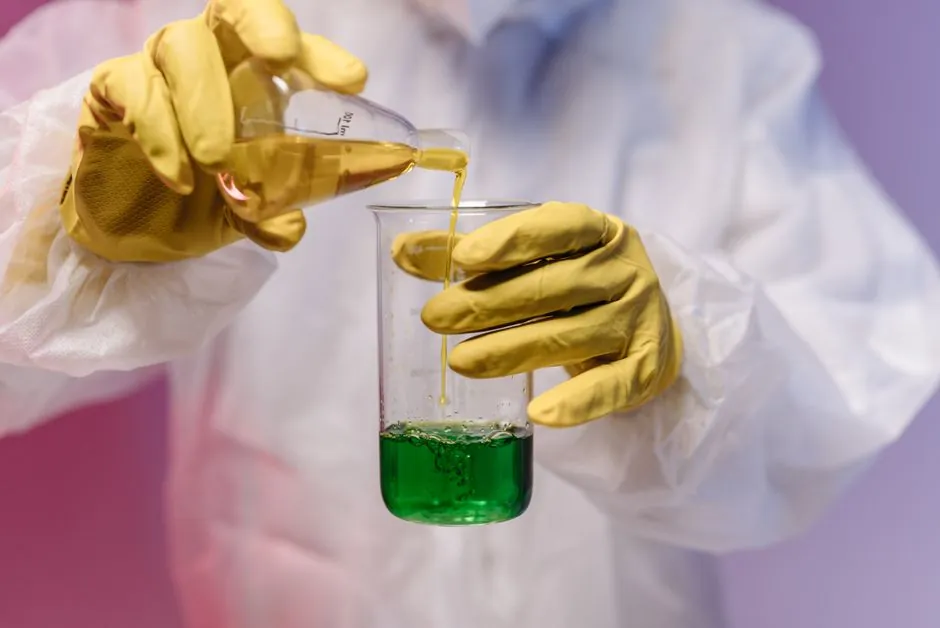
Cleanroom chemical anchor specification is driven by three independent gates: resin chemistry compatible with low-particulate, low-VOC room envelopes, ETA/ICC-ES approval for cracked concrete and seismic categories, and base-material condition (dry, wet, water-filled, submerged) that the cartridge is actually rated for [S1][S3].
Across pharmaceutical, semiconductor, and biotech room builds, the working set narrows to pure epoxy and vinylester injectable mortars paired with stainless or mechanically galvanised studs; polyester mortars are usually eliminated at the resin-selection step on outgassing grounds [S2][S5].
Why Resin Chemistry Drives the Cleanroom Decision
Pure epoxy and vinylester systems are the default anchor resins in ISO Class 5-8 cleanroom builds because they are typically formulated styrene-free, with documented low-odour and low-VOC behaviour during cure, while polyester mortars remain common on general construction sites but tend to be screened out where off-gassing into controlled spaces must be controlled [S2][S3]. Two-part epoxy mortars such as the HIT-RE 500-SD line carry seismic and cracked-concrete approval with a slow cure profile that supports deep embedment and high bond stress, while hybrid mortars (HIT-HY 200-R, HIT-HY 150 MAX-SD) offer fast cure for productivity-driven baseplate work where the room can be ventilated during installation [S1][S5]. Epoxy acrylate sits between the two on cost and flexibility and is occasionally specified for non-structural cleanroom ancillaries where ultimate chemical resistance is not required [S2].
Base-Material and Hole-Condition Gates
Base-material condition is the most common reason an anchor fails in service, and cleanroom slabs introduce two complicating factors: post-tensioned tendons that limit drill depth, and elevated moisture in slabs cured under plastic or in humidified service corridors [S3]. Most injectable mortars on the Hilti lineup are approved for dry, water-filled, and submerged conditions, while capsule systems (HVU, KHC) are typically limited to dry and, in some variants, wet holes, a constraint that matters when a slab has been water-tested for leak-tightness [S1]. Humidity in the hole creates a thin water film at the resin-concrete interface that lowers bond strength and can disrupt cure, so specifying a system whose approval explicitly covers damp or water-filled concrete is a procurement-level decision, not a site improvisation [S3].
Mechanical vs Chemical Anchors in Cleanroom Concrete

Chemical anchors carry no expansion stress into the base material, which is the property that allows closer edge distance, closer anchor spacing, and smaller-diameter holes than wedge or sleeve mechanical anchors in the same concrete [S4][S8]. For cleanroom layouts this matters at two interfaces: equipment plinths near slab edges, where set mechanical-anchor edge distances would force a thicker slab or a redesigned baseplate, and rebar-dense post-tensioned slabs, where the reduced drilling tolerance of mechanical anchors risks striking tendons [S4]. The trade-off is installation time: mechanical anchors set immediately on torque-up, while chemical anchors require hole cleaning, injection, setting time, and a cure window before load-up, so fast-cure hybrid mortars are the usual compromise on productivity-driven packages [S2][S5].
Approval Codes and Cleanroom Documentation
Anchor documentation in a cleanroom submittal typically needs to read: ETA or ICC-ES report number, cracked-concrete category, seismic design category A-F, fire rating where the anchor sits in a fire-rated slab or wall, and a stated base-material condition that matches what the hole will actually be [S1][S5]. The HIT-RE 500-SD and HIT-HY 200-R families are documented for seismic categories and cracked concrete, the HIT-HY 70 is the documented system for hollow masonry with mesh sleeves, and the HVU capsule carries ETA and fire approval for heavy threaded-rod work in dry concrete [S1][S5]. For cleanroom service, a dual-stamped epoxy with both ETA and ICC-ES coverage is the lowest-risk specification because it satisfies both European CE-marked procurement and North American code submittals without a substitution step [S1].
Stud Material and Edge-Distance Sizing
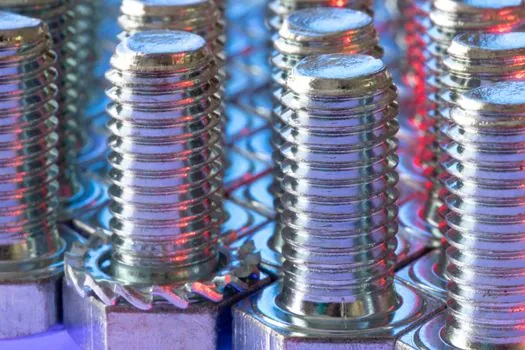
Stud material is the second cleanroom-specific gate, because galvanic corrosion under vinyl-tile or epoxy-floor seams is a common failure mode in wash-down rooms, and stainless A4-316 or mechanically galvanised carbon-steel studs are the two typical choices [S1]. The Kwik-X Dual Action system explicitly pairs KHC adhesive capsules with KH-EZ studs in carbon-steel, mechanically galvanised, and SS316 variants, which lets the same anchor be used for general baseplates, exterior service yards, and corrosive wash-down rooms without a separate procurement line [S1]. Edge distance and anchor spacing shrink with chemical systems, but a typical ETA design still requires roughly 0.5x embedment depth to the nearest free edge; below that, the design must drop to a reduced-load case or move the anchor, which is a real constraint near cleanroom wall-slab junctions where the slab turn-down narrows the available footprint [S4][S8].
Selection Criteria Comparison Across Resin Families
The four resin families compare on four decision criteria that matter in a cleanroom: typical VOC and styrene content, approved base-material condition range, cure speed at 20 C, and seismic/cracked-concrete approval. Pure epoxy: lowest VOC, slowest cure (often hours), strongest chemical resistance, full seismic and cracked-concrete approval [S2][S5]. Vinylester: low VOC, mid cure speed, good chemical resistance, broad base-material approvals including water-filled holes [S2][S3]. Hybrid (hybrid mortar, e.g. HIT-HY 200-R): low VOC, fast cure, seismic and cracked-concrete approval, mid chemical resistance [S1][S5]. Polyester: highest VOC and styrene content of the four, fastest cure, lowest cost, and the approval range is typically limited to dry, uncracked concrete, which is why it is usually screened out of cleanroom specifications on the resin step [S2][S3]. The procurement rule that follows: specify pure epoxy or vinylester where the slab is cracked, water-tested, or post-tensioned, and specify hybrid mortars only when cure-time productivity is the binding constraint and the room can be ventilated during install [S1][S2][S3].
Installation, Cure Window, and Field QA

Field installation sequence drives the achievable bond strength, and cleanroom QA typically records hole-diameter, hole-depth, hole-cleaning method, resin temperature, ambient temperature, and the actual gel and cure times observed on the cartridge label [S2][S5]. Hilti's SAFEset system, which uses a DD 30-W hollow drill bit that extracts dust during drilling, is documented as eliminating the manual blow-brush-clean step and is approved for diamond-drilled holes, which is the configuration most cleanroom slabs end up using because the rebar congestion in PT slabs often rules out percussive drilling [S1]. Cure time is temperature-dependent, and base-material temperature at installation in the Kwik-X system is documented across -18 to 104 F, so a winter slab at 5 C roughly doubles the cure time of the same mortar at 20 C, a fact that routinely slips past the spec writer if the submittal lists the 20 C cure time only [S1][S2].
When Chemical Anchors Are the Wrong Tool
Chemical anchors are the wrong tool when the load is temporary, the anchor must be removable, or the room is operational and cannot be ventilated during the resin cure [S4][S8]. Drop-in and sleeve mechanical anchors remain the better choice for suspended MEP hangers where the bolt will be replaced during a future filter change-out, and wedge anchors remain the default for static equipment baseplates on thick, uncracked, dry slabs with generous edge distance [S4]. In a cleanroom, specifying a chemical anchor where a removable mechanical anchor would do creates a future maintenance liability, because cutting out a cured chemical anchor and re-drilling at the same location is rarely possible without compromising slab integrity [S4][S9]. For cleanroom builds where the design intent lines up with resin-bonded studs and stainless hardware, see how the same documentation discipline applies to storage cage mesh and ESD rules for electronics handling and to PVC-U pipe selection in adjacent cold-storage rooms.
Trackable signals to watch over the next two quarters: any new ETA or ICC-ES listings that explicitly cover hollow cleanroom wall panels, which would let chemical anchors replace the through-bolt + backing-plate detail currently used at panel-to-frame interfaces, and any move by major mortar manufacturers to publish per-cartridge VOC emissions data, which would let the outgassing comparison between polyester and pure epoxy stop being qualitative and become a procurement-level test report. chemical anchor
Spec-level background on the components involved: expansion anchor, and chemical material.