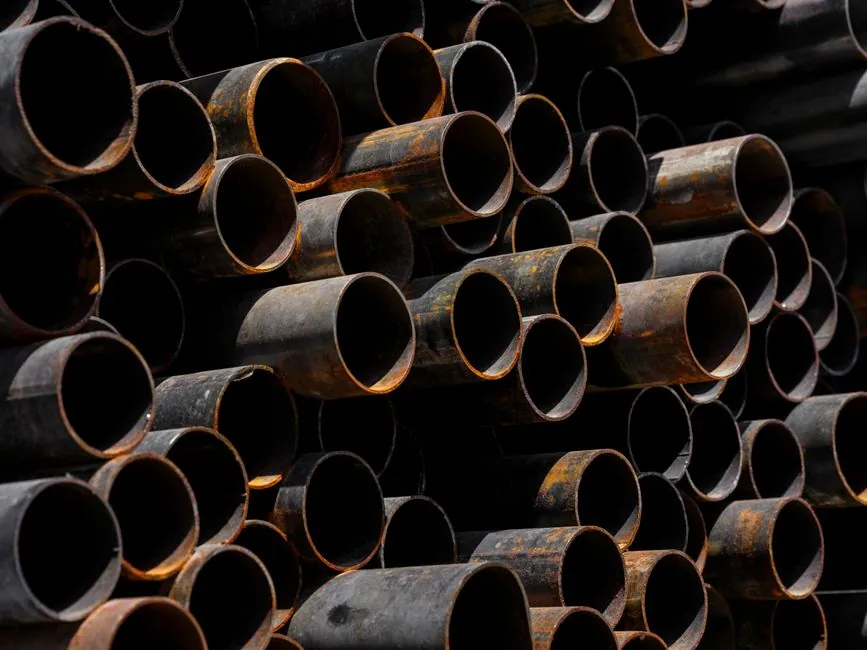
PVC-U operates inside a tight 0°C to 60°C service window, per GF Industry and Infrastructure Flow Solutions guidance for cold-store piping [S1]. That window frames every selection decision for warehouses and refrigerated rooms, because going outside it (either frozen brine lines below 0°C, or hot-sanitisation cycles above 60°C) takes the material out of its qualified range and pushes the spec toward CPVC, PE, or stainless steel.
This spec map covers pressure-rated PVC-U pipe and fittings for cold-storage secondary cooling, room-cooling headers, and food-grade utilities, drawing on GF, Hurckman, LR Marine, Lesso and Maxx Supply data published or updated in 2025-2026 [S1][S2][S5][S8][S9]. It is written for process engineers and MEP designers sizing new builds or retrofitting evaporative cooling and glycol distribution lines in a 2 million ft² class facility [S1].
Where PVC-U Fits (and Where It Doesn't)
PVC-U's 0–60°C service envelope is the deciding line: standard PVC-U is rated to roughly 140°F (60°C) maximum, with CPVC required above that point [S9]. GF specifies its cemented PVC-U system as "excellent" within 0°C to 60°C for cold stores, and that window is what the rest of the spec set must respect [S1]. Cold-storage secondary loops sit comfortably in this band because the working fluid (glycol-water mix or chilled water) rarely falls below the material's glass-transition limit on the operating side.
PVC-U is the wrong material when (a) line temperatures drop below 0°C in a sustained, uninsulated way, (b) the system sees hot sanitisation above 60°C, (c) the line carries ammonia refrigerant, or (d) the routing runs through an FDA-regulated food zone where solvent cement migration and paint flaking are unacceptable, in which case stainless steel pre-fabricated piping is the documented alternative [S2]. For warehouse-handling and racking contexts that do not touch the refrigerant or glycol circuit, see the PVC-U pipe encyclopedia entry.
Selection Criteria: Pressure, Temperature, Joint, Food-Grade
Four criteria dominate a 2026 cold-store PVC-U spec. First, pressure class: schedule 40/PN10–PN16 is the typical band for room-cooling headers and chilled-water manifolds, selected to keep working stress well below the material's hydrostatic design basis at the design temperature. Second, temperature derating: as the line temperature approaches 60°C, the allowable pressure drops roughly linearly; a PN16 pipe at 20°C derates to around PN10 at 50°C, a factor that should be checked against the pump curve rather than the nameplate [S9].
Third, joint method: solvent-cemented (cold-welded) PVC-U is the standard for chilled-water and glycol distribution because it eliminates the threaded-galvanised corrosion path that fails in humid cold rooms. Fourth, food-grade status: solvent-cemented PVC-U is non-painting, non-flaking, and corrosion-free, which is the same property set that pushes Hurckman's food-zone spec away from carbon steel and toward stainless or plastic [S1][S2]. For pipe-rack storage inside the warehouse, see storage rack for the supporting steelwork spec.
Pre-Insulated PVC-U vs Stainless vs PE: A Criteria Comparison

Three material families compete in cold-store secondary cooling. PVC-U is cheapest and easiest to solvent-cement on site, but tops out at 60°C and needs insulation added as a separate factory or field-applied layer [S1][S9]. Stainless steel (typically 304/316) handles ammonia and CO2 refrigerants, tolerates thermal cycling better, and was selected for a cheese-cooling project specifically because it removed the need for paint and rust inhibitor over a food zone, though at a higher unit cost [S2]. PE-based pre-insulated systems (e.g. COOL-FIT PE Plus) are the choice where the design temperature, route length, and energy target justify a factory-insulated, fusion-welded single source [S1].
On a criteria grid, PVC-U wins on installed cost and joint speed for 0–60°C glycol loops; stainless wins on refrigerant compatibility, mechanical abuse tolerance, and lifecycle in 20–30 year service [S2][S5]; pre-insulated PE wins on condensation control and thermal loss where the line runs unheated for thousands of metres at height [S1][S5]. The Hurckman cheese-plant case study is the textbook example of a food-zone spec tipping from carbon steel to stainless because paint flaking into the product was unacceptable, a similar risk profile applies to any PVC-U run over an open food line, where solvent-cemented joints remain the cleanest option but the pipe must still be supported per storage handling practice.
Insulation, Condensation and the Sub-Zero Risk
Below 0°C, insulation integrity becomes the single biggest reliability variable, not the pipe material. LR Marine's pre-insulated pipe design notes that poorly sealed insulation leads to condensation, thermal losses and gradual corrosion, which compounds operating cost over decades [S5]. For PVC-U, the rule is mechanical: the line must not sit in standing water or in uninsulated air below 0°C for long durations, because PVC-U's impact strength drops as temperature falls, even though its pressure rating is technically still defined to 0°C [S1].
Two practical consequences follow. First, specify factory-pre-insulated PVC-U or PE for any outdoor or unheated-space routing, not field-wrapped foam that depends on site workmanship. Second, route the line inside the cold envelope, not through it: a 0–60°C rated pipe is at risk if ambient falls to -25°C in a freezer aisle. For ancillary strip curtains that seal those aisles, the PVC-U pipe encyclopedia covers the wider material family, while door-zone sealing strips (PVC ribbed, low-temp, or anti-microbial) are a separate spec covered in cold-storage door catalogues [S3][S4].
Storage, Handling and Installation Discipline
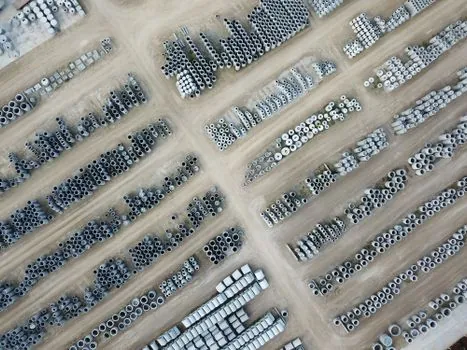
PVC-U storage rules are straightforward but routinely violated on cold-store sites. Maxx Supply's June 2026 guidance is to keep pipe in stable, moderate temperatures, away from boilers, heaters, and direct sunlight, because UV and heat aged PVC-U long before it is ever pressurised [S8]. Inside a cold warehouse that is unheated during commissioning, the storage zone must be conditioned, or the pipe must be allowed to acclimatise before solvent cementing, because cold PVC-U does not soften properly in the cement weld and the joint can fail pressure test.
Handling on site follows the same logic. Solvent-cement joints are moisture- and temperature-sensitive: most cements specify a working range of roughly 4–38°C, so a freezer-aisle installation at -10°C needs tenting, localised heat, or a change to mechanical jointing. Hurckman's pre-fabrication model, measuring and welding spools in a conditioned shop before site install, is one answer to that constraint, cutting field time, limiting production interruption, and giving a faster install on a food-zone project [S2]. For the warehousing and racking side of the same facility, see storage cage for how the finished pipework integrates with parts-handling zones.
2025-2026 Cold-Storage PVC-U Trends
Three signals from the 2025-2026 dataset are worth tracking. First, factory-pre-insulated plastic systems (PE and PVC-U) are displacing field-foamed steel in large refrigeration builds: GF documents a 2 million ft² former-mine cold store in Rush Creek, MO using COOL-FIT PE Plus to leverage the site's natural subterranean temperature stability [S1]. Second, pre-fabrication of pipe spools in conditioned shops is now the default for food-zone and freezer-aisle work, both to control joint quality and to compress on-site hours in operating facilities [S2].
Third, material consolidation is moving away from painted carbon steel in any food-adjacent route: Hurckman's case study explicitly traded higher stainless cost for the elimination of paint and rust inhibitor over a cheese line, a decision that would be similar for a solvent-cemented PVC-U run over an exposed food product [S2]. For facility-level cold-storage warehouse design, the steel-plastic composite pipe selection spec map covers the transition zone where plastic meets metal at the building service entry, and the food and beverage storage cage spec map addresses the receiving-end handling side.
Track these next: PVC-U's 0–60°C envelope is the hard boundary; verify any new cold-store spec sits inside it before locking the pressure class, and pre-insulate every sub-zero route so the insulation, not the pipe, is the part that fails first. Cross-check the warehouse's storage handling and storage rack spec against the same ambient and condensation rules that govern the pipework.