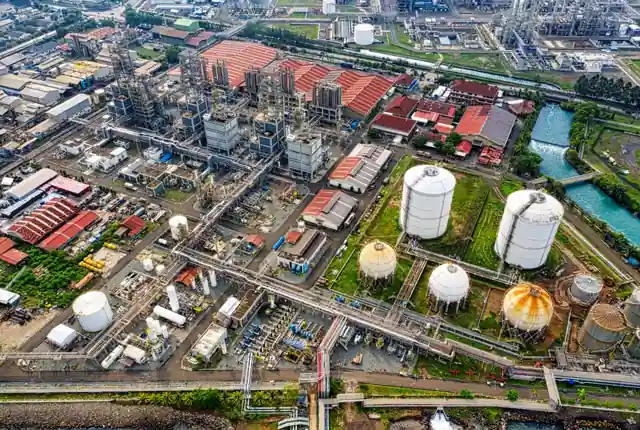
The global chemical industry is sitting at the bottom of a multi-year capital cycle in 2026 rather than pivoting into broad-based expansion, with overcapacity in basic chemicals, soft end-market demand, and regional divergence replacing the textbook recovery curve [S1][S4].
Trade-association forecasts still pencil in roughly 3.5% global production growth, but the operating reality is flat volumes, a falling import book, and an M&A market that has thinned out to a handful of large transactions [S1][S2][S3]. For process engineers and procurement leads, the practical question is which sub-segments and which regions are bottoming first, and which are still sliding.
Where the Cycle Actually Sits in 2026
Deloitte's 2026 outlook, published 2025-11-02, describes the sector as "nearing the bottom of a capital cycle" and explicitly notes the 2026 setup is "slightly weaker than for 2025", with persistent overcapacity in basic chemicals continuing to pressure operating rates and margins [S1][S4]. The framing matters: this is a supply-side correction layered on a demand shortfall, not a pure inventory destock.
On the US side, the American Chemistry Council's 2026-06-12 mid-year update has imports of chemicals projected to decline again in 2026 (down 1.0%) before a manufacturing-led recovery lifts import demand in 2027 [S2]. US GDP is tracked at 2.1% growth in 2026 and 2.0% in 2027, with consumer-price inflation accelerating to 3.5% on higher oil and a 4.4% unemployment rate holding into 2027 [S2]. That is a higher-cost, lower-credit-availability backdrop, which historically is a poor cocktail for discretionary chemical offtake.
Regional Scorecard: US, Europe, China
Comparing the three main blocks on operating-rate recovery, cost position, and 2026 production outlook, the cycle bottom is asynchronous: the US is bottoming first, Europe is still in a structural slide, and China is still adding capacity into a soft demand market. [S4]
US: ACC expects basic chemicals output to rise 1.2% in 2026 with specialty output essentially flat, and growth across 12 of 20 tracked end-use industries versus 9 in 2025; housing is flat, autos slightly down, and consumer chemicals finished 2025 lower [S4]. Imports are projected to fall 1.0% in 2026 before recovering with the broader manufacturing cycle in 2027 [S2]. Europe: German chemicals output is down as much as 18% between 2019 and Q2 2025, the UK is down 30%, and Cefic projects European production growth of only around 3% through 2026 with European energy prices still substantially above pre-2022 baselines [S5]. China: continued build-out of polypropylene, ethylene, and polyethylene capacity is putting Europe and parts of Asia at a cost disadvantage and forcing a wave of plant closures in higher-cost regions [S4].
What Q1 2026 Earnings Are Actually Showing
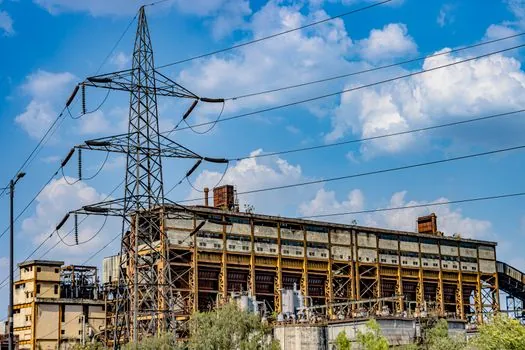
The 2026-05-07 read on Q1 chemical-giant results describes the cycle as "unconventional" because it is being driven by supply contraction rather than a demand surge, with BASF reporting a slight sales dip and continued margin pressure despite the cost-cut program [S7]. That pattern is consistent with a sector where management is taking capacity out at the same time that end-market volumes are still soft, which is the classic mid-trough behaviour.
For procurement and project teams, the practical signal is that pricing power is uneven: commodity grades (olefins, polyolefins, basic intermediates) remain oversupplied globally, while specialty and AI-linked grades are showing firmer pricing and tighter lead times [S5]. The same divergence shows up in M&A, where 2026 deal value is concentrated in select large transactions rather than a broad-based volume rebound [S3].
M&A and Capex: Wait-and-See, With Selective Moves
Deloitte's view, as reported by SCI in early 2026, is that the chemicals M&A market "lacks both buyers and attractive assets" and that meaningful deal volume is unlikely until stability returns, with portfolio re-evaluations more likely to drive a consolidation wave after 2026 [S4]. PwC's 2026 mid-year deals outlook reinforces that picture: value is concentrated in a few large transactions, not a broad recovery in deal count [S3].
Capex posture is the same shape, regional and selective. The split visible across the 2026 outlook set is cuts in Europe (driven by structural cost and regulatory load), flat in the US (where announced petrochemical investments still total hundreds of billions over the next decade), and growth pockets in AI-linked electronics chemicals and Middle East advantaged-feedstock projects [S2][S5]. For chemical reagent and chemical material buyers this translates into longer lead times on specialty grades and more competitive pricing on commodity tonnage, with the gap widening through 2026. The engineering takeaway is that spec standardisation across regions is getting harder, not easier, as the cycle diverges.
Operating Signals to Track Through Year-End 2026
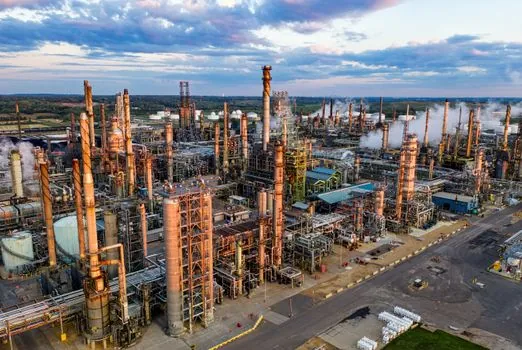
Three concrete signals will mark whether the trough is breaking or deepening: (1) US basic-chemicals output versus the ACC's 1.2% 2026 base case [S4]; (2) the volume of announced European plant closures through Q4 2026 versus the 2025-2026 wave, given that further shutdowns are flagged as likely under continued overcapacity [S4]; (3) the pricing spread between commodity olefins/polyolefins and AI-linked specialty grades, which is currently the cleanest read on supply-demand tightness inside the sector [S5].
For readers tracking adjacent capex and materials stories, the cross-cycle picture is consistent with broader 2026 capex divergence, including AI-driven electronics-chemicals investment and Middle East advantaged-feedstock projects, as detailed in this Chemical Industry 2026 Capex breakdown. Process engineers specifying equipment into this cycle should plan for an extended low-utilisation window in basic chemicals, with the recovery curve uneven across industrial valve and instrumentation demand tied to specialty and AI-linked projects rather than commodity rebuilds.