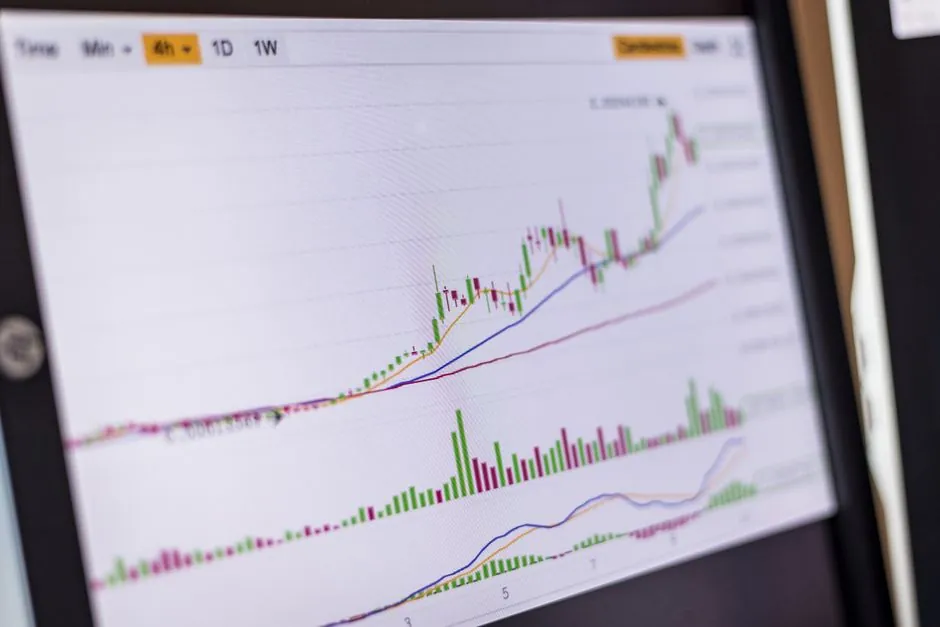
Cerium oxide (CeO₂) spot prices in China (FOB Shanghai) and Europe (Ex-Warehouse Rotterdam) are expected to drift modestly lower through Q3 2026, with industrial-grade >99% material tracking a mildly bearish trend before stabilising near September 2026 [S5]. Chinese domestic EXW prices are flagged as the most exposed, with earlier first-half 2026 softening in domestic spot already beginning to translate into more competitive export offers for European buyers [S5].
The correction is technical, not structural. Cerium is produced as an unavoidable co-product whenever neodymium (Nd) and praseodymium (Pr) are separated for NdFeB magnets, and the resulting supply overhang defines the long-run ceiling on CeO₂ pricing across industrial, polishing, and catalyst grades [S3]. This co-product dependency ties cerium oxide's economic story to magnet demand rather than to its own end-use growth, a relationship material specifiers should price into long-term sourcing contracts.
Oversupply Mechanics: Why Cerium Oxide Cannot Run Away
CeO₂ is a stoichiometric by-product of the Nd/Pr separation circuit, meaning that every additional kilogram of magnet-grade rare earth pulled for EV traction motors and wind turbine generators automatically releases a fixed ratio of cerium into the market [S3]. Demand for cerium itself (glass polishing, catalysts, ceramics, pigments, emerging Al-Ce alloys) is materially smaller than the volume generated by magnet production, so the structural position of CeO₂ is chronic oversupply punctuated by short technical squeezes, not a tightening market [S3].
This co-product geometry is quantified in the Idaho National Laboratory system-dynamics study, which modelled three cerium feed forms (carbonate, oxide, metal) for a hypothetical aluminium-cerium alloy deployment. The model shows that even aggressive Al-Ce alloy uptake produces a maximum ~362% increase in cerium oxide price versus the business-as-usual 228 scenario by 2040, but only because the BAU baseline already sits at a depressed, oversupplied level [S1]. In other words, the upside is real but conditional on a new bulk sink that does not yet exist at industrial scale. For procurement teams running rolling 12-month forecasts, the working assumption is range-bound pricing, with rallies that fade as Chinese supply responds.
Q3 2026 Price Signals: China Leads, Europe Lags
Price-watch assessments for July-September 2026 grade cerium oxide 99.99% min at three benchmarks: FOB Shanghai (China) mildly bearish, EXW China domestic (China) bearish, and Ex-Warehouse Rotterdam (Netherlands, industrial grade >99%) mildly bearish [S5]. The asymmetry is consistent with regional market structure. China carries integrated mine-to-oxide capacity, so inventory builds feed directly into spot softness, while Europe remains import-dependent and somewhat insulated by premium-grade and REACH-grade requirements [S5].
Procurement data points to watch through Q3 2026: weekly Shanghai EXW prints, Rotterdam ex-warehouse quotes for >99% industrial grade, and downstream offtake from the polishing (CMP slurry, precision glass) and auto-catalyst sectors, which dominate near-term consumption. The price-watch forecast framework expects gradual decline through most of the quarter before stabilising toward September 2026, a pattern consistent with destocking rather than a demand collapse [S5]. Related reading on demand-side spec drivers is covered in the cerium oxide 2026 demand breakdown across glass polishing, catalysts, and alloys.
Cost Drivers and Total-Cost-of-Ownership for Industrial Buyers
Cerium oxide unit cost is set by four drivers: (1) NdPr-magnet production rate, which sets baseline co-product flow; (2) separation plant utilisation, where higher runs dump more CeO₂; (3) grade and form premiums, since 99.99% min polishing grades and nanoparticle dispersions command structurally higher unit prices than industrial >99% oxide; and (4) logistics and certification, with Rotterdam ex-warehouse quotes carrying import duty, REACH documentation, and inventory carry that Shanghai FOB does not [S5].
Total-cost-of-ownership considerations shift the calculus away from headline spot. For slurry blenders and CMP users, cerium oxide nanoparticle dispersions were a USD 1.04 billion market in 2025, projected to USD 3.57 billion by 2033 at 16.70% CAGR, with the powder form holding 61.7% of 2025 revenue and North America taking a 34.6% revenue share [S4]. The dispersion segment is a higher-mix, higher-margin slice of the same chemistry, and it is where polishers, semiconductor CMP houses, and biomedical buyers sit. For commodity >99% oxide, the relevant cost model is freight-inclusive, Rotterdam-delivered, with the FOB Shanghai to Rotterdam spread as the arbitrage watch-item.
Long-Term Outlook: Alloy Demand Is the Only Structural Re-Rating Catalyst
Looking past Q3 2026, the long-term price path for cerium oxide is bounded above by the Al-Ce alloy thesis and bounded below by the cost of cerium in the NdPr separation circuit. INL's modelling shows cerium carbonate currently carries the lowest feed price, but cerium oxide offers the best deployment economics for Al-Ce alloys at scale, because its larger market size buffers shocks that would destabilise a thinner carbonate pool [S1]. If Al-Ce alloy production matures into a real industrial tonnage (target markets: aerospace castings, automotive cylinder heads, hydrogen embrittlement-resistant structural alloys), the co-product overhang begins to be consumed in volume.
Until that materialises, the more probable multi-year path is range-bound pricing with cyclical squeezes. Adjacent cerium-bearing technology, including cerium-substituted permanent magnets, is an emerging but not yet a high-volume offset, and the engineering trade-offs are still being mapped (see the cerium-substituted magnet engineering brief). For procurement and spec teams, the right framework is to lock medium-term volume contracts at the Q3 2026 soft patch, hedge against a NdPr magnet demand shock, and treat Al-Ce alloy deployment as a 2028-2030 watch-item rather than a 2026 pricing variable.
Trackable signals through year-end 2026: weekly Rotterdam Ex-Warehouse quotes for >99% industrial-grade CeO₂, monthly Chinese NdPr magnet output (the upstream co-product driver), and any announced Al-Ce alloy capacity additions from major non-ferrous smelters, which would mark the first credible break in the chronic-oversupply regime. Spec-side guidance for downstream polishing and catalyst end-uses is detailed in the 2026 demand-by-application breakdown for cerium oxide, and broader materials price benchmarking (cement, solvents, composites) follows the same co-product-versus-standalone-supply logic discussed here.
For component-level specifications, see construction machinery and equipment, lamps and light fittings, and lighting equipment and electric lamps.