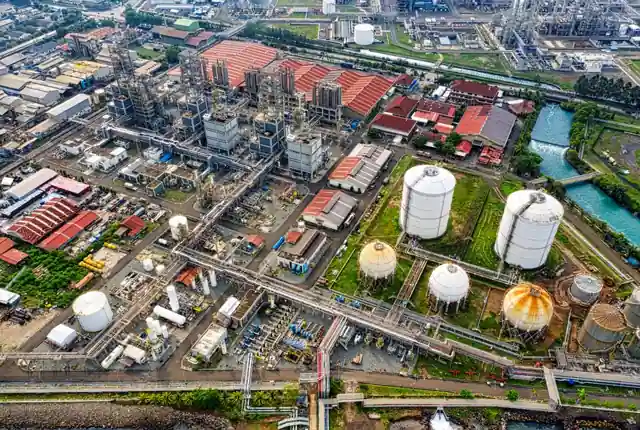
US chemical industry capital spending on equipment and structures is projected to rise just 0.9% in 2026, the weakest reading in years, while EU27 chemical capex already slid from €29.3 billion in 2023 to €28.4 billion in 2024 [S6][S2].
Growth in 2026 is not absent, it is concentrated: petrochemical build-out in the Middle East, US Gulf Coast expansions tied to AI-data-center power demand, and specialty-chemicals debottlenecking [S3][S5]. The wider pattern is profitability over volume, with producers pruning brownfield, deferring greenfield, and reserving sanction-grade capital for projects with a structural demand pull.
How 2026 Capex Compares Across the US, EU, and China
The US, EU, and Asia-Pacific chemical industries are running three different capex cycles in 2026, and the gap between them is widening [S3]. In the US, the American Chemistry Council reports that 2025 capital spending on chemical industry projects rose 2.4% to $39.8 billion, and that 2026 growth is expected to slow sharply to 0.9%, with a more meaningful acceleration deferred to 2027 [S4][S5]. That 0.9% figure is well below typical replacement-cycle capex and signals that the bulk of the US chemical complex is running on maintenance budgets, not expansion budgets.
In Europe, the picture is older but more aggressive. Cefic data show EU27 chemical industry capital spending fell from €29.3 billion in 2023 to €28.4 billion in 2024, a 3.1% nominal decline that is even larger in real terms once 2023-2024 EU construction-cost inflation is netted out [S2]. Europe now accounts for roughly 10% of global chemical sales, down from a structurally higher share two decades ago, and that share loss shows up directly in the capex ratio [S2]. For comparison, ACC's 2026 US capex of approximately $40 billion converts, at average 2026 exchange, to a level roughly 40% above the EU27 nominal figure, despite the US consuming a smaller share of global chemicals.
Asia, particularly China, remains the swing region. Cefic places Europe at 10% of world chemicals and the US at a comparable mid-teens share, with the balance concentrated in Asia [S2]. Excess capacity in Chinese petrochemicals and specialty intermediates continues to suppress global margins, which is the same force driving European site closures and US project deferrals [S3]. The practical consequence for a procurement engineer is that 2026 capex is bipolar: maintenance-level in the West, expansion-level in the Middle East and selected Asian petrochemical corridors.
Where the Growth Dollars Are Going in 2026
Within the muted US 0.9% headline, two pockets are absorbing the marginal dollar: chemicals and materials tied to AI data-center construction, and US Gulf Coast petrochemical projects already sanctioned before the 2024-2025 demand softening [S4][S5]. ACC's 2026 mid-year outlook explicitly credits the surge in data-center build-out with triggering demand for semiconductors, computers, certain electrical equipment, and the upstream chemicals those systems require [S5]. This translates into a measurable pull on high-purity acids, photoresist solvents, hydrogen peroxide for semiconductor wet processing, and on epoxy and laminate chemistries for PCB and server-board manufacture.
The other growth pocket is the Middle East. The 2026 ACC outlook notes that conflict in the Middle East has created new uncertainty, but pre-conflict sanctioned capacity, including world-scale steam crackers and integrated downstream derivatives in Saudi Arabia and the UAE, continues to move toward mechanical completion, with first-product milestones scheduled across 2026-2027 [S5]. These projects are typically equipped with pressure transmitter arrays specified to ATEX/IECEx for Zone 1, large-bore flow meter runs on ethylene and propylene service, and industrial valve packages on NACE MR0175-qualified trim for sour-hydrocarbon duty.
Outside those two corridors, the pattern is restraint. US producers are delaying discretionary projects, deferring debottleneck studies, and pulling back on capacity additions in petrochemicals and specialty chemicals outside the United States, where the cost gap with Asian producers has widened [S3]. For specification engineers, this means a 2026 bid list skewed toward small-MRO packages, instrumentation retrofits, and energy-efficiency revamps, not grassroots plant construction.
Why Demand Is Soft: Auto, Construction, and the Cost Stack
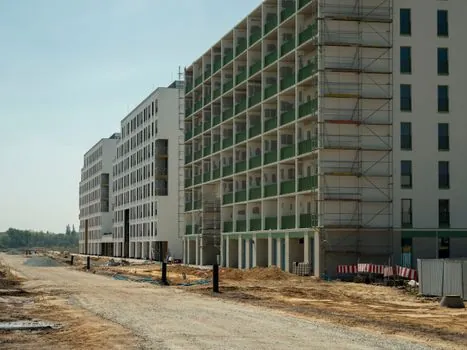
Three demand drivers are pushing capex discipline across the US and EU. First, automotive: US vehicle sales are projected to decline in 2026 after a 2025 peak, which directly reduces pull on plastics, coatings, adhesives, and tire-grade elastomers, all of which are heavy chemical consumers [S3]. Second, construction and broader manufacturing remain subdued, removing another leg of volume support that chemicals typically rely on in mid-cycle years [S3].
Third, the cost stack has hardened. High interest rates, tariffs on imported equipment, and persistent input-cost inflation are pushing hurdle rates above the returns most brownfield expansions can clear [S3]. ACC adds that capital spending in segments outside AI and data-center-linked infrastructure has largely slowed in response to higher costs and an uncertain demand environment [S4]. The combined effect is a US chemicals sector forecast to grow production by only about 0.3% in 2026, with a more meaningful recovery deferred to 2027 [S3].
On the input side, chemical reagent pricing for analytical-grade and process-grade chemistries has tracked the same inflationary pattern, and the same procurement pattern is showing up across chemical material categories used in plant construction, including higher-alloy piping, fiber-reinforced polymer linings, and corrosion-resistant fastener grades. Engineers planning 2026 plant upgrades should expect 4-6 month lead times on specialty items and 10-14 month lead times on large fabricated skids.
Resilience, Energy, and the Petrochemical Advantage
The 2026 Deloitte outlook frames the year around three operating principles: profitability over volume, resilience over just-in-time, and long-term transformation over short-cycle capex [S1]. That framing matches the data: producers are pruning low-margin volume, holding cash, and reserving sanction capital for projects that survive a demand downturn. Energy cost remains the single most important structural variable, and it is the lever keeping the US petrochemical complex running at utilization rates above the European average [S3].
ACC expects 2026 US GDP growth of 2.1%, essentially flat with 2025, with consumer-price inflation accelerating to 3.5% on the back of higher oil prices before easing to 2.4% in 2027 once the assumed Middle East resolution plays through [S5]. Unemployment is projected at 4.4% in 2026 and 4.5% in 2027, consistent with a soft-landing rather than a recessionary demand profile [S5]. For chemical producers, that combination is enough to keep plants running but not enough to justify grassroots builds, which is exactly the demand gap a 0.9% capex print implies.
The Europe side is harsher. EU27 chemical sales continue to lose share globally, the capex base has shrunk in nominal terms, and energy-cost differentials with the US Gulf Coast and Middle East producers remain wide enough that European steam crackers are structurally sub-scale on a cash-cost basis [S2][S3]. The implication for the next two years is continued rationalization: site closures, asset sales, and selective conversion of cracker capacity to higher-value derivatives, with growth capital concentrated in specialty and bio-based niches where European producers retain a technology edge.
What This Means for Project Pipelines and Specification Choices
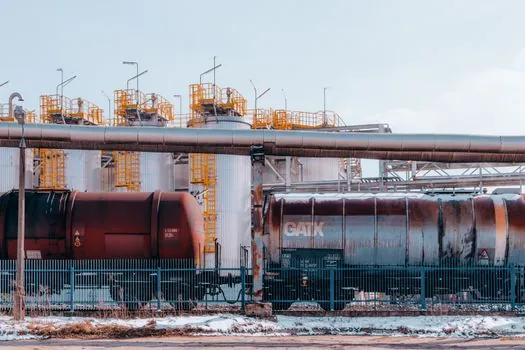
For procurement and project engineering teams, the 2026 capex split has four direct consequences. First, on the US side, the bulk of 2026 spending is staying-power spending: turnarounds, reliability upgrades, instrumentation refresh, and energy-efficiency retrofits, which are typically specified against existing plant standards and existing OEM preferences rather than evaluated as new technology decisions [S4][S5]. Second, on the EU side, the absolute capex base is shrinking, so bid lists are smaller and more competitive on price [S2].
Third, on growth pockets, the 2026 sanctioned projects are concentrated in Middle East petrochemical complexes and US Gulf Coast expansions tied to AI data-center demand, and the chemical anchor specs on these projects typically follow API, ASME, and NACE MR0175 for sour service, with instrumentation packages commonly dual-certified to ATEX 2014/34/EU and IECEx for Zone 1 hazardous areas [S3][S5]. Fourth, on the timing side, the ACC outlook assumes 2026 capex at +0.9% and projects an acceleration in 2027 as demand recovers and policy clarity improves, which is the signal engineers should price into 2026 procurement strategies [S5].
For project teams planning grassroots or major-expansion work that does not have to break ground in 2026, deferring final sanction by 6-12 months is now a defensible position, given that 2026 capex growth is below replacement level and that the 0.9% US print explicitly defers the larger cycle to 2027 [S3][S5]. For project teams working on already-sanctioned Middle East or US Gulf Coast work, the constraint is not sanction timing but supply-chain throughput: lead times on large rotating equipment, on industrial valve packages, and on qualified pressure transmitter inventory are the gating items, not the capex decision itself.
Trackable Signals for the Rest of 2026
Three signals will tell the 2026 story. First, the next ACC quarterly capex revision: if the 0.9% 2026 US print moves materially higher, it is evidence that the data-center and AI-linked chemistry pull is large enough to drag the headline; if it moves lower, the consensus 2027 recovery call is at risk [S5]. Second, EU27 2025 capex disclosure from Cefic in late 2026 or early 2027: a fourth consecutive year of nominal decline would confirm the structural rationalization thesis, while a flat or up print would suggest the European cost gap is closing faster than expected [S2].
Third, Middle East project milestone tracking: first-product dates on the sanctioned Saudi and UAE cracker-derivative complexes are the cleanest signal of whether 2026 global capacity additions stay on schedule, and any slippage directly tightens the 2026-2027 supply balance that currently keeps US and EU utilization rates elevated [S5]. The same milestone calendar is the leading indicator for which OEM packages, instrumentation, and flow meter skids get ordered, built, and shipped in the back half of 2026.
See also our earlier report, Sputtering target vs sputtering cathode: same thing, different scope.