
Eleven transactions of more than $1bn accounted for roughly 70% of the $67bn trailing-twelve-month deal value logged through Q1 2026 across 552 chemicals M&A deals, per PwC's Chemicals: US Deals 2026 midyear outlook [S2].
Sellers are divesting non-core commodity units while redirecting capital into specialty assets in coatings, advanced materials, water treatment, and nutrition, a pattern visible in transactions tracked across 2025-2026 [S1][S3][S4].
Capital concentration: eleven deals carry seventy percent of value
The trailing twelve months to Q1 2026 saw 552 chemicals M&A transactions close for a combined $67bn, yet the median deal size sits well below the headline figure because the top eleven deals absorbed ~70% of total disclosed value [S2]. PwC's chemicals deals lead characterises this as a selective market where capital is available for scaled, strategic assets, while smaller or commodity-exposed businesses face deeper underwriting and longer processes [S2][S4].
Strategic buyers continue to lead deal volume, with private equity concentrating on premium specialty assets and restructuring opportunities, according to the same midyear outlook [S4]. That split matters for chemical plant operators: when private equity acquires a flocculants or coatings line, the supply contract, technical service agreement, and formulation know-how often shift with it.
Five 2026 transactions reshaping coatings, water, and materials
BASF divested its coatings business to The Carlyle Group for approximately EUR 7.7bn, the largest 2026 carve-out in the sector, and a direct test of private equity appetite for automotive OEM coatings [S3]. In the same window, AkzoNobel and Axalta Coating Systems combined to form a single global coatings platform, concentrating purchasing influence over titanium dioxide, acrylic and epoxy resins, specialty solvents, and performance additives into one buyer [S3].
Solenis acquired BASF's flocculants business, expanding its position in industrial and municipal water treatment chemical supply [S3]. Kemira moved into activated carbon, broadening its water-treatment portfolio beyond traditional coagulants. Wanhua and Pingmei Shenma established a polycarbonate joint venture, reflecting a regional pattern of domestic capacity consolidation in engineering plastics [S3].
Commodity headwinds: Chinese capacity versus European energy cost
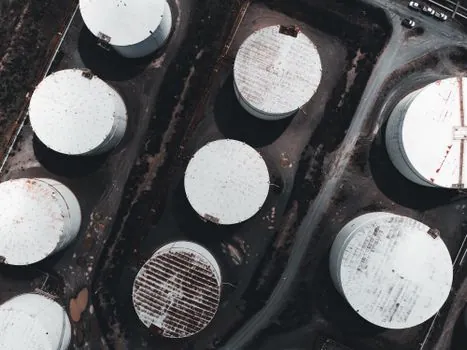
Commodity-exposed assets, particularly those with European concentration, face a four-part pressure stack: higher energy costs, regulatory complexity, weak downstream demand, and ongoing Chinese capacity additions [S2]. PwC's Michael Fiore stated that overcapacity, primarily from China, is prompting companies to rethink their portfolios and focus capital where they have a clearer competitive advantage [S2].
Deloitte's 2026 outlook frames the same dynamic from the demand side: weak demand and structural overcapacity are pushing majors to prioritise profitability, resilience, and long-term transformation over volume growth [S5]. The practical signal for procurement teams is that European commodity industrial valve and flow meter supply chains tied to ethylene, ammonia, or chlorine assets are more likely to encounter ownership changes in the next 12-18 months than Asian or US Gulf Coast equivalents.
Specialty versus commodity: a four-criteria comparison
On margin durability, specialty assets in nutrition, advanced materials, and water treatment continue to command premium multiples, while commodity assets require more creative deal structures or operational improvements to clear underwriting [S2]. On geographic exposure, US Gulf Coast and Asian integrated sites remain attractive, whereas European commodity sites trade at a discount driven by energy-cost differentials [S2][S6].
On buyer type, strategic acquirers still lead deal count, but private equity has absorbed the largest single 2026 carve-out (BASF Coatings to Carlyle at EUR 7.7bn) [S3][S4]. On transaction readiness, sellers that present clean financial data, normalised earnings, and a credible stand-up plan draw materially more interest than those marketing peak-cycle numbers [S2][S4].
Carve-out execution: what disciplined sellers do differently

PwC's midyear report warns that assets marketed on peak-cycle earnings may stall, while carve-outs with clear stand-up plans, normalised earnings, and a credible value creation roadmap continue to draw interest [S2]. Sellers that prepare separation of IT, shared services, and toll manufacturing agreements before launching a process typically compress the timeline from announcement to close by several months.
Buyers are spending less time trying to time the cycle and more time asking which assets will outperform through it, Fiore told Chemistry & Industry, describing 2026 as a more disciplined market where quality matters more than quantity [S2]. Artificial intelligence tools are increasingly used to accelerate due diligence, validate synergies, and stress-test operating models during the underwriting phase [S4].
For whom the 2026 market is, and is not, open
This market is for sellers of differentiated specialty platforms with normalised earnings, and for buyers willing to pay premium multiples for defensible end markets in coatings, water, and advanced materials [S2][S4]. It is not a market for sellers banking on a cyclical recovery to close valuation gaps, nor for buyers seeking broad-based exposure to European commodity assets without a restructuring thesis [S2].
For chemical plant operators and EPC contractors, the practical implications extend to pressure transmitter sourcing, where ownership changes at a flocculants or coatings site often trigger requalification of installed instrumentation under the new parent's standards. The 2026 deal pipeline also has knock-on effects for chemical anchor and chemical material supply contracts, particularly where a PE-owned site renegotiates raw-material agreements within the first 18 months post-close.
Standards, sourcing, and deal-due-diligence signals

Process safety and materials compliance documentation becomes a transaction artefact in 2026 carve-outs: ATEX 2014/34/EU equipment certificates, IEC 60079 series hazardous-area classifications, and NACE MR0175 sour-service declarations routinely transfer with the asset and are re-baselined by the new owner [S2][S4]. PwC's report notes that clean financial data, well-developed separation plans, and credible growth strategies are the three readiness criteria separating deals that close from those that stall [S4].
Engineers evaluating a counterparty change should track the 30-60-90 day post-close communication window, where new ownership typically issues updated supplier qualification questionnaires, revised change-of-control clauses, and revised MOC (management of change) protocols. The M&A cycle continues to be shaped less by market timing and more by strategic execution, and capital is increasingly flowing toward companies with clear competitive advantages [S2][S4].
Track the next 90 days for: further carve-out announcements in coatings and advanced materials, any new BASF or Covestro non-core divestiture packages, and updated PwC Chemicals Deals quarterly commentary due in Q4 2026. The regional cement and heavy-haul infrastructure trends tracked across 2026, including the global cement demand split into three regional tracks, share the same underlying dynamic of capacity rebalancing in bulk materials, a useful cross-check when sizing chemical commodity exposure.