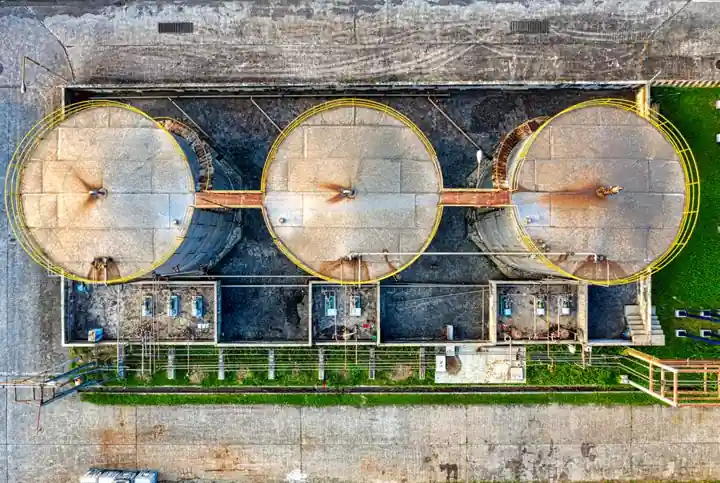
Access control for a chemical plant is not the same job as a hotel door: the reader, lock, and cable have to survive corrosive vapour, flammable atmospheres, and 24/7 shift traffic while logging every credential for audit. Current 2026 OEM spec sheets concentrate on IP65 stainless housings, 125 kHz / 13.56 MHz RFID (ISO/IEC 14443A), and biometric verification with sub-second response [S2][S7].
The working envelope most procurement engineers see runs from -20 °C to +55 °C operating, 20-95% RH non-condensing, and DC 9-12 V or PoE supply, with RS-485 / Wiegand / TCP-IP backhaul [S5][S7]. Plants that ignore the zone classification and pick a commercial reader end up replacing it within 18-24 months; the chemicals eat the housing, not the electronics.
Where Access Control Fits in a Chemical Plant
Access control at a chemical site governs perimeter gates, process-block entrances, control-room doors, and laboratory / rack-room access; the goal is restricting ignition-source zones to authorised personnel while keeping an audit trail for safety regulators [S8][S10]. The access control layer sits between perimeter intrusion detection and the plant CCTV / fire / gas system, and is typically specified together with chemical anchor points and turnstiles for one-way material flow.
Process blocks handling flammable solvents fall under hazardous-area zoning (Zone 1 / Zone 2 in IEC 60079 terminology); the access reader installed at the door frame must be rated for the same zone as the equipment it guards, with the magnetic lock or strike wired through an intrinsically safe barrier when the lock body sits inside the classified area. A standalone RFID reader mounted on a junction box outside the zone, paired with a door-position sensor and a fail-secure strike inside, is the typical 2026 architecture [S8].
Authentication Modes Compared
Five authentication families dominate chemical-plant spec pages in 2026: RFID card, PIN keypad, fingerprint, facial recognition, and mobile credential over Bluetooth/NFC, with palm-vein and iris used in higher-tier rooms [S2][S3]. OEM data sheets list the trade-offs in concrete numbers: SAJO's enterprise reader quotes < 0.5 s authentication and up to 100,000 users per controller, with fingerprint, face, and palm-vein as supported modalities, while Hundure's RAC-300 keypad-card unit stores 3,500 badges in 2K memory and links 255 sets over RS-485 [S2][S5].
For a Zone 1 door frame, multi-factor (card + PIN, or card + biometric) is the baseline most safety auditors will accept; fingerprint-only is rejected because gloved hands fail, so a card + PIN stack or a facial-recognition terminal at 1-2 m standoff is preferred for shift handover [S2]. The chemical material handling in the same block drives reader choice: where solvent vapours fog camera lenses, an OSDP-secure RS-485 keypad with proximity card is more reliable than a face terminal.
Wiring, Protocols, and Hazardous-Area Wiring
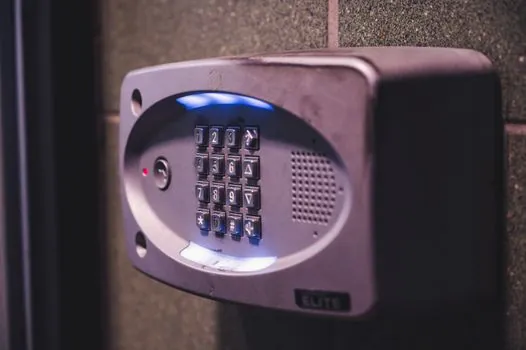
Two wiring patterns cover most chemical-plant installs: legacy Wiegand + 12 VDC for retrofits, and RS-485 / OSDP for new builds because OSDP adds encrypted supervision and supports 128 readers per bus segment [S2][S5]. TCP/IP backhaul is now standard for cloud-managed platforms: Butterfly MX's system runs an iOS / Android dashboard with 365 days of date- and time-stamped photo audit, while SEC4710-SEC4717 panels push events into the SEC Cloud Console over the same Ethernet run [S3][S4].
Cable selection matters in the classified area. Readers mounted in Zone 1 must use armoured cable (typically SWA or braided) on certified glands, with the cable shield grounded at one end only to avoid loop currents; the lock wiring from the safe-side controller to the in-zone strike runs through a zener barrier or galvanic isolator, and the door-position sensor is treated as a simple apparatus when its parameters are below the ignition limits. Plants that run RS-485 at 12 VDC see reliable communications to 1,200 m; beyond that, a repeater or fibre conversion is the rule, not an exception [S5].
Environmental and Mechanical Specs That Decide Winners
Five numbers separate a chemical-plant reader from an office reader: ingress rating, housing material, operating temperature, power, and impact rating. Most 2026 OEM units quote IP65 with ABS-and-metal or stainless-steel housings; the Febino / Trí Việt industrial reader specifies 50 Hz, 1-year warranty, and a 3-5 s alarm window, while Logix lists 12 VDC / 24 VDC, 10 W output, 138 x 86 x 25 mm, 400 g, and IP65 [S1][S9][S10].
For outdoor perimeter gates, the operating envelope widens to -20 °C to +55 °C with 20-95% RH non-condensing, and the housing must resist UV and salt; for indoor control-room doors, a smaller IP54 keypad-card unit is acceptable [S5]. Plants that mount readers on vibrating pipe racks should also check the IK impact rating; ABS-cased units rarely survive an accidental forklift strike, so a metal-cased reader at the gate is the cheaper long-term choice [S9].
Compliance, Audit Trail, and Integration

Audit trail is the most-cited reason chemical-plant buyers replace an existing system. OEM platforms now store 365 days of date- and time-stamped events with photo, and export logs to ERP / HRMS via REST API for compliance reviews [S2][S4]. Emergency lockdown is a hard requirement: SAJO specifies one-click facility lockdown, anti-passback to prevent tailgating, and APIs for HRMS / ERP, which is the same feature set the SEC Cloud Console exposes through SEC4710-SEC4717 panels [S2][S3].
For a Zone 1 process block, the spec line should explicitly call out ATEX / IECEx certification on the reader, fail-secure (power-to-lock) rather than fail-safe strikes on fire-doors, and 99.9% authentication accuracy in OEM literature. Where the door is part of a muster route, the access event must trigger the fire panel's roll-call report, which means the access system and the fire panel need a documented interface, not just a shared Ethernet cable [S2][S8].
Selection Criteria and a Side-by-Side Comparison
Three decision criteria sort the 2026 short-list: hazardous-area rating, authentication strength, and management platform. A Zone 1 door frame forces ATEX/IECEx on the reader, multi-factor (card + biometric) for shift workers, and an on-prem or hybrid management server because the safety auditor will not sign off on a cloud-only tenant for an explosive-atmosphere asset [S2][S8].
Compared against the OEM data sheets: the Hundure RAC-300 keypad-card is the right pick for indoor non-classified doors needing low cost and 3,500-badge local storage; the Logix IP65 ABS/metal unit suits perimeter gates with its 12-24 VDC supply and 10 W output; the SAJO enterprise controller covers process-block doors needing < 0.5 s biometric authentication, 100,000-user capacity, and OSDP / TCP-IP backhaul; and the SEC4700-series panels are the choice for plants standardising on cloud-managed time-zone rules and Google Home integration [S2][S3][S5][S9].
Limits, Failure Modes, and What to Avoid
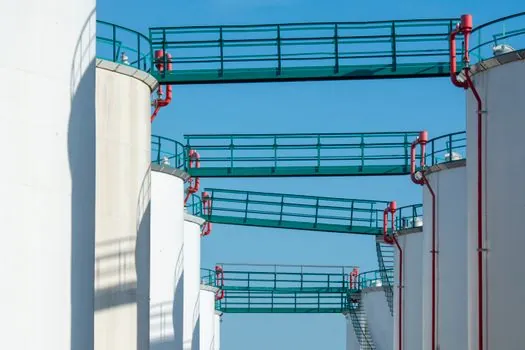
Three failure modes recur on chemical-plant access projects. First, mounting a non-ATEX reader in a classified area because the specifier assumed IP65 implied hazardous-area suitability; IP65 and ATEX are independent ratings, and a weather-proof housing is not an ignition-safe one. Second, running Wiegand in 2026 for a new build: Wiegand is unencrypted and a known tailgating / replay vector, so any greenfield chemical-plant install should default to OSDP over RS-485 or encrypted TCP/IP [S2].
Third, ignoring electromagnetic compatibility near VFD-driven pumps and welding inverters; readers can false-trigger or lose RS-485 comms, and the fix is shielded twisted pair, surge arrestors on outdoor runs, and a 24 VDC regulated supply rather than a long cable from a battery-backed 12 VDC tap [S5]. A useful sanity check before purchase: confirm the reader's MTBF in the OEM datasheet, ask for the EMC test report (typically EN 55032 / EN 55035), and verify the operating-temperature derating curve above +45 °C, which is common in control rooms with poor HVAC [S5][S9].
Trackable 2026 Signals to Watch
Two procurement signals are worth tracking. First, OSDP Secure v2.2 has moved from "available" to "default short-list" in most 2026 enterprise tenders, so plants that still specify Wiegand are paying a labour premium in the bid review. Second, the ATEX/IECEx reader category has widened to include biometric face terminals with 4-inch displays and palm-vein modules, which means the previous "no biometrics in Zone 1" rule is being replaced by certified biometric units in the same Zone 1 housings [S2][S3][S6].
Track the next release of the plant's hazardous-area classification drawing, the IEC 60079-series certificate numbers on the short-listed readers, and whether the OEM publishes an OSDP v2.2 conformance certificate. Buyers who pin those three documents into the purchase order cut their post-installation rework rate sharply, and they also get a defensible audit trail when the next safety regulator walks the site [S2][S5][S8].
For related coverage, see Linear module selection for mining: payload, sealing, and drive map.