
Confined space entry on a live electrical plant (switchgear cells, transformer vaults, cable draw pits, battery rooms) requires insulated hand tools rated to 1000 V AC / 1500 V DC under IEC 60900, the same reference cited by most UK and EU tool makers for VDE-style two-layer insulation [S1][S3].
The core equipment list for any confined-space entry is consistent across UK HSE guidance, WorkSafe NZ references to AS 2865, and supplier kits: tripod, winch with retrieval line, full-body rescue harness, gas monitor, forced ventilation, low-voltage lighting, two-way comms, and escape breathing apparatus [S1][S4][S6]. The insulated-tool set is the hand-tool layer that sits on top of that baseline whenever the space contains, or is adjacent to, exposed conductors.
What "insulated" means in a confined space, and where it applies
Insulated tools in this context are hand tools (pliers, side cutters, screwdrivers, socket sets, T-handles, torque wrenches, cable cutters) whose working heads and shafts carry a two-colour, bonded dielectric sleeve manufactured and individually tested to IEC 60900 for use on or near energised parts up to 1000 V AC and 1500 V DC [S1].
Confined-space entry is governed separately under the Confined Space Regulations 1997 in Great Britain, the AS 2865 series in Australia/New Zealand, and the Permit-Required Confined Space standard in the US (29 CFR 1910.146); these rules cover atmosphere, entry, rescue, and PPE, but they explicitly require the worker to be "capable and trained in both the work and the use of any emergency equipment" before any live work begins [S3][S4].
Voltage class and the three tiers the market actually uses
Most VDE-style insulated hand tools on the UK and EU market are third-party certified to one of three working-voltage tiers, and the class you pick is set by the worst-case system voltage on the busbar, not by the task: [S2]
Tier 1, 1000 V AC / 1500 V DC (IEC 60900), covers the bulk of LV switchgear, distribution boards, and battery banks, and is the default for general facility work. Tier 2, 1000 V AC with thicker walls and a wider impact-rated head, is specified where the work is heavy mechanical (cutting large cables, high-torque bolting on breaker mechanisms). Tier 3, low-voltage electronic tools rated to 1000 V but with thinner shanks and ESD-safe handles, is used inside instrumentation enclosures where the head has to fit between terminals. Every certified tool from a recognised manufacturer carries a year-stamp on the insulation, because IEC 60900 requires a re-test or retirement interval; the year stamp is the single best on-site check [S1].
For a comparison frame: if the entry is to a 400 V LV switchroom, Tier 1 is sufficient and is the cheapest set; if the entry is to a 690 V mining or heavy-industrial distribution panel, Tier 2 is typically specified; if the work is on 24 V DC or 48 V DC telecom/battery systems, the live-work rule does not require IEC 60900 tools at all, but most safety officers still mandate them because the trip risk of dropping an uninsulated spanner across a busbar is the same.
What goes in the kit, and what gets left at the manhole
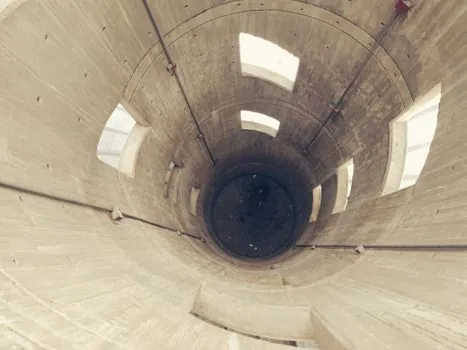
Inside the space, the kit should be a pre-packed, tool-controlled pouch containing only the insulated tools needed for the defined task, plus a non-insulated tag/permit holder and the gas monitor. Heavy uninsulated spanners, large pipe wrenches, power tools, and any steel measuring tape are typically prohibited at the entry point, because a dropped metal object inside a vault is an impact and short-circuit hazard, not just a foot injury. [S2]
Outside the space, the attendant holds the tripod and winch (rated to the combined worker + tool weight, commonly 136 kg / 300 lb working load for a single-person set), the retrieval line, the escape BA, and a duplicate set of the same insulated tools so the same spec can be handed to a rescuer without breaching the kit [S1][S2][S6].
Decision logic: when you do, and when you do not, need IEC 60900 tools
The first sentence of this section is the decision rule: a confined-space entry only needs a full IEC 60900 insulated tool set when at least one of these is true: (a) the space contains exposed live conductors that will be worked on, (b) the work involves opening a panel or termination cover that exposes busbars or cable cores, or (c) the written risk assessment under the Confined Space Regulations 1997 or AS 2865 has classified the adjacent electrical hazard as "significant" and PPE is the chosen control after elimination and minimisation [S3][S4].
If the entry is a sewer, a grain silo, a paint tank, a potable-water reservoir, or any non-electrical vessel, IEC 60900 hand tools add cost without adding safety; the controlling hazards there are atmosphere, engulfment, and falls, and the appropriate kit is a tripod, winch, gas monitor (4-gas: O2, LEL, CO, H2S), forced ventilation, full-body harness, and escape BA, with hand tools limited to non-sparking bronze or aluminium-bronze if the atmosphere can reach the flammable range [S4][S5][S6].
Common failure modes seen in audits
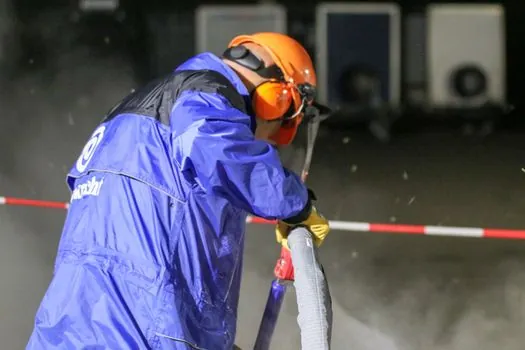
The four failures a process engineer or safety officer will see on a real site are: insulation sleeves damaged by drops or chemicals (the tool must be withdrawn, no field repair); year stamp painted over or missing (tool must be re-tested or scrapped); mixed kits where one insulated driver is used beside an uninsulated ratchet (whole kit is non-compliant); and pneumatic or cordless power tools brought into a classified area without a documented ATEX/IECEx rating for the zone [S1][S3].
Stored in a dry, UV-protected pouch and used within the manufacturer's recommended re-test interval (commonly 12 months for site tools, longer for low-frequency workshop tools), an IEC 60900 set on a confined-space entry is a durable control; the limiting factor in practice is almost always procedural (permit, isolation, gas test) rather than the tool itself [S3][S4].
Standards, sourcing, and what to verify before signing the PO
The two non-negotiable references for the hand-tool layer are IEC 60900 (live working at nominal voltages up to 1000 V AC and 1500 V DC, including the 10 kV dielectric test on each finished tool and the 5 kV post-conditioning test) and, for the entry itself, the Confined Space Regulations 1997 plus HSE guidance in the UK, or AS 2865 in Australia/New Zealand, or 29 CFR 1910.146 in the US [S1][S3][S4].
For the wider equipment on a single project, insulated tools sit alongside the hand tools baseline, the construction tools used for shoring and access, and the machine tools used for any pre-entry fabrication; verify on the supplier datasheet that each tool carries a VDE or equivalent third-party mark, the IEC 60900 rating, the year stamp, and a serial number traceable to the factory test certificate. A second sign-off point is the pressure transmitter and flow meter loop where fitted, since confined-space entry sometimes coincides with instrument recalibration on a live line.
Track next: any revision to IEC 60900 covering newer battery storage voltages (commonly 1500 V DC on utility-scale BESS), and the cross-reading with PPE-at-Work Regulations 2022 in the UK, which are the regulatory signals most likely to shift the insulated-tool spec on a confined-space job in the next planning cycle [S1][S3].
Background reading: Asphalt paver selection for quarrying: tracked vs wheeled, screed width, density target.