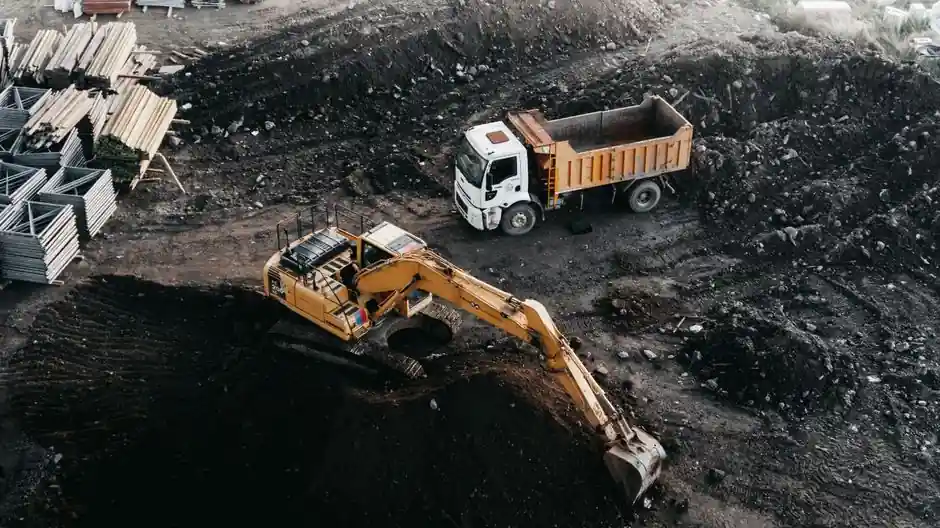
Mining duty cycles punish linear modules with shock loading, abrasive dust, moisture, and continuous 24/7 operation, so the selection hierarchy inverts: environmental survivability and dynamic load capacity are decided before accuracy class [S1][S4].
Unlike semiconductor or laboratory automation, mining applications rarely need sub-micron repeatability; instead they need modules rated for tens of kilograms of moving mass, strokes that can exceed 2 m, and protection class IP65 or higher against dust and water jets common in wash-down zones and underground headings [S1][S4].
Define mining duty before sizing the module
Step one in any linear module selection is naming the application, because the required force, speed, and stroke vary by an order of magnitude between a conveyor transfer carriage, a drilling feed, and a sampling-arm actuator [S1]. Engineers treating "linear module" as a single commodity, rather than a family of payload- and drive-specific products, generate roughly half of all field-failure modes documented in materials handling studies [S2][S3]. A structured 12-step process covering payload, total moving mass, stroke, speed, accuracy, drive type, orientation, environment, motor, safety factor, and expansion is the standard pre-screening sequence [S1].
For mining specifically, two early branch points dominate: whether the axis runs horizontally (haulage rails, transfer cars) or vertically/overhung (gate shutters, drill feeds), and whether ambient exposure is dry/dusty (crushing, transfer points) or wet/corrosive (slurry lines, dewatering stations) [S1][S4]. The horizontal-versus-overhung branch selects different bearing arrangements and lubrication regimes; the dry-versus-wet branch selects the housing material and sealing class.
Compare the three drive types against mining criteria
Ball screw, rack-and-pinion, and belt drive modules cover the practical mining envelope, and each maps cleanly onto different duty profiles [S1][S5]. A criteria-based comparison:
Ball screw modules: positioning repeatability typically in the ±0.01–0.05 mm range, suited to short-to-medium strokes (under ~1.5 m), and the highest thrust density per unit envelope, but limited by screw length, critical speed, and sensitivity to abrasive contamination unless protected by steel-bellows or telescopic covers [S1][S3].
Rack-and-pinion modules: stroke scales independently of drive length, repeatability usually ±0.05–0.1 mm, peak forces commonly tens of kN when helical rack/pinion pairs are used, and the geometry is tolerant of dust and wash-down because the pinion meshes externally, making them the default choice for long-stroke haulage, car positioning, and gate actuation on mining duty [S1][S5].
Belt drive modules: the lowest cost per metre of stroke, the highest permissible speeds (often 5–10 m/s), and repeatability of roughly ±0.1 mm; the belt itself is the weak point under sharp dust ingress or chemical exposure, and service life drops sharply above ~60 °C ambient unless high-temperature reinforced belts are specified [S1][S5].
Load capacity, stroke, and total moving mass
Payload ratings for off-the-shelf linear modules span roughly 5 kg (light pick-and-place) to over 200 kg (heavy gantry Z-axes), and engineered variants can exceed 1 tonne per axis when a rack-and-pinion or roller-screw drive is specified [S1][S5]. The selection mistake most often seen in mining retrofit projects is sizing on static payload only, then losing the duty cycle because the combined inertia of the carriage, fixture, and product exceeds the drive's continuous thrust rating during acceleration phases [S1][S3].
Stroke length is the second hard constraint: ball-screw modules become impractical beyond ~1.5 m because critical speed and buckling load drop with the square of unsupported length, while belt and rack-and-pinion modules scale linearly with track length, and a 3 m, 4 m, or 6 m stroke is routine on engineered long-stroke modules [S1][S5]. For very long horizontal transfers, mining operators typically spec a rack-and-pinion module with hardened helical rack and a servo- or hydraulically-driven pinion rather than chaining shorter modules end-to-end.
Accuracy, repeatability, and resolution: what mining actually needs
Precision-grade linear modules are commonly specced for sub-millimetre endpoint accuracy and minimal vibration across cycles rated in the thousands per day, and they are usually housed in extruded aluminium to balance stiffness, mass, and cost [S4]. Steel housings, by contrast, are selected when shock loading, weld spatter exposure, or elevated ambient temperature make aluminium a poor choice, and the mass penalty is justified by long-term dimensional stability [S4].
In mining, micron-level endpoint accuracy is rarely the controlling parameter; repeatability in the ±0.05–0.1 mm band is normally sufficient, and resolution is governed by the feedback device (incremental or absolute encoder on the drive end) rather than the mechanics. For a deeper look at how feedback resolution and scale pitch interact, see the linear encoder reference page. Where the process genuinely demands micron-class positioning (sample cutters, lab-on-site assay stations), the spec jumps to a precision ball-screw module with a preloaded nut, integrated steel bellows, and a sealed encoder [S1][S4].
Environment, sealing, and lubrication: the mining hard gate
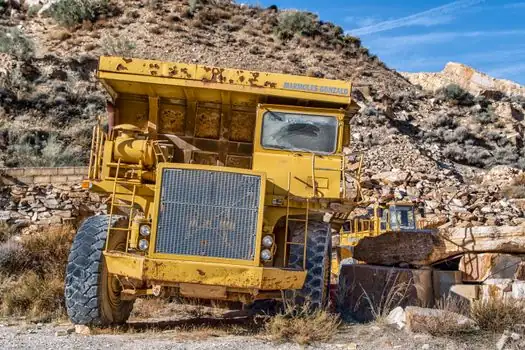
Sealing class is a hard gate for any linear module entering a crushing, screening, or underground transfer station, and IP65 is the practical minimum, with IP67 specified for slurry-line wash zones and any module that may be hosed down or submerged briefly [S1][S4]. A standard module without bellows or scrapers will see its service life measured in weeks rather than years in a dusty environment, because abrasive particles migrate into the raceways and the drive nut [S1].
Material selection for the profile is equally a mining decision: aluminium extrusions dominate in clean factory automation, but steel or stainless profiles are common in heavy-industrial and mobile equipment where impact and corrosion are daily events [S4][S5]. Lubrication intervals shorten dramatically in dust; precision linear modules need relubrication across their life cycle, and on mining duty this is usually re-specified as an automatic lubrication system or a grease bank plumbed to the raceways, rather than relying on manual service [S4].
Mounting, orientation, and integration with mine drives
Orientation choices (horizontal, vertical, wall-mount, overhung) change the load distribution on the bearing rails and the effective load on the drive, and they are evaluated as part of the standard sizing workflow rather than as an afterthought [S1][S3]. A horizontal module sized for 50 kg of payload in clean factory use may be derated by 30–50% when mounted on its side or inverted, because the carriage weight becomes a bending load on the guide rails rather than a compressive load [S1].
For long-travel mining axes, the practical answer is often a linear guide carriage on a separate structural rail, paired with a rack-and-pinion drive, so the bearing and the drive functions can be sized independently. Where the stroke is short and forces are high, a self-contained ball-screw linear actuator gives a simpler mechanical package but constrains the orientation and stroke envelope. A good benchmark of how the bearing, the drive, and the housing interact is given in the linear module reference entry.
What linear modules are NOT for in mining
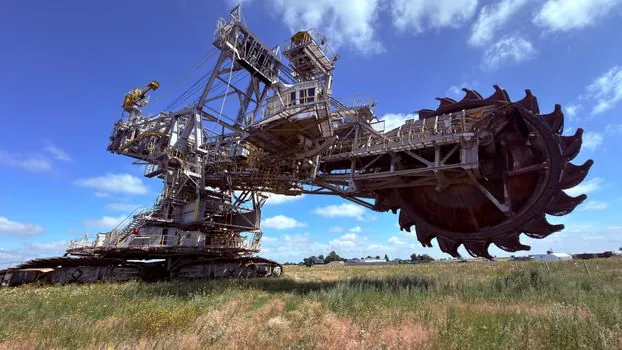
Linear modules are not the right answer for ultra-heavy bulk haulage, where a mining dump truck or a conveyor system handles thousands of tonnes per hour; they are positioning devices, not bulk transport devices, and mis-applying them in a primary haulage role is the fastest way to eat a drive train [S1]. They are also a poor choice for radial loads or moment loading well beyond their published ratings, where a purpose-built slew drive, pedestal bearing, or rotary actuator is the correct component.
For applications requiring both linear and rotary motion in a single compact package, a linear bearing running on a separate shaft or rod is usually a cleaner mechanical solution than forcing a linear module into a guided-rotation role. Mining engineers should treat the linear module as a single-axis positioning building block, not as a general-purpose motion component.
Sourcing, standards, and procurement signals
Specifying a linear module to a recognised standard gives both the buyer and the maintenance crew a common language, and ISO 230-2 (test code for machine tool accuracy) plus ISO 3408 (ball-screws) are common reference points for precision modules [S1]. For mining specifically, dust and moisture performance should be cross-checked against IEC 60529 (IP code) rather than against vendor marketing language, because IP65, IP66, and IP67 modules are mechanically different inside, not just different labels [S1][S4].
On the procurement side, three signals to track in the next 6–12 months: (1) engineered rack-and-pinion modules with hardened helical rack and IP67 sealing becoming the default specification on new long-stroke mining axes, displacing chain-drive retrofits; (2) integrated servo-and-module packages reducing field commissioning time, as suppliers bundle motor, drive, cable, and feedback into a single part number; (3) lubrication-free polymer-race modules appearing on lighter pick-and-place and sampling arms in wash-down zones, displacing greased steel-raceways where contamination risk is the controlling failure mode. For a broader view of mining-machinery selection, see the overhead bridge crane selection for mining spec map, which uses the same duty-and-environment framework for a different motion class.