
Methanol dual-fuel ship contracting fell to four vessels in the first half of 2026, covering 122,800 CGT and approximately 241,400 dwt [S5].
The slowdown contrasts with a global dual-fuel fleet of 503 ships as of September 2026, up 41% from 358 vessels one year earlier, while 850 more vessels remained on order [S3][S4].
Order Volume Collapsed While the Fleet Expanded
The contraction began before 2026. By contrast, the installed dual-fuel fleet reached 503 vessels in September 2026, compared with 358 through the first nine months of 2025 [S3][S4].
That combination defines the market: deliveries from earlier ordering cycles continued to expand the fleet, while fresh methanol contracting lost momentum. An operating fleet of more than 500 dual-fuel ships therefore does not demonstrate sustained 2026 ordering demand for methanol specifically, because the fleet count also covers other alternative-fuel configurations [S3][S4].
DNV Counted Two Methanol Vessels in 1H 2026
DNV counted 137 alternative-fuelled vessel orders in 1H 2026, down from 151 one year earlier under its alternative-fuel methodology [S5][S6].
The difference is methodological rather than necessarily contradictory: coverage, contract-confirmation dates, ship types, gas-carrier treatment and the definition of alternative-fuel capability can change the count [S5].
The broader market total also illustrates why headline order numbers require care.
LNG Took More Than 70% of Alternative-Fuel Orders
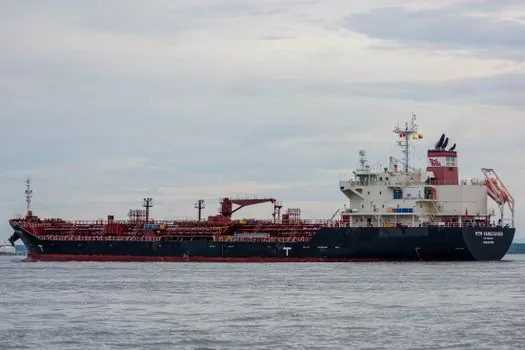
LNG accounted for more than 70% of alternative-fuel orders [S5].
This is the clearest fuel-selection comparison for shipowners: methanol offered four orders and 122,800 CGT in 1H 2026, LNG offered 173 orders and 10.57 million CGT, and DNV counted only 25 ports offering methanol bunkering as of October 2026 [S5][S8]. On near-term order evidence, LNG wins on scale; methanol offers a smaller order set and still faces a narrower physical refuelling network.
Liner Fleets Carry the Largest Methanol Commitment
CMA CGM ordered 12 methanol dual-fuel container ships, with delivery scheduled from late 2028 through 2030 for the high-volume Asia-Europe trade [S7].
Company order books compiled through August 2026 list 20 dual-fuel vessels for Maersk and 12 methanol dual-fuel container ships for Ocean Network Express [S2].
Scale is not limited to container shipping, with Maersk already described as holding 24 methanol ships spanning several thousand TEU to more than 16,000 TEU [S1][S2]. These fleets suit owners able to aggregate demand across large vessel classes and long-term operating programmes.
Methanol Is Better Suited to Owners with Fuel Access
Methanol vessel economics depend on securing fuel at the ports and trade routes served by the fleet. DNV counted only 25 ports offering methanol bunkering in October 2026, even as it recorded 364 alternative-fuel ship orders for the year through that month [S8]. The narrow port footprint makes route planning and fuel-contracting core engineering and commercial workstreams, not post-delivery details.
The model fits liner groups operating high-frequency services on major corridors. CMA CGM’s 12-vessel order for Asia-Europe services demonstrates that approach, with deliveries running from late 2028 to 2030 [S7]. It is less compelling for owners without contracted green-methanol supply, access to compatible bunkering ports or the fleet scale needed to spread methanol-system capital expenditure across multiple vessels.
Existing technology still shows mixed terminology. Methanol-ready vessels are not necessarily dual-fuel, while dual-fuel ships may remain configured for conventional fuel during early operations [S2][S3]. The order picker and related equipment-selection systems are more relevant to land-based fuel handling than ship procurement, so shipowners should evaluate propulsion, tanks, engines, fuel treatment, emissions control and bunkering interfaces as one integrated system.
Delivery Risk Can Outweigh Newbuild Capability
Methanol propulsion does not remove the need for a conventional-fuel operating plan. Owners must account for vessel availability before bunkering infrastructure expands, as only 25 ports were recorded as offering methanol bunkering in October 2026 [S8]. A vessel delivered before green-methanol availability is aligned with its route can still operate on marine fuel, but the dual-fuel investment then depends on later fuel access.
Older project data illustrates the range of designs being ordered. Two 49,800 dwt chemical tankers were scheduled for delivery in 2026 for time charter to TotalEnergies [S1]. Two KAMSARMAX methanol-fuelled bulk carriers were scheduled for completion from the second half of 2026 through the first half of 2027, while two 81,200 dwt dry-bulk newbuildings were expected in the second half of 2027 and first half of 2028 [S1].
Container ships span a wider operating envelope. The first of Maersk’s 12 methanol-powered containerships measured 350 metres in length and 53.5 metres in beam and carried 16,200 TEU [S1]. Earlier container orders also included four 5,900 TEU boxships with Mitsui-MAN B&W 6G80ME-C10.5-LGIM-EGRTC engines [S1]. These examples show that methanol readiness has been engineered into container, bulk, chemical and ro-ro designs, but each segment has different fuel demand and route constraints.
2026 Evidence Favours Selective Fleet Conversion
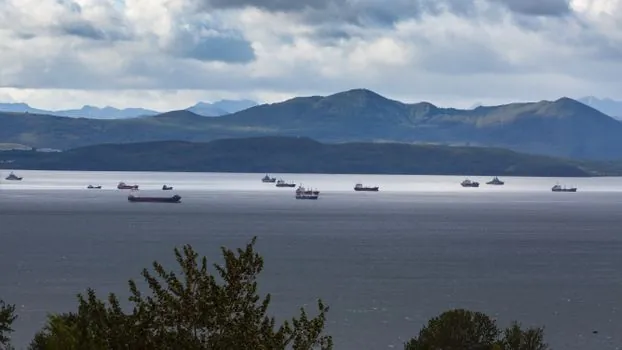
The order data supports a selective rather than broad methanol conversion strategy. Four Clarksons-recorded methanol orders in 1H 2026 equalled 0.25% of newbuilds by count, while 173 LNG-capable vessels produced 10.57 million CGT [S5]. For shipowners deciding between technologies, four measurable criteria rank the options: 2026 contracting volume, contracted tonnage, proven vessel-class use and access to bunkering ports.
On contracting volume, LNG leads decisively. On methanol-specific fleet availability, operators such as CMA CGM, Maersk, Evergreen, ONE and Wallenius Wilhelmsen have built meaningful programmes, including a 12-ship CMA CGM Asia-Europe order [S2][S7]. On fuel access, the recorded network of 25 methanol-bunkering ports remains the constraint to track [S8].
Two order measures provide the next verifiable signals: methanol contracting after the four vessels recorded in 1H 2026, and the conversion of the 850 dual-fuel ships on order into delivered, methanol-capable units [S3][S5]. The fleet expansion can continue while new methanol orders remain thin, but that divergence will determine whether methanol becomes a scaled option or stays concentrated among a smaller set of high-capacity owners.