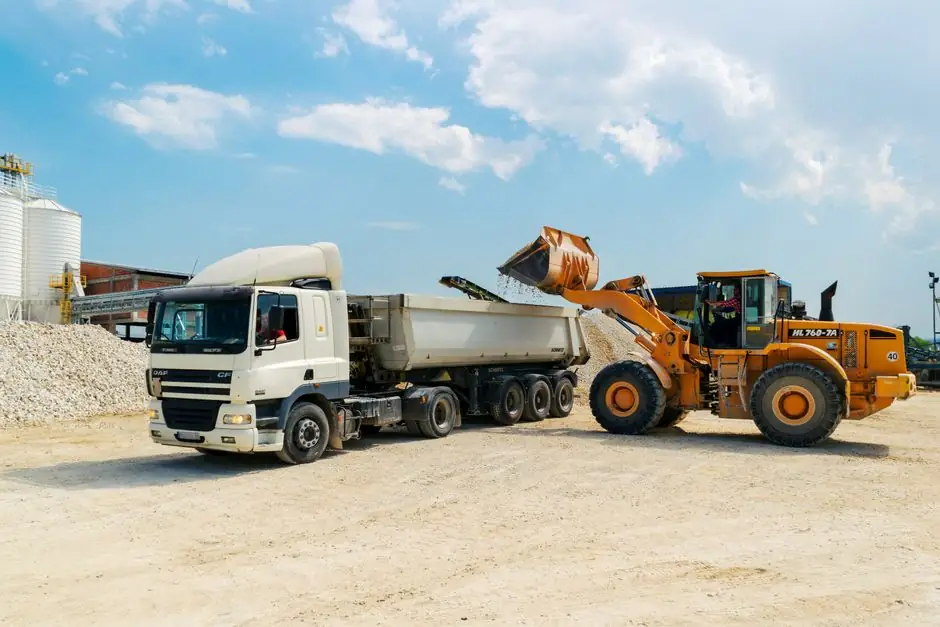
Komatsu commissioned its 1,000th autonomous ultra-class haul truck in April 2026, while the global mining dump truck market is projected to reach $32.59 billion in 2026 [S2][S4].
Mining truck demand is spreading from individual autonomous machines to coordinated fleets, and CiDi secured a 500-truck procurement order in February 2026 [S3][S6].
What 2026 haul truck demand looks like
The mining dump truck market is projected to expand from $30.91 billion in 2025 to $32.59 billion in 2026 and $42.43 billion by 2031, a 5.42% compound annual growth rate from 2026 to 2031 [S4].
Rigid rear-dump platforms dominate long-haul ore movements [S4].
Demand momentum reflects operators’ emphasis on cost-per-ton productivity, compliance with tightening emission rules, and the rapid shift toward autonomous haulage ecosystems [S4].
For equipment categories, the distinction between mining dump trucks and general dump trucks is operationally significant. Mining specifications must handle payload classes from below 150 metric tons to ultra-class units above 330 metric tons, mine-road geometry, tire selection, dump-body durability, dispatch integration and site-specific duty cycles [S4].
Autonomy moved beyond pilot scale
Autonomous and autonomous-ready equipment represented more than 4% of all key mining machinery in 2026 [S3].
Komatsu reached 1,000 commissioned autonomous ultra-class trucks on April 21, 2026. Its 1,000th unit was a 930E-5AT electric-drive truck with a 290-metric-ton payload deployed at Barrick’s Nevada Gold Mines operation in the United States [S2].
The 930E ultra-class electric drive platform is the most widely deployed Komatsu model, representing more than 500 autonomous trucks across customer sites, and Komatsu’s FrontRunner Autonomous Haulage System entered the commercial market in 2008 [S2]. Komatsu’s electric drive haul truck lineup underpins FrontRunner deployments around the world [S2].
Orders now target fleet-scale systems
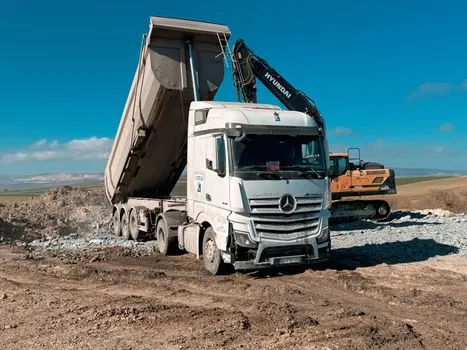
CiDi secured an order for 500 autonomous mining trucks from Guangna Group in February 2026, described as the largest single formal procurement recorded in the cited market research [S6].
CiDi’s MetaMine architecture combines autonomous haul trucks, central dispatch and fleet coordination rather than treating each vehicle as a standalone automation project.
Scania opened orders for autonomous mining trucks in 2024 [S5]. That timeline matters because autonomy procurement is shifting from single-machine demonstrations toward site-wide dispatch, remote operation and fleet support contracts [S3][S5].
New build, retrofit and teleoperation compared
Autonomous haulage options can be compared across deployment scale, fleet integration and capital exposure. New-build autonomous trucks offer integrated commissioning but require mine infrastructure and dispatch interfaces to be ready before fleet acceptance; retrofit programs can extend the life of existing fleets; teleoperated excavation combines remote loading with autonomous haulage without requiring every support vehicle to be driverless [S3][S7].
Retrofit autonomy is anticipated to hold the largest integration share in the autonomous truck market in 2026, driven by existing fleets and retrofit programs in China [S7].
Teleoperated excavation is the most popular element of CiDi’s offering, with loading dependent on real-time coordination between teleoperated excavators and autonomous haul trucks [S3].
Autonomous operation is not restricted to coal. Komatsu’s 1,000th commissioned autonomous ultra-class haul truck was deployed at Barrick’s Nevada Gold Mines operation in the United States [S2]. The equipment proposition therefore depends on commodity, road design, excavation process and fleet scale, not autonomy alone.
Who benefits and where limits remain
Large fleets are the strongest candidates for autonomous haulage because dispatch software can optimize routes and traffic sequencing across tens or hundreds of trucks. CiDi’s largest site operated 220 autonomous units, while Komatsu’s FrontRunner customers collectively exceeded 11.5 billion metric tons of hauled material [S2][S3].
Smaller fleets can still use autonomy, but fixed costs for site communications, remote operations, mapping, dispatching and maintenance support are spread across fewer trucks. Operators should compare system-level cost per tonne rather than the purchase price of individual autonomous vehicles [S2][S3].
Autonomy is not a complete substitute for mine design. Loading, dumping, road condition, traffic interaction, dispatch rules and power availability determine fleet performance. The 56 autonomous trucks operating with roughly 500 manned vehicles demonstrates that mixed traffic can be managed, but it also shows that autonomy does not remove the need for traffic discipline [S3].
Electrification remains at an early stage in mining dump trucks even as diesel propulsion held 71.29% of the 2025 market. Battery-electric trucks are projected to grow at a 10.52% annual rate through 2031, but the installed fleet remains centered on diesel power [S4].
Procurement signals for 2026 orders
Three measurable signals will shape mining haul truck order decisions through 2027: conversion of the 500-truck CiDi order into commissioned vehicles, expansion beyond CiDi’s seven sites operating more than 100 autonomous trucks, and growth in ultra-class orders above the 330-metric-ton threshold [S3][S4][S6].
Buyers should separate four measurable items in each proposal: nominal payload, autonomous or autonomous-ready status, integration boundary with dispatch and excavation equipment, and the power architecture covering diesel, battery or trolley supply [S2][S3][S4].
Komatsu’s 1,000-truck milestone and CiDi’s 500-truck order establish scale, but neither figure represents the entire mining truck market. The wider market remains diversified across rigid rear-dump trucks, payload classes, propulsion systems, mining methods and regions, so autonomy is a fast-growing segment rather than a wholesale replacement for conventional haulage [S2][S4].