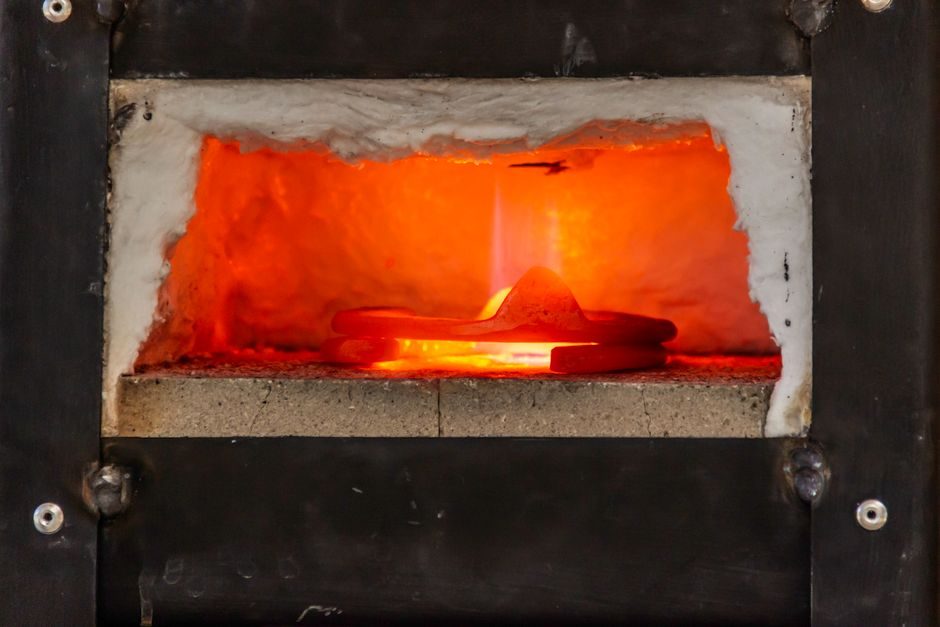
Primary magnesium ingot supply in China is concentrated in three provinces — Inner Mongolia, Shanxi, and Henan — with audited makers on Made-in-China.com and Okorder quoting 99.9% / 99.95% purity at MOQs from 5 to 20 metric tons and supply capability up to 1,000 m.t./month per listing as of July 2026 [S2][S3][S5][S6].
Pricing on the open B2B portals clusters between roughly US$2,250 and US$3,000 per metric ton for pure Mg ingot in mid-2026, and supply capability statements of 1,000 m.t./month per supplier are the norm rather than the exception [S2][S5][S6].
Purity Grades and What the Spec Sheets Actually Show
Standard commercial Chinese primary magnesium ingot is offered at 99.9% minimum Mg (commonly shown as 3N) with a 7.5 kg per-ingot weight and 20 m.t. minimum order quantity on the Okorder listing current to mid-2026 [S3]. Higher-purity metal at 99.95% (≈3N5) Mg is also available from the same Chinese mill pool, with a 5 m.t. MOQ and 1,000 m.t./month declared supply capability [S6].
The underlying chemistry is straightforward: elemental magnesium with atomic weight 24.305 g/mol (formula Mg) is the material basis; trading listings index against the 99.9 / 99.95 purity bands rather than fine sub-grades [S1][S10]. Buyers specifying 4N (99.99%) or 5N (99.999%) material should expect separate qualification, longer lead times, and pricing well above the open-portal bands.
Price Bands and MOQ Reality on the Open Market
Inner Mongolia Pusheng Iron & Steel quotes US$2,500–3,000/ton at 20-ton MOQ and carries Diamond Member / Audited Supplier status on Made-in-China.com as of 18 July 2026 [S2]. A second audited Inner Mongolia producer under the same listing shows an identical US$2,500–3,000/ton price band at the same 20-ton MOQ floor, signalling that 20 tons is effectively the wholesale entry point for this region [S5].
Shanxi Jinshengyuan New Material undercuts the Inner Mongolia range with US$2,250–2,300/ton at a lower 5-ton MOQ, which makes it the practical first contact for small-batch trial orders and qualification sampling [S5]. The price spread between the Shanxi and Inner Mongolia floors is roughly US$200–250/ton, which can dominate landed cost for a 100 m.t. trial shipment.
Magnesium oxide by-product is listed separately on Made-in-China.com by Shandong Yifengtuo Chemical at US$150–180/ton, 20-ton MOQ — useful as a cross-check on Chinese bulk inorganic pricing but not a substitute for ingot [S4].
Province-Level Sourcing Map
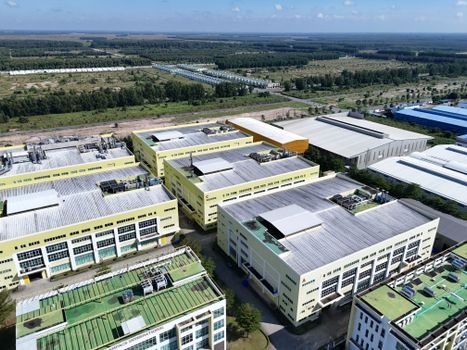
Inner Mongolia dominates primary production because the Pidgeon (silicothermic) reduction route is energy-intensive and Inner Mongolian coal-fired power keeps the smelter electricity cost competitive [S2][S5]. Shanxi sits in the same northern metallurgical belt and serves the lower-MOQ / lower-freight lane into central China [S5].
Henan (specifically Anyang) is the third node: the Made-in-China.com filtered directory returns 20 Henan/Anyang primary magnesium ingot listings as of 18 July 2026, including Anyang Yitong Metallurgy Refractory which also trades aluminum-strontium master alloy at US$300–1,000/ton, 5-ton MOQ [S2][S8]. Anyang is the natural freight and metallurgical-alloy hub for buyers who want a single vendor relationship for both pure Mg and Al-Sr grain refiners.
Who Should and Should Not Source From These Listings
These open-portal listings fit buyers who need 5–1,000 m.t./month of 3N to 3N5 primary Mg, are willing to transact against TT or LC, and can accept Tianjin as the standard loading port [S3][S6]. They are the right channel for alloy makers, die-casters, and steel desulfurisation shops that already run PQC against Chinese material.
They are a poor fit for buyers who need ASTM B92 / B93 certified secondary magnesium, Defence-grade controlled materials, REACH-registered EU supply chains, or lot sizes below 5 m.t. — the open-portal MOQs and documentation depth will not support those requirements. For OEM-grade die-casting, cross-reference the magnesium die casting machine encyclopedia entry before you lock your ingot chemistry to a single vendor.
Spec Checks and Due Diligence Before Releasing the PO
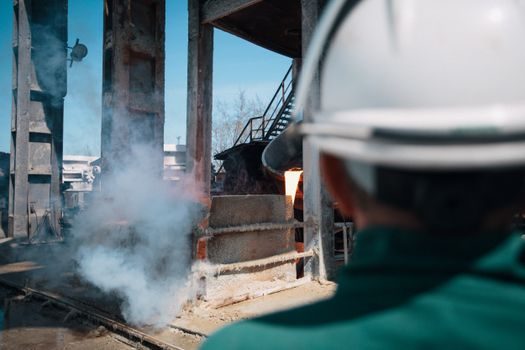
Treat every listing as a starting point, not a qualified vendor: confirm the mill's current GB/T 3499 (Chinese primary magnesium ingot) certificate, request a recent OES or ICP assay, and verify the 7.5 kg/ingot (or alternative) piece weight matches your melt furnace charge [S3]. For higher-purity 99.95% orders, ask for lot-level Fe / Cu / Ni / Cl trace values — these control corrosion behaviour in molten handling and downstream castability [S6].
Cross-check capacity claims: a 1,000 m.t./month supply capability on a listing does not equal 1,000 tons of committed output, and the same figure appearing on multiple offers is a portal template rather than an audited number [S2][S5][S6]. One process-engineering control to insist on is the alloy-stage link — pair your ingot order with a flow meter and pressure transmitter on the molten-Mg loop if you are running an in-house alloy station, so batch traceability is auditable.
Adjacent Categories: Magnesium Oxide, Master Alloys, and Equipment
Magnesium oxide at US$150–180/ton, 20-ton MOQ, is the most common by-product category and is the right hand-sell if your plant also runs refractory or steel-slag conditioning [S4]. Aluminum-strontium master alloy (AlSr5/10/15/20) is offered at US$300–1,000/ton, 5-ton MOQ by Anyang Yitong, and is the natural co-product pairing for Mg-Al alloy work [S8].
On the equipment side, cold-chamber die-casting machines sized for Mg, Al, Cu, brass, and Zn ingot are listed at roughly US$19,650 per unit (130-ton clamp, Bengbu Long Hua) and dedicated magnesium ingot production lines with reduction furnaces at US$90,000 — relevant if you are evaluating captive ingot production rather than merchant supply [S9]. For a deeper look at how primary Mg moves from smelter through alloy station to die-cast part, the upstream-downstream map of magnesium ingot gives a useful one-page reference, and broader inorganic sourcing context is covered in the industrial magnet suppliers 2026 map.
Trackable signals for the next 6 months: any change in Inner Mongolia Pusheng or Shanxi Jinshengyuan FOB-Tianjin quotes, the GB/T 3499 revision cycle, and whether EU REACH registration filings by Chinese primary smelters expand — those three together will move the China-origin price band more than any single open-portal listing refresh. Buyers who also cast zinc or brass should bookmark the plug valve suppliers 2026 map as a parallel reference on Chinese non-ferrous sourcing.