
Commercial magnesium ingot grades such as 99.90% min (per CNBM export specs on Okorder, 5 m.t. MOQ, Tianjin loading) supply downstream alloy sheet, bar, slab, wire and tube mills as well as magnesium die casting machine feed [S2].
The upstream backbone is metallothermic reduction of calcined dolomite or magnesia using ferrosilicon, concentrated in China's Shanxi, Shaanxi and Ningxia clusters — Shanxi Yuanhua Metallurgy Materials (Wenxi County, Yuncheng; manufacturer registered 2013) typifies the small-to-mid Chinese smelter that sells 7.5 kg / 300 kg / 1000 kg notch-book ingot lots under ASTM B92-like commercial purity bands [S1].
Upstream: Feedstock, Smelting Route, and Purity Bands
Commercial Mg ingot carries a molar mass of 24.305 g/mol (ChemicalBook entry CB1519927) and is graded primarily on Fe, Si, Cu, Ni, Al, Mn and Cl content; 99.90% min, 99.95% min, and 99.98% min are the three most quoted merchant grades, with the 99.90% grade dominant for general alloying and the 99.95–99.98% grades reserved for electronic and sacrificial-anode duty [S3].
The Pidgeon process remains the workhorse route: calcined dolomite (CaO·MgO) is mixed with 75% FeSi and briquetted, then retorted at 1200 °C under vacuum to yield "crown" condensate, which is remelted and cast into notch-book ingots weighing 7–8 kg or large sows up to 300 kg. The 5-ton minimum order quantity and 2,000 t/month capability shown on the Okorder listing for 99.90% min ingot are typical scale points for a single CNBM-affiliated merchant line shipping Tianjin FOB into Europe (Germany, Czech, Poland, UK), North America (Canada) and Asia (Korea, Turkey) [S2].
Shanxi-based merchant sources are integrated vertically from dolomite mining to ingot, an arrangement that buffers raw-magnesium cost volatility — SunSirs reporting for the week of 2022-01-17 to 2022-01-21 showed ingot prices running "relatively stable" after a prior-week correction, with downstream alloy makers returning to the spot market in a "small wave" of pre-holiday restock [S5].
Downstream Line 1: Magnesium Alloy Ingot for Die-Casting
Magnesium ingot is the primary feedstock for downstream magnesium alloy ingot — explicitly stated as the use case for 99.90% min ingot in the Okorder product brief — and these remelt alloys feed magnesium die casting machine cells producing AZ91D, AM60B, AS41B housings, instrument panels, steering components and 3C electronics shells [S2].
AZ91D (Al 9%, Zn 1%, Mn 0.2% min) is the dominant die-casting alloy, prized for a density near 1.81 g/cm³ — roughly 35% lighter than aluminum and 78% lighter than steel at comparable stiffness.
Surface-treatment options for as-cast Mg components, as documented in merchant FAQ literature, include (1) room-temperature paint, (2) anodizing, (3) electroless nickel plating, (4) electroplating, (5) electrophoresis, (6) organic coatings, and (7) PVD — the limited electrochemical potential of Mg means each pretreatment is more sensitive than the equivalent on aluminum, so specifiers should not transfer aluminum pretreatment parameters without verification [S2].
Downstream Line 2: Wrought Products, Sheet, Bar, Tube, Wire
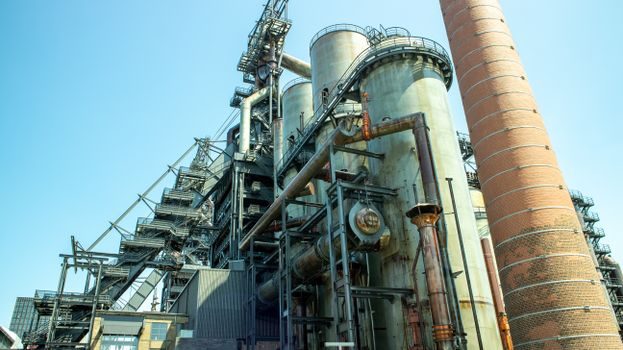
For wrought products (plate, sheet, bar, slab, tube, wire), merchant-export specs cite hot-rolling equipment as the forming backbone, with the Okorder-listed CNBM profile confirming a "world class" supply position across all five wrought forms [S2].
Wrought Mg alloys — AZ31B (the dominant sheet/plate grade), ZK60, WE43 — are typically twin-roll cast at 4–8 mm gauge, then hot-rolled to 0.5–6 mm plate, with a rolling temperature window of 300–450 °C and inter-pass reheating to control crystallographic texture. Tensile yield of AZ31B-O sits around 130–160 MPa, density 1.77 g/cm³; this is the grade that competes with 5052/6061 aluminum in electronics chassis and rail-truck interior panels.
Process control on hot-rolling mills relies on the same instrumentation stack as aluminum mills — flow meter loops on emulsion and quench headers, industrial valve banks on coolant manifolds, and pressure sensor feedback on hydraulic roll-force cylinders — and these are the same component categories that spec teams reuse when retrofitting a steel rolling line to handle magnesium at lower density and tighter cooling windows.
Downstream Line 3: Chemical and Metallurgical End-Uses
Merchant-FAQ sources document the chemical and metallurgical downstream channel: Mg serves as a desulfurization agent and cleaning agent in steel and non-ferrous casting, as a reducing agent in rare-metal production (Ti, Zr, Hf, U), as a dehydrating agent in organic chemistry, and as raw material for Mg powder used in spray, coating, anticorrosion and powder-metallurgy die casting [S2].
Grignard reagent synthesis (RMgX) consumes high-purity Mg turnings, while Mg granules/peening shot are consumed by metal-surface finishing shops. Direct contact with solid Mg ingot is non-hazardous; the dust fraction is flammable/explosive, so bulk-machining cells should be specified with dust-extraction interlocked to the PLC abort routine, not the cell's die-height hydraulics.
For upstream and downstream industries in antidumping contexts — the CNKI working paper "Analysis of Antidumping Duty Rate Optimization in Upstream and Downstream Industries under Complete Dynamic Game" (PENG Gao-qun, XI Jun-fang, ZHONG Gen-yuan, Shanghai Jiao Tong University) models how ad-valorem duty adjustments propagate from ingot to alloy to die-cast part, a useful reference frame for purchasing teams routing Mg components across borders [S4].
Buying Criteria: Purity, Form, Volume, Incoterms

Four practical decision criteria separate 99.90% min ingot sourcing options: (1) purity tier and Fe/Cl limits, (2) form factor and weight per notch-book, (3) volume capability, and (4) shipping Incoterm. A CNBM-tier merchant line (Okorder) on 99.90% min runs 5 t MOQ, 2,000 t/month capability, Tianjin FOB, TT or LC [S2]; a smaller Shanxi manufacturer (Yuanhua) typically negotiates per-shipment on L/C at sight with 7.5 kg/300 kg ingot forms [S1].
For wrought-mill buyers, the comparison is between integrated CNBM hot-rolling capacity and independent rolling shops — the former offers AZ31B/ZK60/WE43 cert packs with guaranteed density 1.77–1.84 g/cm³ and tensile-yield test reports, the latter typically offer spot-tonnage lots without full traceability. For die-casters, the cut is between remelt-alloy ingot (AZ91D billets from CNBM) and in-house Mg melting from primary ingot — the in-house route needs magnesium die casting machine cells with SF6/CO2 cover-gas systems and melt pumps capable of 650–680 °C holding.
Constraints, Failure Modes, and What Spec Teams Should Not Transfer from Al
Magnesium ingot handling has a specific failure-mode profile that aluminum and zinc specifiers must unlearn: Mg melt at 650–680 °C oxidizes rapidly in air, so the standard cover-gas mix is SF6 0.2–0.5 vol% in CO2 (or more recently, Novec 612/HFC-134a replacements under environmental pressure) — a flow meter on the cover-gas train is mandatory, not optional. [S2]
Chips and fines are combustible (Mg dust flash point well below aluminum), so dust-extraction ducting and explosion-isolation valves are part of the cell spec, not an afterthought. Potable-water contact with burning Mg produces hydrogen and intensifies fire; the documented extinguishing media is dry powder (Class D), not water or CO2, contradicting the instincts of teams used to aluminum foundry practice.
Finally, the merchant FAQ on surface treatment explicitly warns that magnesium's limited potential difference makes its surface treatment range narrower than aluminum or zinc — anodizing, electroless nickel and PVD all work but require Mg-specific process windows, and the typical transfer error of borrowing aluminum anodizing parameters (e.g., higher current densities, longer sealing times) results in porous, low-corrosion films [S2].
For alloy-feed end-uses, the natural next node for spec teams is to check 2026-Q3 export licensing changes from China's Commerce Ministry, and to monitor weekly SunSirs and Shanghai Metals Market price ticks for 99.90% min FOB Tianjin to confirm the "stable" pricing regime documented for late-January 2022 holds or breaks — the same signal pattern that has historically driven the pre-holiday restock wave into AZ91D billet output [S5].
Background reading: Food and Beverage Belt Conveyor Selection: Belt Type, Sanitation, Throughput.