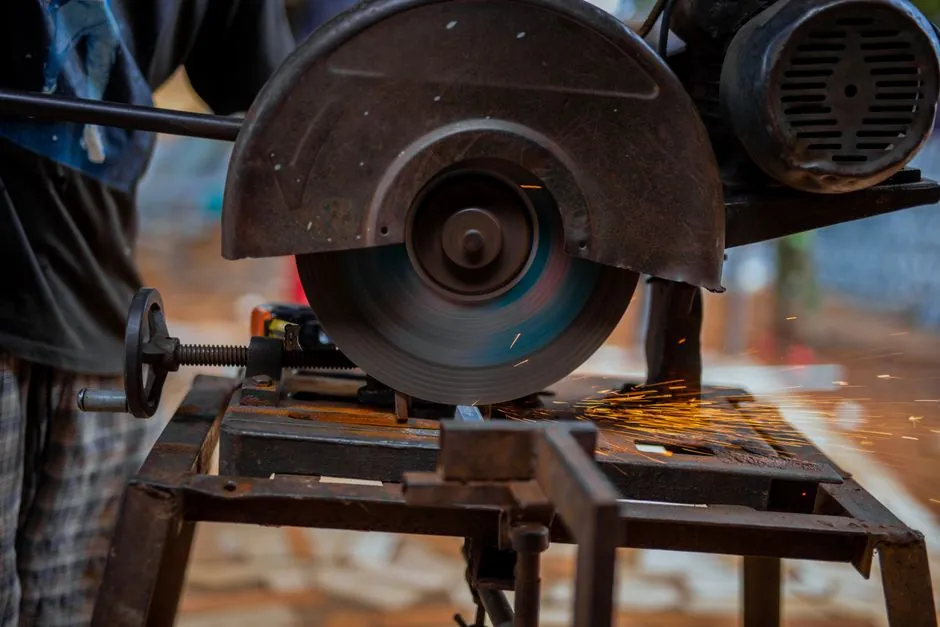
Zirconia alumina generally outperforms aluminum oxide in aggressive fettling because its tougher grain withstands heavier loads, resists heat, and lasts longer [S1][S2].
For a fettling grinder, the decision depends on pressure, material, wheel life, cut rate, and cost per finished part, not grain name alone.
Aluminum Oxide vs Zirconia Alumina Decision Criteria
Aluminum oxide is the economical choice for general-purpose grinding, sanding, maintenance, deburring, blending, and short runs [S5]. Zirconia alumina, a blend of zirconium oxide and aluminum oxide, is the more durable option for firm-pressure stock removal, weld removal, edge grinding, and sustained work on steel and stainless steel [S3][S4].
Aluminum oxide is the economical starting point, while zirconia alumina costs more. Its useful advantage is service life: zirconia normally outlasts aluminum oxide and can preserve cut rate and surface finish through more of the wheel life under aggressive grinding [S1][S4].
Aluminum oxide is the economical choice for general-purpose work, while zirconia alumina offers greater durability and performs well under higher pressure. The reverse also matters: paying for zirconia on light maintenance work adds unit cost without converting into useful removal output.
Material and Pressure Matching
Aluminum oxide suits light- to medium-duty applications, including general fabrication, deburring, blending, and short runs [S5].
Zirconia alumina performs well under higher pressure and maintains a consistent cut rate and surface finish through the life of the disc. It is a rational choice for aggressive grinding, weld removal, carbon steel, stainless steel, and titanium [S4]. Zirconia also offers superior heat resistance, making it less vulnerable to loss of cutting efficiency in demanding metalworking conditions [S2][S3].
Do not select zirconia solely because the workpiece is aluminum. The supplied evidence places zirconia firmly in steel and stainless fabrication, while aluminum oxide remains the general-purpose and economical abrasive [S4][S5]. For aluminum work, test a wheel on a controlled area and compare loading, loading tendency, surface finish, and wheel consumption rather than assuming a harder grain is better.
Wheel Life, Cut Rate, and Operating Economics
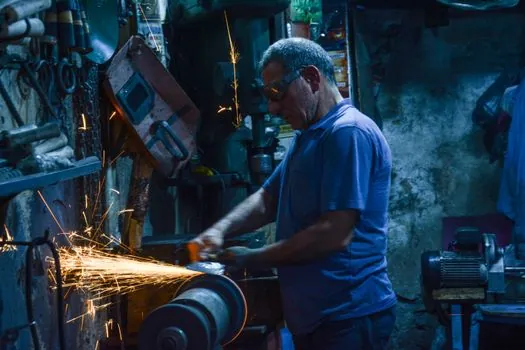
Zirconia alumina will outlast and outperform aluminum oxide in aggressive grinding. In practical terms, a longer wheel life can reduce wheel changes, interrupted cycles, setup time, and abrasive consumption, but those savings must exceed the higher purchase price [S4][S5].
Aluminum oxide remains the best-value choice when work is intermittent, pressure is moderate, and predictable operating cost matters more than maximum removal rate [S5]. Zirconia becomes economical when the workpiece can supply firm pressure and when the operation generates enough stock removal for longer life and faster removal to offset its middle purchase-cost position [S5].
Compare cost per completed part rather than cost per wheel. A useful trial records pieces ground per wheel, elapsed grinding time, wheel changes, workpiece finish, and any loading or burn marks. Keep grit, wheel diameter, grade, bond, machine, and workpiece constant where possible, because changing those variables prevents a clean grain comparison.
Correct Product Construction and Operating Limits
Abrasive grain alone does not define a safe or effective wheel; product form, backing or bond, grit, maximum speed, and material rating must match the grinder and application [S5]. Confirm that the wheel is approved for the machine, that its bore and outside diameter fit, and that the operating speed does not exceed the wheel marking.
Use bonded wheels for rigid fettling and edge work, while coated flap discs or belts require their own backing, flexibility, and machine compatibility. Ceramic is a distinct abrasive-grain family, and both zirconium and ceramic flap discs are discussed for grinding applications. Do not infer that a zirconia alumina flap disc can be substituted for a bonded grinding wheel, or that a cut-off wheel is suitable for fettling.
For the machine and process context, review the requirements for a sand blasting machine only when surface finishing follows grinding, since abrasive removal mechanisms differ. The heat treatment furnace is relevant only when the fettling operation is part of a controlled manufacturing route; furnace temperature does not determine wheel-grain selection by itself.
Failure Modes and Qualification Checks
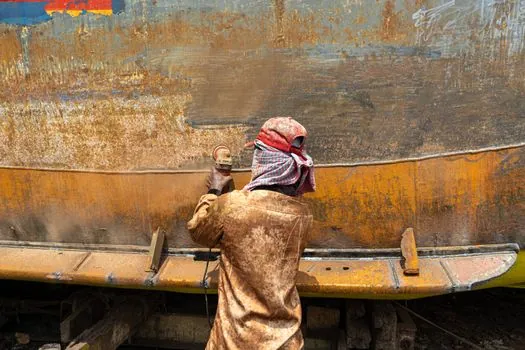
Three failure modes dominate abrasive selection: rapid edge dulling under insufficient load, heat-related loss of cutting performance, and premature wheel breakdown. Aluminum oxide is more exposed to the first condition when the task demands aggressive stock removal; zirconia alumina addresses heavier loading and improved heat resistance [S1][S2][S5].
Excessive loading can still damage a coated belt or flap disc, while an unsuitable bond can cause poor profile retention. Ceramic grain performs best in sustained, higher-pressure production grinding, where its higher cost can be offset by faster cutting and longer life.
Before release, inspect the wheel for cracks, edge damage, contamination, and storage damage, then verify the marked maximum speed against the grinder speed. For the qualification record, use at least 3 comparable test wheels, log the first wheel separately if it is a setup or dressing artifact, and compare removal rate, wheel life, finish, loading, and operator control. No qualified supplier data was provided for pressure, speed, or temperature limits, so these must come from the wheel maker and machine documentation rather than generic abrasive claims.
Practical Selection for Fettling Operations
Choose aluminum oxide for routine fettling, occasional weld cleanup, blending, deburring, short runs, and work where minimum purchase cost and broad availability are priorities [S5]. Choose zirconia alumina for high-pressure fettling of steel and stainless steel, weld removal, edge grinding, extended runs, and operations where heat resistance and longer life have measurable economic value [S2][S3][S4].
The decision rule should be workload-based: if the grinding cycle is intermittent and lightly loaded, aluminum oxide is the rational baseline. If the operator must press hard, wheel changes interrupt production, or removal rate limits throughput, trial zirconia alumina against the same aluminum oxide baseline [S1][S5].
Next, validate the selected wheel on the actual casting mold geometry or workpiece using at least 3 wheels per option, then approve the option that lowers total cost per finished part without compromising the specified surface finish or wheel operating limit.