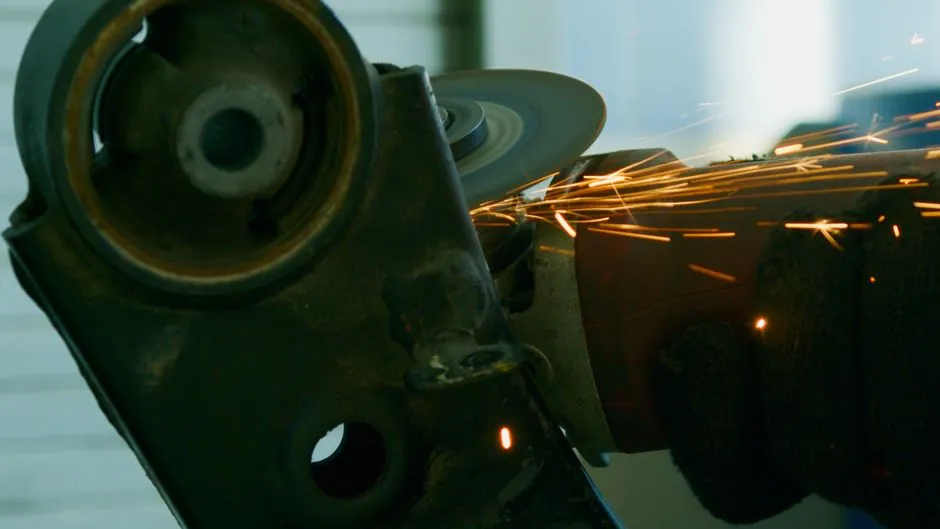
Gray iron removes material more readily than hard steel, yet its graphite flakes load abrasive wheels and increase heat, so fettling-wheel wear cannot be ranked by workpiece hardness alone [S3].
For gray iron and ductile iron, zirconia corundum or ceramic-grit roughing discs are the practical baseline; silicon carbide cutting discs fit heavily sand-coated castings, while cast-steel conditions require a separate wheel selection [S4].
Why Gray Iron and Steel Castings Behave Differently
Gray iron contains flake-shaped graphite, while ductile iron contains spheroidal graphite. The flake structure can clog wheel pores and generate heat, even though gray iron is easier to grind than hard steel [S1][S3].
Ductile iron is therefore not interchangeable with gray iron for wheel loading, heat generation, or stock-removal rate [S1].
The comparison is not simply gray iron versus steel. Foundry work can include gray iron GJL, ductile iron GJS, cast steel, and castings containing heavy sand inclusions, each requiring a different abrasive response [S4].
Compare the Main Fettling Wheel Options
Zirconia corundum roughing discs provide aggressive cutting and long service life for gray and ductile iron.
Tyrolit recommends CERABOND X ceramic-grit roughing discs for grey and ductile cast iron. For automatic fettling, resin-bonded grinding wheels and diamond cutting discs are specified for maximum service life and precision on both iron types [S4].
Silicon carbide is practical where loading and sand contamination dominate. Tyrolit recommends silicon carbide cutting discs for heavily sand-coated castings, while practitioner evidence identifies softer SiC wheels and flood coolant as effective controls for loaded gray iron [S3][S4].
Aluminum oxide is not the default fettling choice for gray iron because the abrasive family and wheel grade must support chip clearance, loading resistance, and application pressure. A steel-grinding wheel should therefore not be transferred to gray-iron fettling without a dressing trial [S3].
Set Selection by Decision Criteria
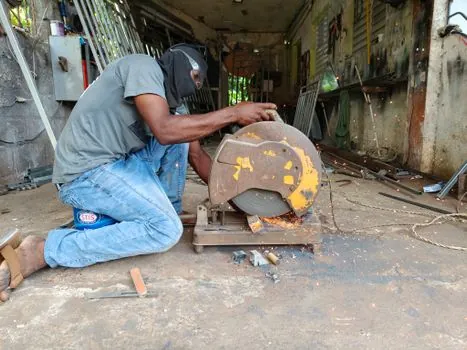
For manual gray-iron fettling, choose an open-structure zirconia corundum or ceramic-grit disc when stock removal is primary. Use a softer silicon carbide wheel and flood coolant when graphite loading is persistent, and dress between parts or batches to restore cutting action [S3][S4].
For automated gray- and ductile-iron fettling, compare resin-bonded grinding wheels with diamond cutting discs on service life, dimensional precision, and machine integration. The documented foundry selection favors diamond cutting discs for maximum life and precision in automatic gray- and ductile-iron work [S4].
For heavily sand-coated castings, prioritize silicon carbide cutting discs over a steel-oriented abrasive. Sand inclusions act as abrasive contaminants and can change both loading and wear behavior at the grinding interface [S4].
For cast steel, CERABOND X is identified among the suitable tools. Specify by casting hardness, machine force, stock condition, and required removal rate rather than by the steel label alone [S4].
Control Wear Through Workpiece, Wheel, and Process Variables
Wheel wear increases with depth of cut and cross-feed per pass. Aggressive engagement therefore shortens usable wheel life even when the abrasive grade is suitable [S7].
Dress the wheel before it becomes loaded or dull. Loaded wheels create heat quickly, and repeated dressing is a process cost even if the wheel is not physically consumed; a light skim dress before a finishing pass can also help establish size [S3].
Use coolant on gray iron when the wheel loads aggressively. Flood coolant supports chip evacuation and reduces the heat accumulation associated with a loaded wheel, although contaminated coolant must be monitored rather than assumed harmless [S3].
Measure wheel life by usable stock removed per wheel, dressing time, scrap rate, and grinding burns, not by calendar time. A defensible production trial should record casting mass and hardness, wheel code, diameter, abrasive and bond, grit, machine force, depth of cut, feed, coolant, dressing interval, and rejected castings.
Use Grinding Data to Separate Wheel Life from Part Life
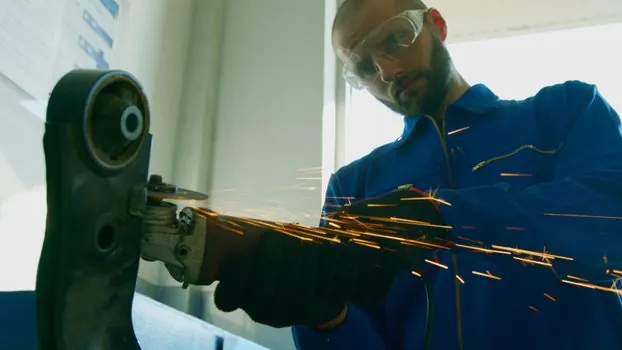
In a controlled HT250 gray-iron study, CBN grinding produced a subsurface layer with grains refined by approximately 15% and peak microhardness of 382 HV. Under the tested conditions, its wear depth was only 50–80% of that produced by conventional SiC grinding [S2].
Within the tested parameter range, the optimal wear-resistant surfaces were obtained at a grinding speed of 30 m/s, a feed rate of 2,000 mm/min, and a depth of cut of 6 μm.
These results concern the wear resistance of the ground HT250 guideway surface, not the wear rate of the fettling wheel. They also concern precision guideway grinding, so they should not be transferred directly to heavy foundry stock removal without a separate process trial [S2].
Implement a Wear-Rate Baseline for Production
This supports a direct A-versus-B trial where diamond tooling is operationally suitable [S1].
Run a controlled comparison on representative castings: gray iron and cast steel as separate datasets; one approved roughing grade versus one alternative; fixed machine pressure, feed, depth of cut, and coolant. Track wheel mass loss, dressing count, parts per wheel, elapsed grinding time, stock removed, and thermal rejects [S1][S7].
The decision rule should reflect the process constraint. If wheel dressing dominates, reduce loading through abrasive grade, softer SiC selection, coolant control, or less aggressive engagement. If dimensional precision or automatic-tool life dominates, evaluate resin-bonded wheels and diamond cutting discs on the same casting family before selecting a production standard [S3][S4].
For foundry application planning, link wheel selection to the fettling grinder and compare the abrasive against the machine force and casting geometry. A wheel-wear number without the casting grade, wheel specification, stock removal, and dressing policy is not transferable.