A portable gas detector should have one sensor for one defined hazard, four for the standard O2, %LEL, CO and H2S set, or up to six when VOC or additional toxic-gas coverage is required [S3].
The count follows the gases a job can actually produce, not the number of channels an instrument can offer: gas identity, expected concentration, monitoring location, response requirement and data use determine the correct configuration [S1].
Build the sensor count from the hazard assessment
Portable gas detection starts with a task-specific gas list. A single-gas detector measures one parameter, such as H2S, CO or O2, while a multi-gas detector combines several sensing channels for simultaneous monitoring [S7]. The selection sequence should establish the gases first, then the sampling method, disposable or serviceable construction, wearer, and location [S3].
For one known gas, specify one dedicated sensor and match its measurement range, response time and known cross-sensitivities to the actual exposure [S6]. For a variable hazard area, additional channels reduce the risk of carrying instruments for unrelated hazards. This makes a portable gas detector an atmospheric measurement tool with defined boundaries, not a substitute for a complete written hazard assessment.
A confined-space entry sequence illustrates the distinction. [S2]. A single-gas instrument cannot execute that three-part sequence by itself; a four-gas unit combines O2, combustible gas, CO and H2S in one enclosure [S5].
Compare one, four and six sensor configurations
A dedicated single-gas detector is strongest when the hazard is stable and precisely defined. Its benefits include focused measurement and alarm logic, lower power consumption, simpler calibration and reduced exposure to cross-sensitivity from unrelated channels [S4]. The limitation is equally concrete: it provides no measurement for a gas that is not fitted, so an H2S monitor does not substitute for an O2 or combustible-gas channel.
The standard four-gas arrangement covers O2, combustible gas expressed as %LEL, CO and H2S. It is the default for confined spaces, utilities, wastewater, steel, and oil and gas because it addresses oxygen deficiency, flammability and two common toxic hazards in one instrument [S3]. Its disadvantage is that it cannot detect a fifth hazard unless the configuration includes one.
Five- or six-channel configurations add a toxic sensor or photoionization detector for volatile organic compounds. The practical cost difference is material: a disposable single-gas unit was listed at $137.50–$226, a standard four-gas monitor at $640, and six-gas PID instruments at $1,597–$5,152 [S3]. These figures establish purchasing order, not universal pricing, but they show why adding channels should follow a documented need. A multi-gas detector is appropriate for changing hazards; a premium PID channel is not justified where no VOC hazard has been identified [S3].
Match sensor coverage to concentration and response needs
Sensor count does not establish detection quality. Measurement range, response time and cross-sensitivity determine whether the configured channel can perform the required job, particularly for low-level toxic-gas warnings [S6]. A detector with more channels can still provide weak protection if a required gas has the wrong range, slow response or unacceptable interference from another gas [S1].
One published portable system for trace-level industrial gas surveys provides continuous active air sampling, real-time readings, graphical data, logging, audible and visual alarms, and up to eight hours of continuous battery operation [S1]. Those specifications matter when early warning for one toxic gas justifies active sampling; they do not justify adding channels for gases that cannot occur in the work area.
Toxic readings are commonly shown in parts per million, combustible readings as %LEL, and oxygen as percent by volume [S5]. The written alarm plan should convert those display units into site actions, including instrument response time, sensor recovery after exposure, and whether readings must be recorded for later review. Selection guidance also calls for comparison of sensor limitations, sampling methods, alarm functions, battery runtime, enclosure protection and data logging [S5].
Set the sensor count around the sampling location
Diffusion sampling and pumped sampling change the role of the detector even when the sensor count is unchanged. A diffusion monitor samples air drifting across its sensors and suits a person moving through an area. A pumped monitor draws air through a hose from a remote point, such as the bottom of a vault, the far end of a tank, or a space before entry [S3].
That distinction governs credible pre-entry testing. A diffusion monitor moved over an open hatch on a pole does not provide the same remote-area sample as a pumped instrument [S3]. A fixed gas detector may be justified where a permanent location needs continuous coverage, but adding fixed channels does not remove the need for portable testing of remote spaces.
The operating environment also sets limits on usable sensors. Temperature, humidity, dust, corrosive atmosphere, vibration and the presence of interfering gases can affect sensor performance and maintenance intervals [S8]. Selection guidance emphasizes physical sensor operating limits and sampling mechanics alongside the target gases [S8]. Sensor count should therefore be fixed only after the sampling point, expected concentration and environmental conditions are documented.
Use the detector for the right users and tasks
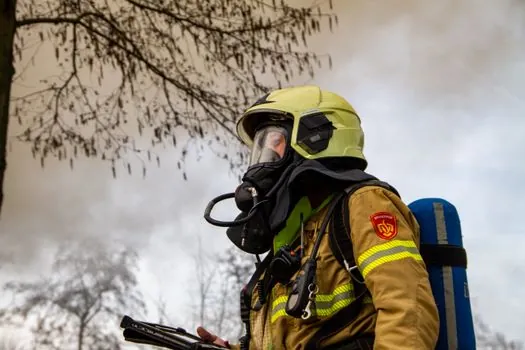
A single-gas detector is suitable for personal exposure monitoring, inspections in a defined single-hazard area, and routine leak checks centered on one substance [S5]. A four-gas instrument is the stronger choice for confined-space entry, petrochemical operations, industrial maintenance, emergency response and general inspections where O2, flammability, CO and H2S must be observed together [S5].
The detector is not suitable when the site relies on an unlisted hazard, requires measurements outside the fitted sensor ranges, or needs remote sampling without a pump. It is also not a substitute for fixed coverage at a continuously hazardous location. For emergency response and rescue work, instrument capability, alarm behavior, data handling and team communication must be reviewed as one system rather than reduced to channel count [S1].
One-gas, two-gas, four-gas and six-gas configurations form a practical procurement ladder: one gas for a defined hazard, two gases when two hazards are documented, four gases for the common confined-space set, and five or six gases for VOC or additional toxic coverage [S3]. This approach reduces unnecessary channels without omitting a credible hazard. It also simplifies training, maintenance and calibration planning because each installed channel has a defined purpose [S4].
Plan service, alarms and records around every channel
Every added sensor creates a service obligation: sensor life, calibration gas, calibration interval, bump-test procedure, replacement stock and possible cross-sensitivity must be addressed [S5]. Single-gas units are easier to maintain and calibrate, while multi-gas units require more complex calibration management [S4]. A lower channel count therefore reduces routine workload when the hazard list supports it.
Alarm architecture should specify setpoints, audible, visual and vibration notification, and how readings are recorded. Portable instruments can support personal monitoring, pre-entry checks, leak investigation and emergency assessment, with audible, visual and vibration alarms activated at preset concentration levels [S5]. A multi-channel display reduces equipment redundancy, while a single channel makes the response procedure more direct [S4].
For toxic gases, verify low-level performance, response time and known cross-sensitivities before purchase; these are explicit single-gas selection criteria [S6]. For combustible channels, compare the specified %LEL range with the target gas rather than treating every combustible sensor as interchangeable. Combustible gas detectors may also be constrained by poisoning and cross-gas effects, so the sensor technology must match the service environment [S3].
Verify the final configuration against five decisions

The final sensor count should pass five checks: every credible gas has an appropriate channel; each channel has the required range and response; the sampling method reaches the intended location; alarm and recordkeeping requirements are defined; and the maintenance plan covers each installed sensor [S3][S5].
A practical specification can therefore read: 1 sensor for one documented gas; 2 sensors for two documented gases; 4 sensors for O2, %LEL, CO and H2S; 5 or 6 sensors when a further toxic channel or PID is required [S3]. This is not a universal rule based on worker movement. It is a decision framework that ties sensor count to the gases the job can produce [S1].
The next procurement review should record the task gas list, exposure range, sampling point, pump requirement, alarm outputs, data-logging need and service interval. Changes to any of those six inputs can change the sensor count, and the final configuration should be approved against the current hazard assessment rather than the broadest catalog configuration.