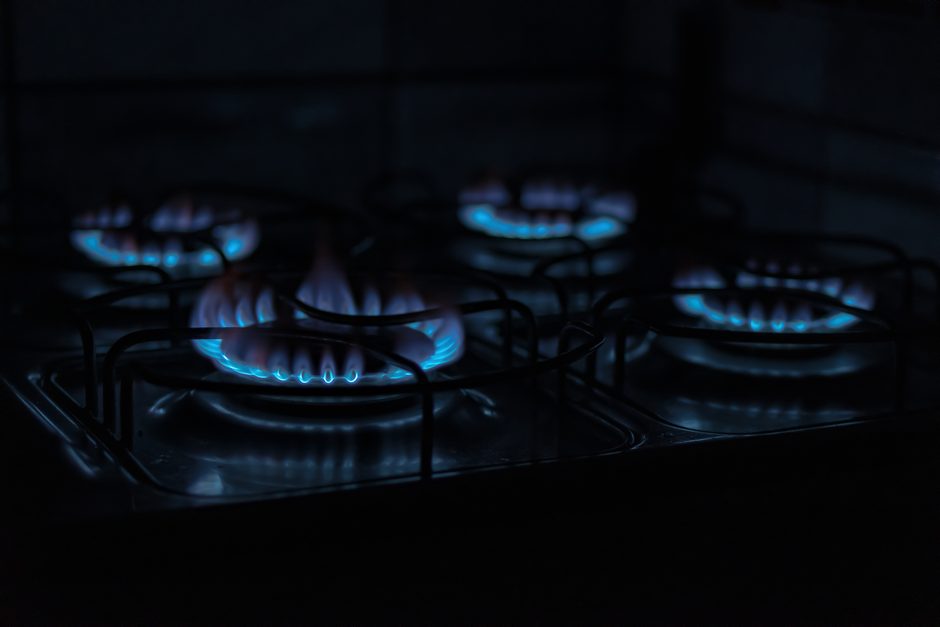
A catalytic-bead (pellistor) sensor is the workhorse for combustible-gas detection up to 100% LEL when the duty is hydrocarbons in relatively clean air [S1][S2]. Two matched beads — one active, one poisoned reference — sit in a Wheatstone bridge; combustion raises the active bead's resistance, unbalances the bridge, and produces a millivolt signal proportional to gas concentration [S2]. The detector family fits a fixed gas detector footprint in refineries, LNG stations, boiler rooms, and paint booths where the target gas is methane, propane, butane, pentane, gasoline vapor, acetone, or alcohol [S1][S3].
The same housing can also host electrochemical, NDIR, or PID cells for toxic gas detector duty, but those are different sensors with different selection logic. This map covers catalytic-bead instruments for combustible-gas duty only — picking a multi-gas cart for confined space, where a portable gas detector running LEL + O2 + CO + H2S is mandatory, is a different decision tree [S2][S3].
Catalytic-Bead Operating Principle and Why It Matters for Selection
A catalytic-bead sensor contains a platinum coil embedded in an alumina bead coated with a palladium/platinum catalyst; a matched inert bead in the opposite arm compensates for temperature and humidity drift, and the pair forms one arm of a Wheatstone bridge [S2]. When combustible gas oxidizes on the hot active bead, the exotherm raises its resistance, unbalances the bridge, and the output voltage is read as LEL fraction. Operating temperature of the active element sits roughly in the 450–550 °C window, which is what makes the sensor fail in two predictable ways: catalyst poisoning and bead burnout.
Three application gates flow directly from this physics. First, the detector must be specified for the **target gas** — calibration on methane is not interchangeable with calibration on pentane, because relative response factors (RRF) shift the curve by 20–60% across the C1–C8 range. Second, the environment must be **oxygen-sufficient** — catalytic oxidation needs roughly 10% O2 minimum to give a linear response, so dead-air or inerted vessels will read low. Third, the atmosphere must be **free of poisons and inhibitors** — silicones, lead, sulfur, phosphate esters, and halogenated solvents coat the catalyst and permanently suppress output [S2].
Five Spec Gates That Drive the Shortlist
**1. Range and LEL scale.** Industrial catalytic detectors are normally scaled 0–100% LEL of the calibration gas, with linear output across roughly 5–60% LEL and roll-off above that [S1][S3]. For battery rooms or electrolyzer halls where H2 is the leak gas, catalytic H2 cells exist but are poisoned easily; an electrochemical H2 cell is usually the better fit. If the duty is methane or propane distribution, a 0–100% LEL catalytic sensor with 1% LEL resolution is the default [S1].
**2. Response time (T90) and warm-up.** Typical T90 for a catalytic-bead detector is 15–30 s to step-gas at the sensor head; instrument-level T90 rises to 30–60 s once diffusion through the sinter and housing is included [S2]. Confined-space and leak-search duty push the buyer toward a portable gas detector with pumped sampling — diffusion-only heads will under-read moving leaks.
**3. Output and integration.** Fixed catalytic detectors expose 4–20 mA analog, RS-485 Modbus, and one or two alarm relays; portable instruments add local LCD, 85 dB audible, and strobe [S1][S3]. For a combustible gas detector tied into a fire & gas system, expect at minimum two SPDT alarm relays, a 4–20 mA loop, and a fault relay — and verify the controller accepts a 3-wire mA sink/source input. Catalytic sensors draw roughly 250–300 mA of heater current, so loop-power designs with HART over 4–20 mA usually pair a thicker 18 AWG cable and a dedicated 24 VDC supply.
**4. Environmental rating and certification.** For Zone 1 / Class I Div 1 hydrocarbon service, look for IECEx/ATEX Ex db IIC T6 Gb or UL-listed explosion-proof housing; for Zone 2 only, an Ex db eb IIC T4 with restricted-breathing enclosure is acceptable. Ingress protection is a separate axis: IP65 for sheltered outdoor, IP66/IP67 for offshore splash, and a stainless 316L head for salt-laden or fertilizer-plant air [S1][S3]. Operating temperature of the housing usually runs −40 °C to +70 °C, but the pellistor itself derates output above 40 °C ambient and below −20 °C unless the maker publishes a compensated curve.
**5. Calibration cadence and poison tolerance.** A clean-air, methane-only plant can run 90-day bump tests; a refueling station or coating line usually needs 30-day calibration [S2]. Spec the calibration cup thread, the test-gas concentration (commonly 50% LEL CH4 in air), and the recommended flow rate (0.5–1.0 L/min) up front — generic cylinders will not seat on a non-standard cup.
Catalytic vs NDIR vs MOS: A Criteria Comparison
Catalytic-bead, NDIR (non-dispersive infrared), and metal-oxide-semiconductor (MOS) sensors all sit in the combustible-gas detector market, but they answer different questions. The right pick is set by the duty, not by which technology is newest. [S1]
**Cost and life.** Catalytic pellistors are the cheapest of the three (sensor element typically under USD 80 in volume), with a 3–5 year field life in clean service [S1][S3]. NDIR cells run 3–10× the price but deliver 5–10 year life with no oxygen dependence. MOS heads sit between the two on cost but have a 2–3 year life and high humidity drift.
**Selectivity and poisoning.** Catalytic sensors will respond to anything combustible — methane, propane, acetone, gasoline vapor, alcohols — but a calibration on one hydrocarbon will read the other at a different percentage (RRF shift of 0.4–1.6 across C1–C8). NDIR is selective to a target absorption band (4.26 µm for CO2, 3.3 µm for CH4) and ignores most interferents; it is also immune to the silicones and sulfur compounds that kill pellistors in days [S2].
**Oxygen dependence.** Catalytic sensors need at least ~10% O2; NDIR is oxygen-independent; MOS is oxygen-dependent and humidity-sensitive. For inerted or oxygen-starved vessels, NDIR is the only correct choice. For boiler houses and LNG stations, catalytic is the default and the cheapest replacement path.
**Response and recovery.** Catalytic T90 is 15–30 s with full recovery in under 60 s [S2]. NDIR T90 is 5–15 s and recovers in under 30 s. MOS is the slowest (30–60 s) and recovers over minutes because water vapor on the oxide surface has to desorb.
Who Should NOT Buy a Catalytic Detector
Catalytic-bead sensors are the wrong instrument in four common scenarios. First, **H2S, HCl, HF, Cl2, or any reactive acid-gas stream** — sulfur and halogens poison the catalyst permanently within hours; specify an electrochemical cell on a toxic gas detector instead. Second, **engine exhaust, landfill, or biogas** with high H2S — even a few ppm of H2S in the background will kill a pellistor in weeks; NDIR CH4 is the correct technology. Third, **silicon-rich environments** — silicone sealants, release agents, and some lubricants volatilize cyclic siloxanes that deposit on the catalyst and cause irreversible loss of sensitivity. Fourth, **oxygen-deficient vessels** — any space that has been purged with nitrogen or CO2 will under-read because the catalytic reaction needs oxygen; spec an NDIR or paramagnetic O2 + LEL NDIR combination. [S1]
Continuous exposure above 100% LEL is also a problem: the catalyst heats to incandescence, the active bead can melt, and the sensor never recovers. For high-concentration or unknown concentration duty, a multi-gas detector with NDIR and a flame arrestor is the safer pick, even at higher unit cost [S1][S2].
Real Use Cases That Map to the Shortlist
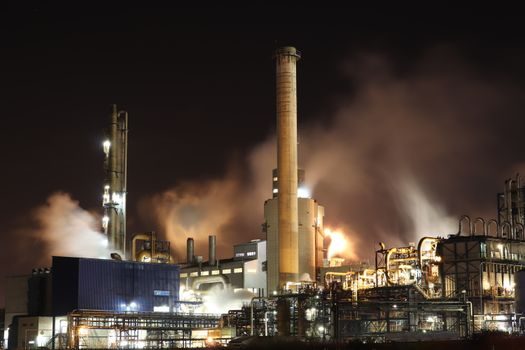
**LNG/CNG station** — methane is the only target, atmosphere is outdoor or sheltered, oxygen is normal. Spec: catalytic-bead, 0–100% LEL CH4, Ex db IIC T6, IP65, 4–20 mA + Modbus + 2 alarm relays, 90-day calibration interval, methanometer-only with no cross-gas compensation [S1][S3].
**Refinery furnace area** — methane + propane + butane, ambient outdoors, occasional H2S below 1 ppm. Spec: catalytic-bead with H2S scrubber filter, 0–100% LEL, Ex db, IP66, 30-day bump test interval, dual relays for low and high alarm at 20% and 40% LEL [S3].
**Paint spray booth** — acetone, toluene, MEK, and alcohols; mixed solvent vapor. Catalytic sensors will respond but with a strong negative interference from halogenated solvents; NDIR is usually specified instead. If the spec must stay catalytic, accept a 30-day calibration cadence and a calibration gas matched to the dominant solvent.
**Confined-space entry** — sewer, tank, manhole. The instrument is a portable gas detector running LEL (catalytic) + O2 + CO + H2S simultaneously, with pumped sampling, audible + visual + vibration alarms, and a runtime of 12+ hours on a single charge [S2][S3]. The catalytic channel is mandatory for the combustible LEL reading; it is the toxic channels that get people killed.
**Battery room / electrolyzer** — H2 is the leak gas. Catalytic H2 cells are available but burn out fast in this duty because the lower explosion limit is 4% vol — an order of magnitude higher concentration than hydrocarbon leaks — and the bead sees chronic over-range. An electrochemical H2 cell, 0–1000 ppm or 0–4% vol, is the correct primary, with a secondary catalytic LEL detector as a backstop [S1].
Limits, Failure Modes, and Bump-Test Discipline
The catalog failure modes of a catalytic-bead detector fall into three groups. **Poisoning** — silicon, lead, sulfur, phosphate ester, and halogenated compounds permanently reduce the active bead's response; the sensor reads low against test gas, eventually pegs at zero, and must be replaced. **Inhibition** — water, alcohol, and some acid gases temporarily suppress the signal but the sensor recovers when the atmosphere clears. **Burnout / drift** — chronic exposure above 100% LEL, mechanical shock to the bead, or 5+ years of continuous service raise the baseline and shift the calibration curve, again requiring replacement [S2].
Operational discipline matters as much as sensor chemistry. Run a **bump test** with 50% LEL calibration gas at instrument startup for confined-space entry; spec a sensor that needs the test gas at least 50% of span for a pass reading, otherwise the bump will pass on a poisoned sensor that would still under-read a real leak. Lock out the instrument and route it to calibration if the bump fails, if the reading drifts more than ±10% between bump tests, or if the sensor has been exposed to a confirmed over-range event. Documentation standards such as ISA RP12.13 and IEC 60079-29-2 govern combustible-gas detector installation, calibration, and functional testing in fixed systems; the functional test interval is commonly 30–90 days depending on duty [S2][S3].
For sourcing, China-based OEM/ODM channels through Hanwei Electronics and similar Tier-1 sensor houses dominate the volume market; portable single-gas detectors, multi-gas detectors, and fixed detectors are all available with custom branding and EN/IEC/UL certification support [S3]. Verified factory audit, calibration-gas traceability certificate, and a written calibration interval are the three paper items to walk out with before signing a PO. A spec-first shopping map for adjacent instrumentation — from load cells to ultrasonic thickness gauges — runs on the same logic: identify the duty, write the spec gate, then pick the technology that meets it.