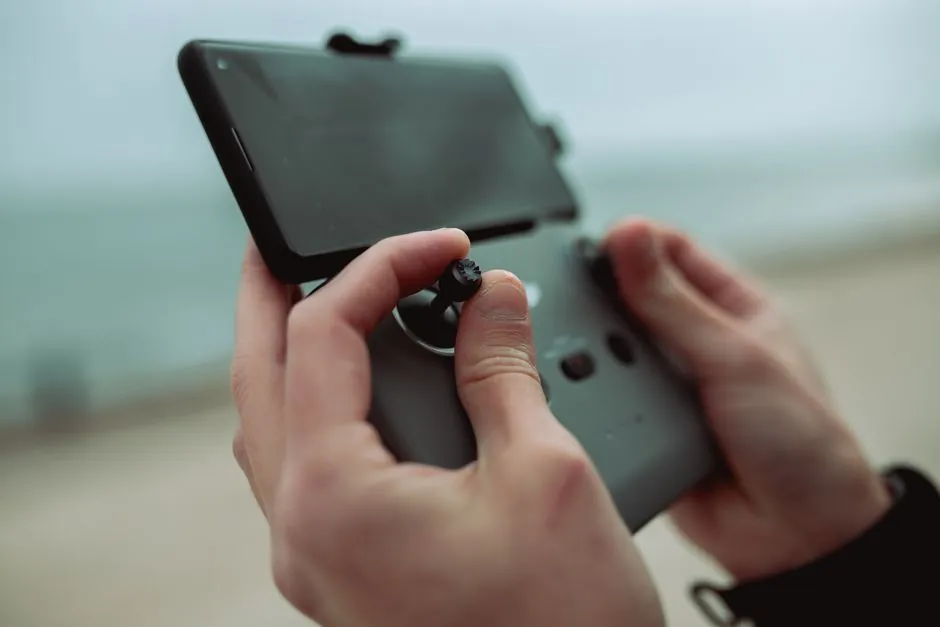
A two-hand control (THC) station is a safeguarding device that only initiates a machine cycle when two separated actuators are pressed within a synchronisation window, and it must be paired with a dedicated safety relay that performs cross-fault monitoring, anti-tie-down, and synchronised-timing checks, not a PLC scan [S2][S3].
Demand in 2026 is being driven by retrofits on mechanical and hydraulic presses, small-footprint assembly cells, and the global roll-out of press-brake safeguarding, with active product lines from ABB, Banner, Eaton, IDEM (via AutomationDirect), Pilz, SICK, Schmersal, Siemens, and Rockwell, plus new entrants such as New Elfin releasing dedicated stations [S1][S4][S6][S7][S8]. For a spec-first view of safeguarding controls, see the related guide on insulated tools and hand tools and the two-hand control entry.
Type IIIA vs Type IIIC: The Deciding Architecture
EN 574 classifies THC devices into three types based on input device, logic, and output behaviour, and the classification you choose dictates the entire bill of materials [S2][S6]. Type I uses two separate control devices without any timing logic and is essentially obsolete for new builds. Type II adds a timing relay requiring both buttons actuated within 0.5 s, but it permits tie-down via mechanical latches and is restricted in many jurisdictions.
Type III is the dominant spec in 2026 and splits into two sub-classes with very different risk profiles. Type IIIA allows the outputs to stay energised if one button is released and re-pressed within a short re-energisation window, which is acceptable on partial-revolution clutches but rarely used on full-revolution presses. Type IIIC, also called Type III C, requires both buttons to be released and re-actuated together to re-start, eliminating tie-down by construction and becoming the default for new press and press-brake builds in Europe and North America [S2][S3].
What the Safety Relay Must Do: Timing, Cross-Check, Anti-Repeat
The safety relay sitting between the THC station and the machine's stop circuit is the actual safety function, because the buttons and wiring are only input devices and cannot be trusted on their own [S2][S3][S4]. Three behaviours are non-negotiable: synchronisation, typically both inputs must close within 500 ms of each other; cross-fault detection, where the relay pulses one input and reads the other to detect welded contacts or short circuits; and anti-repeat, where releasing either button drops the outputs and a new cycle cannot start until both are released and re-pressed within the timing window [S2][S4].
Banner, Eaton, and Pilz document this behaviour as the core differentiator from a simple two-button interlock, with the relay's safety-rated outputs (typically two force-guided contacts per output channel) feeding the press's clutch/brake control or the machine's safe-stop circuit [S4][S6]. A useful analogy for engineers familiar with guarding relays is that the THC safety relay behaves like a category-3 or category-4 safety gate monitor but with synchronised input logic instead of a single interlock channel.
Mechanical Buttons vs Zero-Force Sensors: Match to Operator Cycle
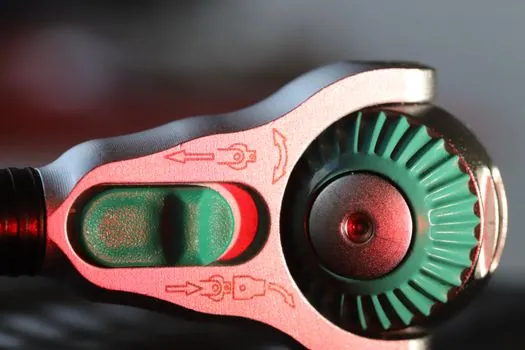
Mechanical palm buttons remain the workhorse of press rooms, with mushroom-style red actuators on a steel enclosure and a fixed shroud preventing accidental one-hand operation, and they are the lowest-cost, highest-reliability option for hydraulic and mechanical presses in stamping and forging lines [S3][S7]. The trade-off is operator fatigue: high-cycle assembly cells (more than 60 cycles/hour) push users toward zero-force capacitive or optoelectronic actuators that sense the hand at 1-2 mm distance and require no actuation force [S2].
The right rule of thumb: if cycle time is below 5 s and the operator presses more than 200 times per shift, spec zero-force and budget the safety relay accordingly; otherwise mechanical palm buttons are the rational choice [S2][S3].
Press Safeguarding, Clutch/Brake Wiring, and Why a PLC Won't Do
Press-control regulations in North America, specifically the ANSI B11.1 / OSHA 1910.217 framework, and CSA Z142 in Canada, historically required that clutch/brake and trip control live in electromechanical or certified dedicated hardware rather than a general-purpose PLC scan, and the same rule of thumb persists in 2026 even with modern safety PLCs [S5]. A 500 ms synchronisation check and cross-fault detection on each press cycle is enforceable in a safety PLC, but only if the I/O is safety-rated and the application is validated, and many auditors still prefer a hardwired relay for the THC function and the PLC for sequence logic only.
In practice, plants split the safety function: the THC relay handles synchronisation, cross-fault, and anti-repeat, and the PLC handles cycle counters, brake monitors, and light curtains. A second, redundant architecture uses two safety PLCs (for example, redundant Allen-Bradley SLC 500 chassis) where each PLC cross-checks the other's THC inputs, which is acceptable under CSA Z142 but requires documented validation [S5]. Whichever path you choose, the buttons must have two mechanically independent contacts per hand so that a welded contact cannot be masked by the wiring.
Who Should and Should Not Specify a THC Station

THC is the right fit when the hazard is a single-stroke crushing or shearing action that can be stopped mid-cycle, when the operator's hands can be kept outside the danger zone during the cycle, and when the cycle is short enough that constant two-hand holding is tolerable [S3][S6]. Typical applications include power presses, press brakes, punch presses, cut-to-length fixtures, and small test benches, where full physical guarding is impractical because the operator must feed or remove a part each stroke.
THC is the wrong fit when the operator must reach into the danger zone during the cycle (use a light curtain or safety mat instead), when the hazard is a continuous-run rotating element such as a mixer's blade shaft (use a safe-speed guard with interlocked door), or when the cycle exceeds ~10 s because operator fatigue produces a one-hand cheat that defeats the safeguard [S3]. For a broader view of how this compares with non-contact guarding, the machine safety control cabinet reference maps the integration of THC relays with light curtains and stop categories.
Selection Criteria Compared Side by Side
Four realistic options line up against four decision criteria. Mechanical palm button station: low unit cost (typical 200-500 USD per station), high cycle-count reliability, requires actuation force, best for press rooms and stamping. THC safety relay only (panel-mount, no station): lowest cost if buttons are reused, requires customer-supplied wiring, suitable for retrofitting existing pendant buttons. PLC-based THC with safety I/O: highest flexibility and diagnostics, requires safety PLC and validated application software, best for new line builds where sequence logic and safety share a platform [S2][S3][S4][S6][S8].
New Elfin's 2025-10 release illustrates the trend: a pre-built THC station with integrated E-stop, dual-channel mechanical buttons, and a removable terminal block that drops into a standard DIN rail, targeting the gap between bare relay + button and full PLC safety architecture [S8]. AutomationDirect's IDEM-branded stations lean the same way, sold as a complete station with relay and shipped from U.S. stock for short lead times [S7].
Integration with Guarding, Light Curtains, and Access Control
A THC station is almost never a standalone safeguard; it normally sits inside a broader safety system that includes a light curtain at the press opening, a guard interlock on the side door, and an emergency stop on the same panel, and the THC relay's outputs are typically wired in series with the light curtain and guard interlock so that any single trip stops the press [S2][S4]. Banner's THC modules, for example, monitor the output of each mechanical switch and de-energise when the operator removes one or both hands, and the same module family accepts inputs from light curtains and interlock switches with no extra logic [S4].
This is where the access control and linear guide reference pages become relevant in a different way: the THC station controls the initiation of motion that the linear guide then carries, and the access-control layer determines who can reach the THC station in the first place. On a guarded cell, a key-transfer interlock between the door and the THC station prevents bypass, and operators cannot reach the palm buttons without first being recognised by the access system.
Failure Modes, Compliance Evidence, and What Auditors Want to See
The most common THC failure mode is anti-tie-down defeat: a maintenance worker wedges a button, bricks the actuator, or wires one input permanently closed, and the press will then cycle on a single-hand press. The safety relay defeats this by demanding both inputs release between cycles (Type IIIC), but only if the relay is correctly specified, installed, and tested [S2][S3][S5]. The second most common failure is a welded contact on one button: mechanical palm buttons specified with two independent contacts per hand, and a relay that cross-checks them, catch this in commissioning; a single-contact button does not.
Auditor evidence in 2026 typically includes: a written risk assessment citing ISO 12100, a THC circuit diagram with safety relay model and serial, a synchronisation-time setpoint (commonly 500 ms, sometimes 250-300 ms on legacy press lines), a validation report showing a documented cross-fault test, and a periodic-test schedule. The easiest compliance path is to buy a station that is third-party certified to EN 574 and designed as a complete subsystem, rather than mixing buttons, relay, and wiring from different vendors without a system-level validation [S3][S5][S6].
Shortlist Logic: Putting It Together for 2026
If you are safeguarding a mechanical or hydraulic press in a stamping or forging cell, the default 2026 shortlist is a Type IIIC mechanical palm-button station (ABB, Banner, IDEM/AutomationDirect, Schmersal) paired with a vendor-matched safety relay, validated to EN 574, with dual-channel buttons and documented 500 ms synchronisation [S1][S3][S4][S7]. If you are building a new line where a safety PLC already exists and is the chosen platform, spec the THC function as a safety-PLC application block and retain a hardwired relay only as a backup; document the validation explicitly [S5].
For adjacent applications such as metal-cutting saws, the circular saw service and replacement guide covers blade-side guarding, and the laser marker sizing guide covers Class 1 enclosure integration, both of which can share the same control-cabinet architecture as a THC station. and EU channels with incomplete EN 574 documentation.