
On active construction sites the fire alarm control panel (FACP) is the only continuously supervised node protecting a partially-completed, high-fuel-load environment, so its selection must lock down power redundancy, zone resolution, and expandability before the slab is poured [S1][S4].
The decision starts with site classification: a temporary site hut cluster under 200 m², a permanent mid-rise superstructure, or a phased campus build each maps to a different control panel architecture, detector count budget, and code regime (BS 5839-1:2017, BS EN 54-2, NFPA 72, or local equivalents) [S1][S4].
Four FACP architectures and the site scale each fits
Conventional panels, addressable panels, wireless panels, and networked (distributed) panels cover the full construction-site spectrum, and each has a defensible scope [S1].
Conventional panels indicate the zone of activation only, not the specific device, and are typically configured in 2, 4, or 8 zone increments with or without LCD display, which keeps them cost-effective for small temporary welfare units, site offices, and storage compounds under ~200 m² [S1][S8]. Addressable panels assign a unique address to every detector, MCP, and module on the signalling line circuit (SLC), which lets the panel display the exact device in alarm (e.g., "Level 3, Plant Room, Detector 17") and is now the default for medium and large commercial builds, healthcare, schools, and high-rise projects [S2][S3]. Wireless panels eliminate cable runs for the SLC and are often the only feasible option in heritage retrofits or where cabling routes are blocked by finished surfaces, but battery-life discipline and radio-path surveys become part of the spec [S1]. Networked or distributed panels link multiple FACP nodes across a large site or campus, which is the only practical answer once the distance between the most remote device and the head-end exceeds the loop limit set in the manufacturer's documentation, or once a single panel cannot supervise the full detector count [S1][S9].
Selection criteria the panel must satisfy before procurement
Six gates filter the candidate panel list: code path, detection zoning, device count and loop load, power supply and backup, surge protection, and commissioning/maintenance workflow [S1][S3][S4][S7].
Code path is non-negotiable: in the UK the FACP must satisfy BS 5839-1:2017 for system design and BS EN 54-2 for control and indicating equipment, with power supply equipment covered by BS EN 54-4 [S4]. Local codes (NFPA 72 in the US, regional European EN 54 series, or GCC equivalents) impose the same product-standard logic, and the panel must carry the matching third-party listing [S4]. Zoning and detector count drive conventional-versus-addressable choice: a panel advertised as supporting "up to 32 zones" is not equivalent to a single-loop addressable panel supervising 126 or 159 devices per loop, and the latter is almost always cheaper per detection point once the device count crosses roughly 60–80 [S2][S3]. Power supply sizing must include primary mains, secondary battery backup (typically 24 hours standby plus 30 minutes alarm for BS 5839-1 non-domestic premises), and a listed Type 2 surge protective device (SPD) on the branch circuit supplying the FACP, located at or within the FACP enclosure or immediately adjacent [S7]. Expansion headroom matters because construction sites evolve: a panel specified to 80% of its device capacity at handover will not survive the first tenant fit-out [S1][S3]. Maintenance workflow is the hidden gate, since BS 5839-1 requires inspection by a competent engineer at intervals not exceeding six months, and the panel must generate a fault log readable by that engineer without proprietary software [S4].
Conventional vs addressable vs networked: criteria comparison
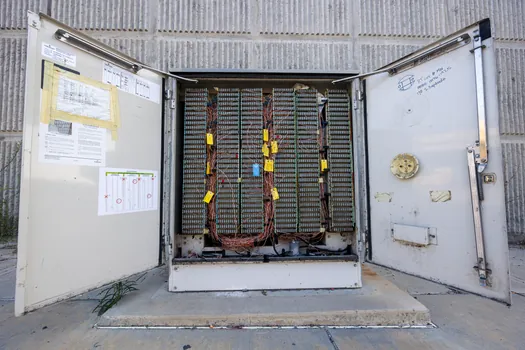
The table below lines up the three practical options on the four criteria that drive construction-site procurement [S1][S2][S3][S4].
On zone resolution, conventional panels return only a zone number, addressable panels return a unique device address, and networked panels return a device address tied to a specific node on the network [S1][S2]. On scalability, conventional scales by adding zones (typically 2, 4, 8, or 16 per card slot), addressable scales by adding devices on a loop (commonly 126 or 159 per SLC), and networked scales by adding nodes (each node a full addressable panel) without practical ceiling for campus builds [S1][S9]. On cable count, conventional needs a dedicated pair per zone, addressable uses a single loop for many devices, and networked reuses a peer-to-peer or radial fibre/copper backbone between nodes [S1][S3][S9]. On unit cost, conventional is the lowest at small scale, addressable wins on cost-per-point above ~60–80 devices, and networked carries the highest first cost but the lowest marginal cost per added building [S1][S2][S9].
Construction-site failure modes the spec must close
Three failure modes show up repeatedly on real construction sites: nuisance alarms from dust, partial-power brownouts during concrete pours, and unauthorised disconnection of detectors by follow-on trades [S1][S3][S5].
Dust nuisance is a detector-level problem, but the panel must support detector-type zoning (smoke vs heat vs multi-sensor) so the system can be re-zoned as a floor transitions from structural phase to fit-out phase, when dust suppression replaces combustion risk as the dominant concern [S3][S5]. Partial-power brownouts are common on sites fed by temporary generators; the FACP must therefore be specified with a power supply unit that accepts a wide mains tolerance and that switches to battery without a controller reboot, which is a BS EN 54-4 requirement that should be checked against the panel's data sheet rather than assumed [S4]. Unauthorised disconnection is mitigated by the panel's continuous loop supervision, which is intrinsic to addressable and networked panels and is a paid extra on conventional systems through end-of-line devices, so the procurement decision on architecture is also a decision on which failure modes the spec can detect automatically [S1][S3][S5].
Standards, sourcing, and what to confirm in the submittal
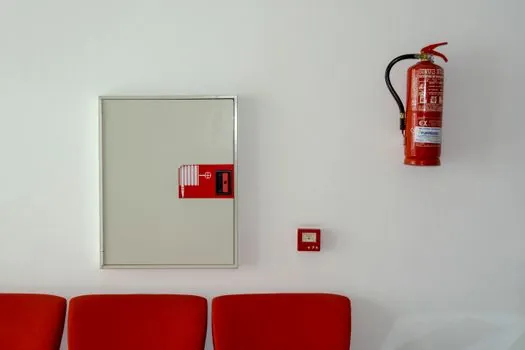
The submittal must list the FACP model, the governing product standard (BS EN 54-2 in the UK, UL 864 in the US), the system-design standard (BS 5839-1:2017 or NFPA 72), the loop-loading calculation, the battery-sizing calculation to the project's required standby duration, and the SPD specification on the supply branch circuit [S4][S7].
Engineers should also confirm the panel's maximum device count per loop, the maximum number of loops or nodes, the protocol on the SLC (proprietary versus open, which affects third-party detector compatibility), and the fault-log export format, since BS 5839-1 inspections are recurring and the log is the auditor's primary evidence [S1][S4]. A spec that locks these six items is auditable; a spec that names only the brand and "addressable, 4-loop" is not, and will fail at first commissioning [S1][S7].
Signals to track before the next procurement cycle
Watch for revisions to BS 5839-1 and BS EN 54-2 published by BSI, since any change to standby duration, fault-log retention, or network-node requirements will reset the sizing math on existing designs [S4].
For broader fire-system context, the fire alarm control panel component reference page covers the field-device side, while projects that also need perimeter protection during the construction phase can cross-check the perimeter alarm page, and builders specifying detector heads alongside the panel can use the heat detector selection guide to keep the detector and panel specs on the same page. Site MEP planners will also want the construction tools and construction machinery and equipment references when sequencing temporary power for the FACP supply.