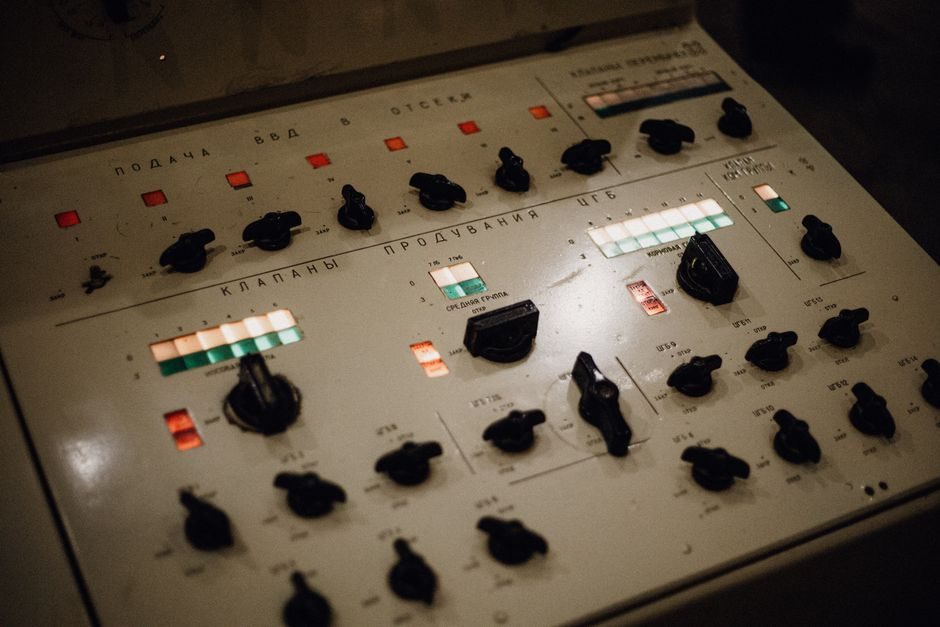
A fire alarm control panel is selected on topology (conventional vs addressable loop), loop loading, approval pack, and the auxiliary outputs the BMS or fire-suppression tie-in actually needs — not on brand colour or front-bezel finish.
On the 2026-07-07 sourcing beat the price spread is wide: a 4-zone conventional panel in the Chinese small-fire category lists for roughly ¥1,720 (~$240) at retail [S4], while a Siemens FC121-ZA conventional unit built for indoor commercial areas carries IP30 ingress and is catalogued as a conventional-area panel [S1]. Bulgarian OEM DMTech Ltd, established 2011, markets parallel conventional, addressable and repeater lines from a single site [S3], and offshore/marine build-outs — vessels, platforms — run a separate marine fire-alarm-control line that bundles detection, control and suppression release into one cabinet [S2].
Conventional vs Addressable vs Marine: Topology Decision
Conventional panels hard-wire each zone on a dedicated pair back to the FACP, so a 4-, 8-, 16- or 32-zone unit is sized by physical zone count rather than device count [S1]. Addressable loops put 100-200+ devices on a single twisted pair, each with a unique address, and the panel polls loop loading rather than counting zones [S3]. Marine panels add watertight enclosures, salt-fog PCB conformal coating, and ship-specific approvals (e.g. classed societies — DNV, Lloyd's, CCS, ABS) layered on top of the base EN 54 or equivalent functional standard [S2].
For small shops, single-tenant retail and 2-3 storey residential blocks, a 4-8 zone conventional panel at the $50-$300 band is the economic answer; the CK1004 class unit referenced in 2025-08 retail data sits in that band [S4]. For floor plates above roughly 1,000 m², mixed-tenant offices, hospitals and data centres, addressable is the default — labour saving on the loop alone offsets the higher panel cost, and you can pinpoint the device in alarm. Marine and offshore is a separate procurement track: the panel must be supplied as part of a detection-and-control package, not as a stand-alone FACP [S2].
Approval Pack: EN 54-2/4, UL 864 9th, FM, CE-CPR
Every panel that lands on a regulated site has to carry a third-party approval matching the jurisdiction: EN 54-2 (control and indicating equipment) and EN 54-4 (power supply) inside the EU, UL 864 9th edition for North American commercial fire, FM Approval for FM-insured properties, and CE-CPR (305/2011) marking for any panel installed under the Construction Products Regulation. Marine panels additionally carry class-society type approval and are built to the IEC 60092-504 electrical-installations-for-ships framework [S2]. A Siemens-branded conventional unit carrying the catalogue part number FC121-ZA is shown rated for conventional areas with IP30 enclosure [S1] — IP30 covers solid objects >2.5 mm but no water, so it is an indoor-only rating; for plant rooms, car parks and marine decks you need to step up to IP54 or IP65.
Spec rule: never accept a panel that ships with only a CE declaration and no EN 54-2/4 test certificate, and never accept a marine cabinet without a class-society certificate number on the nameplate.
Loop Capacity, Device Count and Cable Type
An addressable loop is sized in three constraints: the panel's loop-driver card limit (typically 159 (Notifier/EST) or 126/252 address points), the per-loop current budget (usually 400-500 mA), and the cable resistance budget (most panels hold loop resistance under roughly 40-50 Ω total). Conventional zones run at 24 V DC nominal with an end-of-line resistor (typically 4.7 kΩ) and a zone-current threshold in the tens of milliamps. The CIE must list both the maximum device count and the maximum cable distance on the data sheet — values that are not published should be treated as unverified and the panel bounced from the bid. [S1]
Power Supply, Battery Standby and N+1
EN 54-4 requires the panel power supply to maintain full operation plus battery charging from the mains, and to run the system from batteries alone for a defined standby plus alarm period — typically 24 h standby + 30 min alarm for life-safety systems, shortened to 4 h + 30 min where a generator-backed mains is present. Battery sizing is a calculation, not a rule of thumb: total standby current × standby hours + total alarm current × alarm hours, derated by 1.25 for ageing, then divided by battery capacity at the 20-hr rate. Panels that ship with internal 12 V / 7 Ah or 12 V / 17 Ah sealed lead-acid bays and an external 24 V / 38-65 Ah expansion box are the common configuration. [S2]
Auxiliary Outputs: Relays, NACs, BMS and Suppression Release
The CIE must drive the field: programmable relay contacts for HVAC shutoff, elevator recall, fire-door release; notification appliance circuits (NACs) for horns, strobes and speakers — typically 24 V DC, 1-3 A per NAC, Class B or Class A wiring; and clean contacts or a serial/Modbus/Ethernet link to the BMS. Where the panel releases a gas/clean-agent or pre-action sprinkler system, the output must be a dedicated, supervised releasing circuit with a cross-zoning or double-knock interlock and a countdown timer per NFPA 12/2001 logic — not a generic programmable relay. Each auxiliary function on the data sheet should map to a project I/O list before the panel is ordered, not after. [S3]
Who a Conventional Panel Is For — and Who It Is Not For
Conventional is the right answer for: small shops, single-storey retail, 2-3 zone residential blocks, parking sheds with under roughly 32 zones, and budget-driven retrofits where the existing zone wiring is being reused. Conventional is wrong for: hospitals, data centres, high-rise, multi-tenant offices, warehouses above ~1,000 m², and any site that needs per-device identification, drift-compensation on smoke sensors, or cause-and-effect logic across more than a handful of zones. Marine and offshore is a category of its own: marine fire-alarm panels ship inside an integrated detection-and-control cabinet rated for shipboard environment, not as a wall-mount commercial FACP [S2].
If you are pricing a perimeter alarm tie-in to the FACP, the loop interface and protocol — typically a dry-contact output from the perimeter panel into a CIE input — must be specced on the CIE I/O list, not improvised in the field. A gas alarm controller for boiler rooms or parking ventilation should be sourced as a separate sub-system and brought into the FACP via clean contacts, not daisy-chained on the detection loop.
Selection Criteria Matrix: Conventional vs Addressable vs Marine

Compared on the four decision gates buyers actually use: [S4]
Conventional: 4-32 zones; 24 V DC zone wiring with EOL; $50-$300 panel cost; best for small commercial and residential. Addressable: 100-200+ devices per loop, single twisted pair; $800-$3,000+ panel cost; required for per-device identification, cause-and-effect and large floor plates. Marine: integrated detection-control-release cabinet, IP-rated enclosure, class-society approved; panel cost dominated by enclosure and approval pack, not by zone count; mandatory for vessels, offshore platforms and shipyards [S2][S3]. Approval pack is the gate that is non-negotiable across all three: EN 54-2/4 for EU, UL 864 9th edition for North America, class-society plus IEC 60092-504 for marine.
For spec-first buyers tracking the detection-end of the same system, the heat-detector price bands in 2026 cover the conventional/analog/addressable tiers you will be wiring into this FACP — see the heat-detector price and spec breakdown for 2026. Procurement teams running a multi-discipline MRO bid will recognise the same spec-first pattern used on rotating equipment, where the hydraulic-pump buying guide treats pump type, duty point and %IZ-style derating as gates before vendor talks.
Limits, Failure Modes and What to Bounce
Panels to reject on sight: any panel shipped without a published loop-loading spreadsheet; any panel where the data sheet lists a single 'zone' count that conflates detection zones with NACs; any panel with battery space that won't physically accept the 24 h + 30 min battery calculation; any panel whose enclosure is only IP30 but is offered for plant-room or car-park use [S1]; any panel offered for marine duty without a class-society certificate on the nameplate [S2]. Common commissioning failures: ground faults on the loop because the cable tray was shared with power; intermittent device loss on long loops when the installer used non-twisted, non-shielded cable; battery run-time failures at the annual discharge test because the original sizing ignored the actual sounder load on the NACs.
Trackable signals for the next procurement cycle: the EN 54 series is under rolling maintenance and the fire-industry CIE datasheets get refreshed each time a -2 or -4 amendment lands; UL 864 9th-edition changes ripple through North American panel SKUs; the conventional/addressable price spread narrows as more mid-tier Asian OEMs enter with EN 54-2/4 certificates, and the DMTech-style catalogue model — conventional + addressable + repeater from one Bulgarian site [S3] — is a useful signal of where the small-to-mid market is consolidating.