
Industrial oxygen detector pricing in 2026 splits across three distinct bands: sub-US$50 pocket/consumer cells, US$200–800 fixed electrochemical transmitters, and US$3,000+ cryogenic-rated digital units [S1][S2].
The dominant cost levers are the sensing element (electrochemical cell vs. zirconia vs. paramagnetic), the hazardous-area certification package, and the form factor (portable pocket, wall-mounted fixed, or compact cryogenic-skid), as evidenced by ESP Safety's gas-electrochemical O₂ detector listing and Wessington Cryogenics' digital-compact-portable spec sheet [S1][S2].
Price Bands by Detector Class
Across surveyed catalog data, three pricing tiers map cleanly to the application class. Consumer/personal-safety O₂ alarms cluster at US$15–50 per piece, dominated by Chinese export listings on Made-in-China where MOQ is 1–100 pieces and the unit cost is heavily compressed by C-grade electrochemical cells. [S1]
Industrial fixed O₂ detectors — electrochemical, 4–20 mA + relay output, intended for confined-space or process-side monitoring — sit in a US$200–800 band, with ESP Safety's gas-electrochemical O₂ detector listed as a representative product in this range [S2]. For spec context on what these industrial units deliver, the oxygen detector encyclopedia entry breaks out the typical sensor technologies and signal outputs.
Cryogenic and high-purity oxygen monitors — digital, compact, portable, with zirconia or paramagnetic cells — command US$3,000–6,000+; Wessington Cryogenics' digital-compact-portable unit is a 2026 catalog example at the upper end of the survey [S1]. These are not commodity items: lead time, calibration gas kit, and the intrinsic-safety or ATEX/IECEx certificate all add to the headline figure.
Sensor Technology Cost Levers
The sensing element is the single largest cost variable. Electrochemical cells (galvanic, 2–3 year life in clean air) are the cheapest, suited to ambient safety monitoring where the cost of a US$30–80 replacement cell every 24 months is acceptable [S2].
Zirconia (ZrO₂) solid-electrolyte sensors — used in combustion trim, flue-gas O₂ measurement, and high-temperature heater control — sit in a mid-tier, with the SFSZ-ZrO₂ reference cell being a documented sensing substrate for O₂ detectors and fuel-cell stacks (2025-08) [S5]. Paramagnetic sensors, the choice for medical O₂ and high-purity gas pipelines, are the most expensive because of the precision-machined cell and drift-compensated electronics; this is where the Wessington-class US$3,000+ pricing lives [S1].
A useful engineering rule: each step up the sensor stack roughly doubles the unit price. Electrochemical → zirconia is ~3×, zirconia → paramagnetic is ~2–4×, and any of those wrapped in an explosion-proof housing (ATEX/IECEx) adds another 20–60% on top.
Certification, Output and Compliance Cost Stack
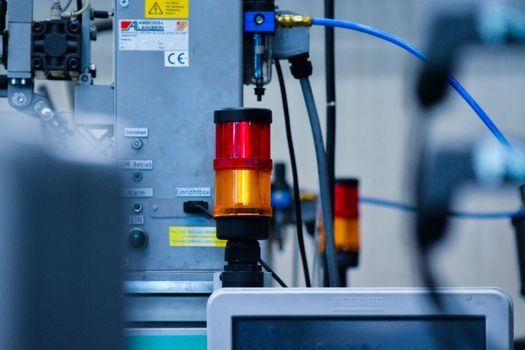
Certification is the most commonly underestimated cost driver. A non-certified O₂ detector for a warehouse may list at US$50; the same form factor with ATEX Ex d IIB T6 or IECEx Gb certification lists at US$350–600 because the housing, the Zener barrier, and the third-party audit fees are baked in. [S2]
Output protocol is the second stack. 4–20 mA analog-only is the cheapest; adding HART 7 (FSK-modulated on the same loop) typically adds 8–15%; Foundation Fieldbus or PROFIBUS PA add 20–35% because of the digital communication stack and the corresponding host integration effort. For buyers mapping out gas detector signal protocols, the same HART/Fieldbus premium logic applies.
For buyers cross-shopping the broader gas-detection family, the toxic gas detector pricing structure follows the identical cert-plus-sensor cost model, and the combustible gas detector sensor cert response map gives a side-by-side for LEL vs. O₂ vs. toxic cell selection.
MOQ, Lead Time and Sourcing Channels
MOQ and channel move price as much as the spec. Medical oxygen regulators (CE + ISO 13485) list at US$1–20 per piece on the same channel with 1-piece MOQ, showing how certification-and-MOQ interact to set the floor price [S4].
For an industrial O₂ detector purchase, the realistic channel split is: direct OEM (Wessington, ESP Safety, MSA, Dräger) at list price with 4–8 week lead time; industrial distributor (Eurolec, RS, Grainger) at 10–25% markup with stock; and Chinese export-trading platforms at 40–60% off list, but only for non-certified or entry-level certified units. A spec-driven comparison of oxygen detector vs portable gas detector is worth reading before committing to a channel.
Total-Cost-of-Owness Beyond the Sticker
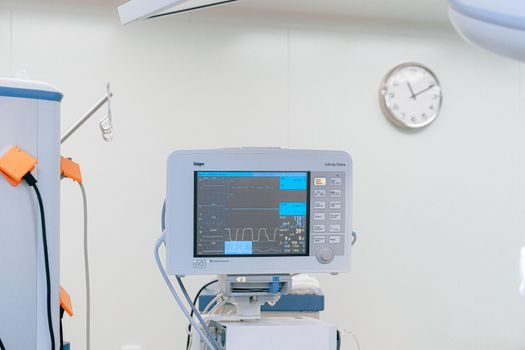
The sticker price is roughly 40–60% of the 5-year cost of ownership. The rest is calibration gas (US$50–150 per cylinder, 2–4 cylinders per year), bump testing, sensor replacement, and recertification. An electrochemical cell at US$50 replaced every 2 years adds US$25/year; a paramagnetic cell at US$1,200 replaced every 5 years adds US$240/year — a 10× delta that flips the TCO math. [S3]
For buyers scoping a broader plant-instrumentation capex, the balancing valve 2026 price and cost guide and the knife gate valve 2026 buying guide cover the flow-control side of the same project, while the arc welding machine 2026 price and cost guide is the right reference if the oxygen is feeding a welding gas mix.
For component-level specifications, see linear guide.