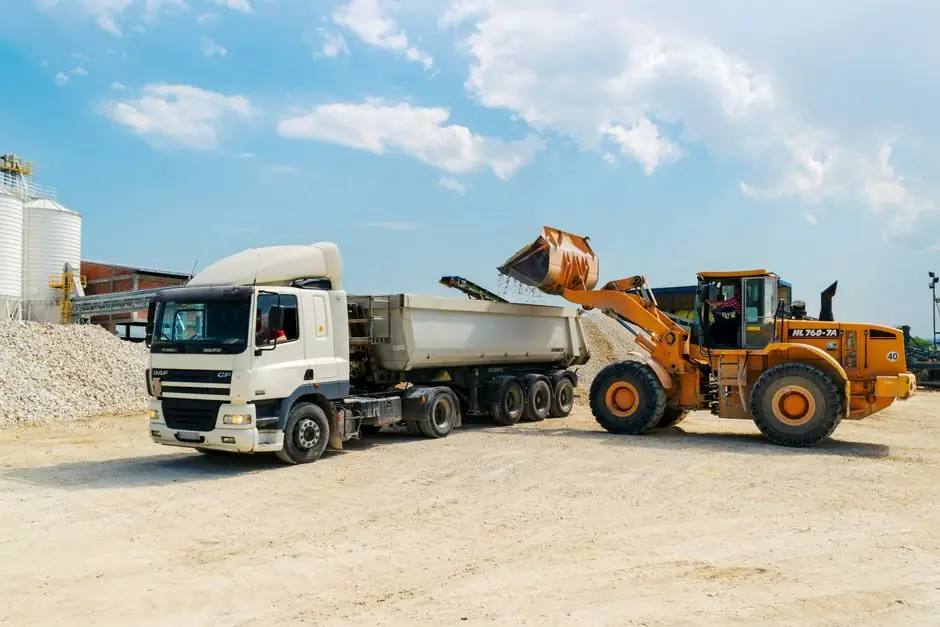
A Class 7 dump truck carries about 1.6 to 2.2 times the payload of a Class 5, even though the GVWR step between them is only 6,501 lb on paper, because heavier chassis and crew-cab mass eat into the lower class before the first load of aggregate goes on [S1][S4][S5].
Specifying by class is the cheapest way to short-list chassis, axles, brake certification, and CDL exposure in a single step: Class 5 sits in the 16,001–19,500 lb GVWR band and is classed medium-duty, while Class 7 spans 26,001–33,000 lb and is the first heavy-duty tier that triggers a federal CDL requirement [S4][S7][S9].
GVWR Bands and Where Each Class Lands
The U.S. GVWR scheme uses eight numbered classes and groups 3–6 as medium-duty, 7–8 as heavy-duty, per the FHWA scheme [S4]. Class 5 covers 16,001–19,500 lb (7,258–8,845 kg), Class 6 covers 19,501–26,000 lb (8,846–11,793 kg), and Class 7 covers 26,001–33,000 lb (11,794–14,969 kg); the AFDC data set and the Wikipedia summary both report identical breakpoints [S1][S4]. A third source repeats the same Class 7 window: 26,001 to 33,000 pounds [S7]. UTI’s diesel-technology program guide uses the same numbers and adds Class 8 as “>33,001 lb” and Class 9 as the Federal Bridge Formula special-duty bracket [S5].
The duty-class label matters more than the raw pound figure when specifying a dump body: Class 5 is the top of medium-duty and is treated as “single-rear-axle, non-CDL in most states” territory, while Class 7 is the bottom of heavy-duty and falls under the federal CDL rule for any vehicle above 26,001 lb GVWR [S4][S7]. The Loadking dump-truck guide flags this same 26,001 lb threshold as the cutover for permit, DOT number, and HOS-rule application, regardless of cargo [S2].
Payload Reality: Class 5 vs Class 7 With the Body On
Payload is not the GVWR minus a single curb-weight number; a typical Class 5 conventional chassis with single rear axle and a small dump body lands near 5,000–8,000 lb of legal payload once crew, fuel, and the steel body are tallied, while a Class 7 tandem-axle chassis with a steel dump body commonly lands near 12,000–17,000 lb, a 7,000–10,000 lb gap on a 6,501 lb GVWR delta [S2][S10]. The HelloGravel 2025 dump-truck guide puts most working dump bodies in Class 7 or Class 8 “due to their heavy-duty construction,” which is consistent with a usable payload floor near 10,000 lb for any production dump body heavier than about 3,000 lb [S10].
Two engineering facts drive the gap: (a) a Class 7 chassis must use larger axles, drum or air-disc brakes rated for the higher GVWR, and a heavier frame, which adds roughly 2,000–3,000 lb of tare versus a Class 5 single-axle chassis; (b) the dump body itself, when specified for aggregate or asphalt duty, commonly runs 2,500–4,500 lb of steel, eating into payload on both classes but consuming a larger share of a smaller GVWR [S2][S10]. For a deeper look at how body length and side height translate into struck and heaped volume across axles, see the dump truck box dimensions vs payload capacity spec guide.
Decision Matrix: When Class 5 Is Enough, When You Must Step to Class 7

Spec the Class 5 (16,001–19,500 lb GVWR) when the route has posted bridges or streets with lower limits, when no operator on staff holds a CDL, and when per-trip payload needs stay under about 8,000 lb, examples being landscaping topsoil loops, mulch runs, and small-site cleanups [S2][S4][S7]. Spec the Class 7 (26,001–33,000 lb GVWR) when each haul must move 10,000+ lb, when tandem rear axles are required for on-road stability with a heaped load, and when the operator must hold a CDL anyway [S4][S7][S9][S10]. The 5 Star Truck Sales reference lists Class 7 as the common band for garbage trucks and city delivery, which is the same chassis family used for tandem dump bodies [S9].
A plain-English comparison lines the two up against four decision criteria that match what a process engineer or fleet buyer would actually score:
• GVWR band: Class 5 = 16,001–19,500 lb; Class 7 = 26,001–33,000 lb. Delta: 6,501 lb on paper, 7,000–10,000 lb in delivered payload [S1][S4][S7].<br>• Typical legal payload (with dump body on): Class 5 ≈ 5,000–8,000 lb; Class 7 ≈ 12,000–17,000 lb [S2][S10].<br>• Operator licensing: Class 5 generally non-CDL in most states, Class 7 triggers a federal CDL Class B at the 26,001 lb line [S4][S7].<br>• Common duty: Class 5 fits landscape, light aggregate, and final-mile site work; Class 7 fits tandem dump, refuse, and city delivery chassis repurposed for aggregate haul [S9][S10].
Axle, Brake, and Frame Upgrades That Eat the GVWR Headroom
The minimum step from a Class 5 to a Class 7 chassis is a tandem rear axle with a combined GAWR that sums to at least the upper GVWR minus the front axle, plus larger drum brakes or air disc brakes certified to FMVSS 121 heavy-duty stopping distances, a topic covered in the heavy-duty service literature [S2][S7]. A Class 5 single-rear-axle chassis typically pairs a 7,000–10,000 lb GAWR rear with hydraulic drum brakes, while a Class 7 tandem runs two axles commonly rated near 17,000–21,000 lb GAWR each [S2][S4].
Frame rail height and RBM (resisting bending moment) also scale with class: a Class 5 dump chassis commonly uses 7–9 inch rail with modest RBM, while a Class 7 dump chassis moves to 10–11 inch rail at significantly higher RBM to support a heaped aggregate load on the rear axle group [S2][S10]. For how the axle count changes allowable body length, struck volume, and heaped capacity, the spec-first chart in dump truck bed size by axle configuration lines the same two classes against the right numbers.
Regulatory Triggers, Permits, and Operating Cost
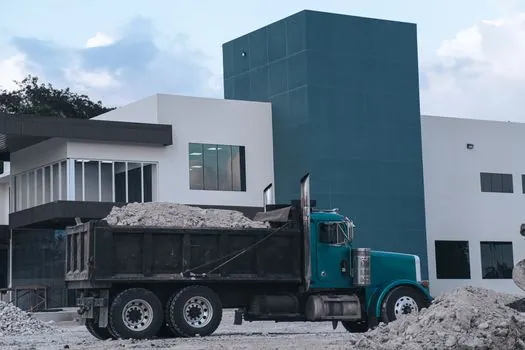
Class 7 ownership brings four regulatory items that Class 5 ownership largely avoids: a CDL Class B at the 26,001 lb line, a USDOT number across the 10,001 lb line, IFTA and HOS-rule coverage, and routine weigh-station exposure on interstate routes [S2][S4]. The Loadking guide notes that any vehicle above 10,001 lb requires a DOT number and that vehicles above 26,001 lb require the relevant CDL, both of which are the same thresholds a fleet manager will see in FMCSA guidance [S2].
Insurance, tire cost, and fuel use also scale non-linearly: a Class 7 tandem at 33,000 lb GVWR commonly runs 11R22.5 or 315/80R22.5 tires on aluminum or steel wheels, a step up from the 19.5-inch or 22.5-inch light-medium tires common on Class 5 single-rear-axle dumps, and that tire upgrade alone is a meaningful share of the per-mile operating-cost delta [S2][S10]. For a more detailed taxonomy of dump-truck body types, sizes, and where each class fits the line-up, the dump truck commercial vehicle classification guide entry is the right starting point.
Who Should NOT Step Up to Class 7
Stepping from Class 5 to Class 7 is a step backwards for operations that run on local streets with low bridges, on sites with weight-restricted pavement, or where no operator holds a CDL; the chassis, tire, and insurance cost goes up while payload per trip may still be capped by site constraints [S4][S7]. The Hedges Company reference is blunt that Class 7 and 8 are the “heavy-duty” bracket covering cement mixers and the largest tow and fire apparatus, which is heavier than many final-haul, last-mile, and landscaping routes actually need [S8].
Operators who only occasionally exceed 8,000 lb of payload, or who work a short radial distance, usually see a better payback from a Class 5 on a second short body or a tag trailer than from a Class 7 re-spec, because the per-mile cost of the heavier chassis is fixed regardless of how often the extra capacity is used [S2][S10].
What to Lock in the Spec Before Ordering
Lock the GVWR target first: write 19,500 lb for a Class 5 build or 33,000 lb for a Class 7 build and do not let the chassis maker drift upward inside the class without a payload check [S1][S4]. Then lock the rear GAWR sum, the brake code (hydraulic on most Class 5, full air on Class 7), the dump body weight empty, and the resulting payload figure, all four of which are the only numbers that matter at the weigh station [S2][S10].
Two trackable signals for 2026: keep an eye on Class 7 electric and CNG chassis announcements in the 26,001–33,000 lb band as alternative-fuel rules tighten on state and municipal fleets [S1], and watch the tire-cost index for 22.5-inch heavy retreads, which has been one of the larger swings in Class 7 operating cost in the past 12 months [S2][S7]. For applications that demand heavier haul than Class 7, the mining dump truck class sits well above this band and uses a different brake, frame, and tire logic altogether.
Detailed specification references: reach truck.