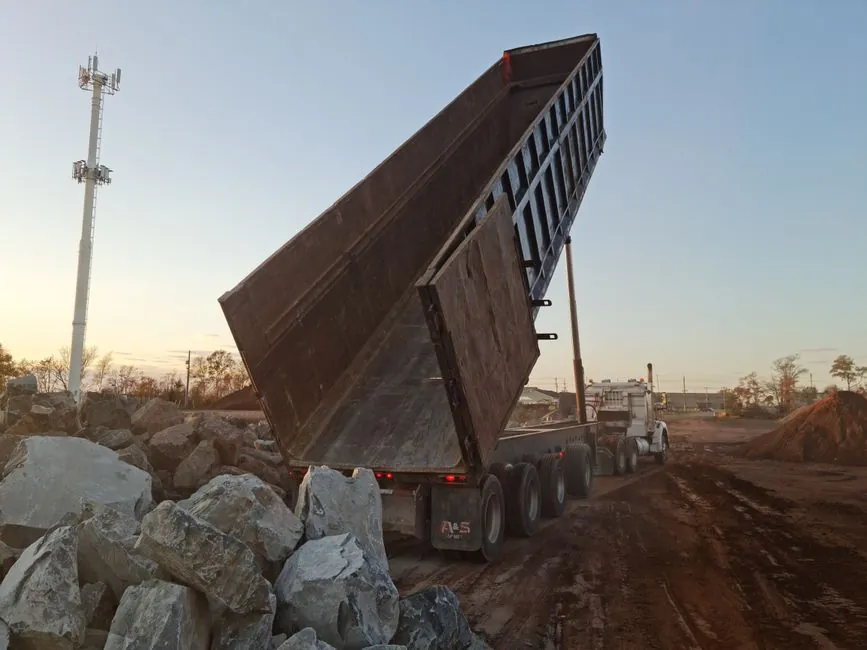
On-road dump truck bed capacity is governed by three coupled variables: axle count, body inside dimensions, and chassis GVWR. Single-axle trucks carry 6-8 tons in a 5-8 yd³ body, tandems (10-wheelers) carry 12-18 tons in 10-14 yd³, tri-axles carry 18-25 tons in 12-16 yd³, and semi-end dump trailers stretch to 18-26+ yd³ at 25-40 tons [S1][S4].
Cubic yardage alone misleads buyers; a 14 ft steel body holding 15 yd³ of wet gravel weighs over 22 tons, which can exceed a 33K GVWR chassis rating [S1]. The reliable spec discipline is to lock the axle configuration first, then size the inside bed length × inside width × side height to the material density and the legal axle-weight window.
Bed size by axle class: the four-row reference
Single-axle dump bodies measure roughly 8-10 ft long inside, 88 in wide, with 24-36 in side heights, yielding 5-8 yd³. Tandem (rear tandem axle, "10-wheeler") bodies stretch 10-14 ft inside at the same 88 in width, often with 36-48 in sides, and rate 10-14 yd³. Tri-axle dump bodies add a third rear axle and commonly run 14-16 ft inside, 88 in wide, 36-60 in sides, for 12-16 yd³ [S3][S4][S5].
Quad-axle and semi-end dump configurations push further: quad-axle bodies commonly hold 14-18 yd³, and semi end-dump trailers (a tractor plus a frameless dump trailer) rate 18-26+ yd³ and gross 25-40 tons when the Federal Bridge Formula is satisfied [S4][S9]. A Load King 16-18 ft tri-axle body, for reference, posts 88 in inside width, 48 in standard side height, 84 in overall height, 54 in tailgate height, and 16-19 yd³ struck capacity with 1/4 in AR450 steel floor and side sheets [S5].
Inside-dimension math: from L × W × H to cubic yards
Yardage is a clean geometric calculation. Measure the inside of the truck body in feet, multiply length × width × height to get cubic feet, then divide by 27 (because 1 yd³ = 27 ft³). A 10 ft long × 6 ft wide × 4 ft high body is 240 ft³, or 8.9 yd³ [S2].
Two volume losses to keep in the spec book: the hoist well typically consumes about 0.5 yd³ of usable space, and curved-radius body designs (such as the Ox Bodies Stampede) can cost another 0.5 yd³ [S2]. For a 10 yd³ nominal body, that is a real 9 yd³ at the strike plate. Always reconcile calculated yardage against the OEM's struck-level rating.
GVWR, bridge formula, and why axle count beats body size

Tonnage is a function of how the weight sits on the axles, not the size of the box. A smaller dump truck can weigh 28,000 lb empty and hold only 6-8 tons, while a tri-axle can weigh 32,000-36,000 lb empty yet legally haul up to 25 tons under the Federal Bridge Formula, which limits weight per axle group based on the spacing between axles [S1][S9].
Concrete numbers from the bridge-formula literature: a tandem dump with 3 axles and a 215 in wheelbase has an overall axle length of 20 ft, so its maximum weight is set by the FBF table for that span, not by the body it sits on [S9]. The rule of thumb: more axles, more spread, more legal tons, regardless of whether you bought a 14 ft or 16 ft bed.
Material density is the third axis on the chart
Bed size and axle class together still do not determine a legal load, because the payload weight depends on the material. Dry mulch runs 400-800 lb/yd³ (2-4 tons per 10 yd³), wet gravel runs 3,000+ lb/yd³ (about 15 tons per 10 yd³), and asphalt millings run 2,800-3,200 lb/yd³ (14-16 tons per 10 yd³) [S1]. Hot mix asphalt is a worst case: 1 yd³ ≈ 2 tons, so an 8-10 yd³ tri-axle body loaded with HMA is already 16-20 tons before the chassis weight [S1].
For a like-for-like comparison on a tri-axle chassis rated 25 tons, a 14 yd³ body loaded with dry mulch is nowhere near its limit (about 2.8 tons), the same body loaded with wet gravel is at 21 tons (still legal), and the same body loaded with limestone riprap at roughly 1.6 t/yd³ sits at 22.4 tons [S1][S5]. This is the reason contractors spec the body to the heaviest material they will run, not the average.
Quick selection rule: which axle class for which job
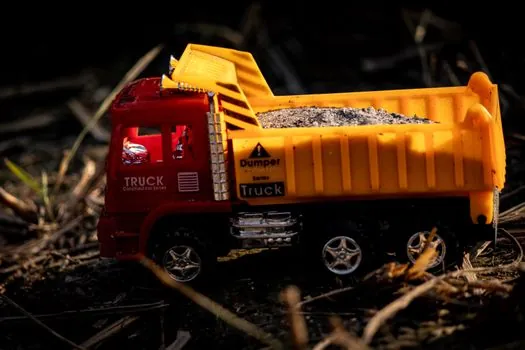
For 1-5 ton residential or landscaping hauls, a small or pickup dump on a single-axle chassis (1-5 yd³, 18-21 ft overall length) is the right size; for 6-8 ton utility work, the single-axle dump (5-8 yd³, 20-22 ft) covers it [S4]. Tandems (10-wheelers) hit the 12-18 ton band at 10-14 yd³ and 22-26 ft overall, which is the workhorse for city paving and aggregate delivery [S1][S4].
Tri-axles (12-16 yd³, 18-25 tons, 24-28 ft overall) and quad-axles (14-18 yd³, 20-25 tons, 26-30 ft overall) are the spec for DOT paving bids and heavy aggregate or millings work; semi end-dumps (18-26+ yd³, 25-40 tons, 30-45 ft overall) are reserved for highway and long-haul projects where state weight law and the FBF clear the higher gross [S1][S4]. The body size chart, drawn against the four axle classes, is in our dump truck reference page.
Height, width, and clearance constraints
Overall width runs 2.3-2.55 m (7.5-8.5 ft), and most operators need 10-11 ft of gate clearance to pass safely [S4]. Overall height is 3-3.8 m (10-12.5 ft) on-road, but with the dump body raised, the box can extend 15-18 ft vertically, which contacts 14 ft utility wires on inattentive sites [S4].
Wheelbase runs 3.2-4.5 m (10.5-14.8 ft); longer wheelbases ride better and spread weight for the bridge formula, but they lengthen the turning radius and limit access to tight jobsites [S4]. On a 16-18 ft tri-axle body, the spec sheet for a Load King gives an 84 in overall height, 88 in inside width, 54 in tailgate height, and a 6.5 in heavy-duty 4-stage trunnion-mounted cylinder; these are the figures to compare against your state's legal envelope and your loader's reach [S5].
Steel versus aluminum body weight penalty
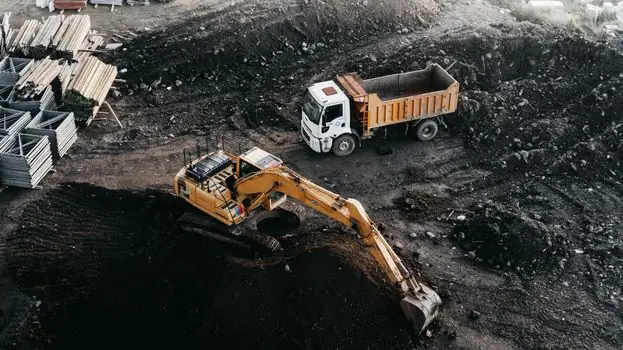
Body construction is a hidden axle-load item. AR450 steel floors at 1/4 in thickness (as on the Load King tri-axle) add wear life but also tare weight, eating into the legal payload before the first bucket of gravel lands; an aluminum body of the same inside dimensions weighs less and frees 1-3 tons of payload on a tri-axle, but costs more and repairs less easily [S1][S5]. The denser the cargo, the more the steel tare hurts; for mulch or wood-chip work, the body weight difference is largely irrelevant.
For heavy-aggregate or riprap hauls, the comparison is concrete: a steel-bodied tri-axle at 32,000-36,000 lb tare with 25-ton legal payload leaves less margin than an equivalent aluminum-bodied truck, which is why many aggregate haulers run steel despite the payload penalty, valuing impact resistance over empty weight [S1].
Verifiable next nodes: state-by-state limits and the chassis spec
Before you commit to a bed size, pull the GVWR plate on the chassis and the FBF table for the wheelbase you intend to run, then back-solve the legal payload from the heaviest material on the job, not the lightest [S1][S9]. Two trackable signals: state DOT amendments to the federal bridge formula (some western states permit 129,000 lb on specific axle spacings) and OEM 2027 model-year chassis downweighting on aluminum-intensive frames, which shifts the right body class for tri-axle aggregate haulers [S9]. A related read on heavy-equipment weight math is our mining dump truck reference, which uses the same axle-spacing logic at off-road scale.
Detailed specification references: reach truck.
For related coverage, see Diesel vs Electric HPU for Remote Wellsites: 2026 Selection Guide.