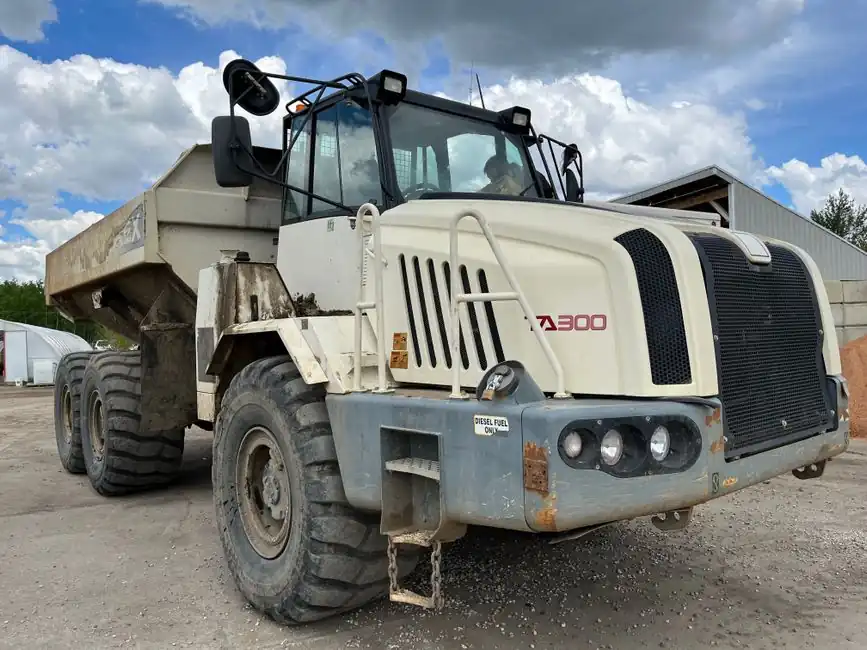
The phrase "Class A dump truck" is a common mix-up between two unrelated U.S. federal systems: the FHWA GVWR classification that ranks trucks by weight, and the FMCSA commercial driver's license (CDL) tier that ranks drivers by the combinations they may pull. Under the FHWA scheme there is no "Class A truck" at all, only Classes 1 through 8, with most production dump trucks landing in Class 7 (GVWR 26,001-33,000 lb) or Class 8 (GVWR above 33,000 lb) [S4][S8].
What the term usually captures is the CDL Class A endorsement, which the FMCSA defines as any single vehicle with a GVWR of 26,001 lb or more that is designed to tow a trailer with a GVWR over 10,000 lb, including most tractor-trailer dump combinations, lowboys, and end-dump trailers used in aggregate haulage [S1]. A Class B CDL, by contrast, covers heavy straight trucks of 26,001 lb or more towing 10,000 lb or less, which is where many vocational single-unit dump trucks sit.
GVWR classes that actually contain dump trucks
The FHWA splits the 33,000 lb and heavier space into exactly two buckets, and production dump trucks map onto both [S4][S9]. Class 7 covers a GVWR of 26,001-33,000 lb (11,794-14,969 kg) and Class 8 covers any GVWR above 33,000 lb, the latter being the bucket where most tandem and tri-axle dump bodies from makers such as Kenworth, Freightliner, Peterbilt, Mack, and International are registered [S1][S6]. A 2025 commercial-vehicle guide reinforces the same split, listing Class 7 dump examples as large box trucks, moving vans, and lighter dump trucks, and Class 8 as the category that also contains cement mixers and refuse trucks [S6].
On the chassis side, SANY's 2026 specification roundup shows where the GVWR numbers come from in practice: a two-axle (4x2) dump truck posts a 32,000 lb gross load weight, a tri-axle (6x4) hits about 68,000 lb gross with a 25,380 lb steel body or 22,600 lb aluminum body, and a seven-axle configuration reaches the FHWA Interstate cap of 80,000 lb [S3]. For aggregate and ore haulers using mining dump trucks, payload-rated bodies routinely push the chassis past 33,000 lb, which is why operators plan fleet replacement on Class 8 spec sheets rather than Class 7.
What a CDL Class A license covers on a dump truck
The CDL Class A definition, per the FMCSA framework reproduced across the industry, is a combination vehicle whose GVWR exceeds 26,001 lb and whose towed unit has a GVWR over 10,000 lb [S1]. A tractor pulling a belly-dump, side-dump, or end-dump trailer that crosses 10,000 lb GVWR is the textbook Class A combination; a tandem-axle straight dump with a pup trailer over 10,000 lb GVWR is also Class A. Removing the heavy trailer or swapping it for one under 10,001 lb GVWR drops the same power unit to a Class B requirement.
Class B, the tier that most single-unit vocational dump operators hold, covers any single vehicle of 26,001 lb or more GVWR towing 10,000 lb or less, and Class C adds the small-vehicle exception plus hazmat and 16+ passenger endorsements [S1][S5]. States retain discretion to tighten these rules, so a three-axle dump registered in California can trigger a CDL even when its GVWR is below the 26,001 lb federal threshold, while New York extends CDL coverage to stretched limousines and other vocational edge cases [S4].
Weight, license, and axle rules compared side by side

Side-by-side, the three numbers that govern a U.S. dump-truck decision are GVWR class, CDL tier, and Interstate axle/gross cap, and they do not move together [S2][S4]. The Interstate System sets 20,000 lb on a single axle, 34,000 lb on a tandem axle, and 80,000 lb maximum gross vehicle weight under the Federal Bridge Formula, regardless of which GVWR class the chassis sits in [S2]. A Class 7 dump truck with a 33,000 lb GVWR can still be driven on a Class B CDL if no trailer is attached, while the same chassis with a heavy end-dump over 10,000 lb GVWR must move to Class A [S1].
The licensing thresholds step at 10,001 lb (DOT number display and FMCSA Hours-of-Service coverage), at 16 passengers or hazmat placards (CDL regardless of weight), and at 26,001 lb (the heavy-vehicle trigger for CDL, Form 2290 HVUT at 55,000 lb, and most weigh-station compliance regimes) [S1][S5]. Misreading any one of those three cut-lines is the root cause of roadside out-of-service orders on vocational fleets, and is why fleet managers separate chassis spec (GVWR class) from driver hiring (CDL tier) instead of treating them as the same field on a spec sheet.
Who "Class A dump truck" fits, and who it does not
For aggregate haulers running tractor + end-dump or tractor + belly-dump combinations, the right framework is GVWR Class 7 or 8 chassis paired with a CDL Class A driver, because the trailer GVWR is the deciding factor [S1][S3]. For municipal and small-site operators running a single tandem-axle straight dump, the more accurate labels are GVWR Class 7 or 8 chassis with a CDL Class B driver, since the truck tows nothing over 10,000 lb GVWR.
The term "Class A dump truck" does not fit lighter applications at all: a 6,000 lb Class 1 pickup with a dump insert is not in the FHWA heavy-duty set and does not need a CDL, and a Class 3-6 medium-duty vocational dump stays below the 26,001 lb federal trigger unless the chassis is up-rated [S4][S9]. Operators specifying chassis for concrete pump trucks, concrete mixer trucks, or aerial work trucks should apply the same GVWR class plus CDL tier matrix, because the labeling confusion hits those bodies just as hard as it hits end-dump and side-dump configurations.
Failure modes and spec pitfalls when class and tier get blurred
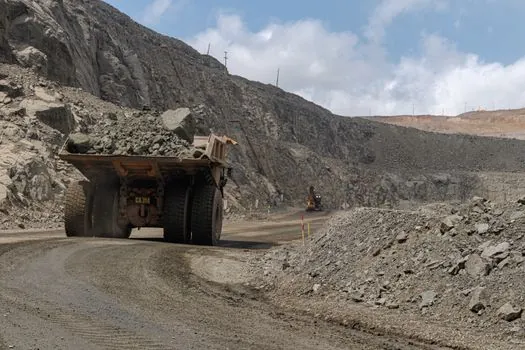
The most expensive mistake is registering a chassis in GVWR Class 7 while operating it as a Class A CDL combination, which leaves the driver out of compliance even though the truck is properly plated. A related pitfall is treating the FHWA "Class 7-8" merged label used in some industry charts as a single weight class; the actual federal boundary sits at 33,000 lb, and that boundary determines whether the truck falls into the lighter or heavier registration band and what its per-mile tax exposure looks like under Form 2290 [S5][S10].
Spec-side, engineers ordering a new dump chassis should also avoid the reverse error of assuming a 26,001 lb GVWR is a clean cut for CDL triggering. Several states (California, New York among them) require a CDL at lower GVWRs, at three-axle configurations, or for any hazmat-placarded load regardless of weight, and a fleet spec that only references the federal 26,001 lb line will be non-compliant on day one in those jurisdictions [S4]. For payload-rated bodies, weighing the loaded truck on a certified truck scale and comparing the reading to the door-jamb GVWR plate is the only reliable way to confirm both the FHWR class and the CDL tier that follows from it.
Sourcing and standards used in this breakdown
The GVWR 1-8 ladder, the 26,001 lb / 33,000 lb break points, and the Interstate 20,000 / 34,000 / 80,000 lb axle and gross limits are all sourced to the FHWA framework as reproduced by Wikipedia, TSC Fuel, Universal Technical Institute, and Pull Tarps in their 2025-2026 classification guides [S2][S4][S9][S10]. CDL endorsement definitions (Class A combination, Class B heavy straight, Class C small-vehicle or hazmat) trace back to FMCSA guidance as restated by Custom Truck and Express Truck Tax [S1][S5].
Chassis-level weight data points (32,000 lb two-axle gross, 68,000 lb tri-axle gross, 25,380 lb steel-body empty weight, 22,600 lb aluminum-body empty weight, 80,000 lb seven-axle cap) come from SANY's January 2026 specification breakdown, and the Class 7/8 dump-truck placement is corroborated by HelloGravel's December 2025 commercial-vehicle guide and Jimi IoT's December 2025 Class 1-8 reference [S3][S6][S8]. For related vocational equipment, a reach truck selection follows an entirely different EN ISO 3691-1 stability logic and is not a useful analog for on-highway dump-truck classification.
Two trackable signals to watch: any FMCSA rulemaking that reopens the 26,001 lb CDL trigger or the 80,000 lb Interstate gross cap, and any state-level CDL expansion (California's three-axle rule, New York's stretched-limo extension) that pulls more chassis under Class A or B even when their GVWR is below the federal line [S4]. Either change would force fleet spec sheets to separate "GVWR class" from "CDL tier" more aggressively than they do now.
For related coverage, see ZA vs ZI vs ZK vs ZN worm thread profiles: a side-by-side selection guide.