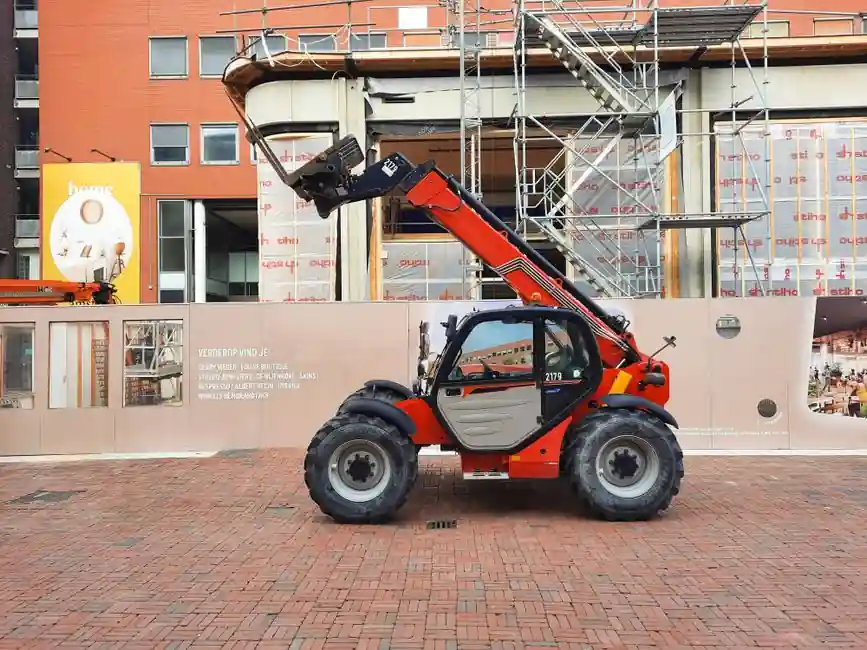
Vehicle-mounted lifting equipment falls into one of two statutory intervals under LOLER 1998: a maximum 12 months between thorough examinations for goods-only machines such as a lorry loader or a goods-only tail lift, and 6 months for any equipment used to lift people or for any lifting accessory in the chain (slings, shackles, hooks, spreader beams) [S1][S3].
Where a competent person prepares a written examination scheme under LOLER Regulation 9(3)(c), those defaults can be shortened or, in narrow cases, lengthened, but only with documented engineering justification, and the equipment is then examined at the scheme's stated interval [S3][S6]. The dutyholder still owns the asset, the driver owns the pre-use check, and the technician owns the servicing schedule; a clean LOLER report does not absorb any of those parallel duties [S2].
What LOLER actually requires on a truck-mounted crane
A truck-mounted crane (HIAB, lorry loader, knuckle-boom loader) is treated as two machines on one chassis, and the lifting side is caught by LOLER 1998 with a thorough examination at least every 12 months by a competent person, separate from the driver's daily pre-use check and the maker's periodic servicing [S2]. The LOLER report must record the examination date, the next-due date, and any defect that is or could become a danger; on a serious finding the competent person must notify the dutyholder verbally at once and send a written copy to the enforcing authority [S1]. Common HSE findings include applying a blanket 12-month interval to accessories that legally need 6-monthly examination, so slings, chains and shackles on the same vehicle are normally on the shorter clock [S3].
Tail lifts: 12 months goods, 6 months people
A tail lift used at work is lifting equipment under LOLER 1998, with a normal maximum interval of 12 months for goods-only use and 6 months where it is designed or used to lift people; lifting accessories used with the tail lift (slings, hooks, shackles) sit on the 6-month cycle regardless of platform use [S4]. Most workplace tail lifts are also work equipment under PUWER 1998, so LOLER covers the lifting risk while PUWER covers the broader safety, maintenance and use of the platform, and satisfying one regulation does not discharge the other [S4]. Shorter intervals than 12 months are appropriate when the lift is heavily used, runs near rated capacity, works in a corrosive or dirty environment, or has a defect history; the calendar maximum is a ceiling, not a recommendation to wait [S4]. For related guidance on platform lift compliance, see the truck-mounted crane examination duties and lifting vehicle reference pages.
6-month vs 12-month equipment: a side-by-side
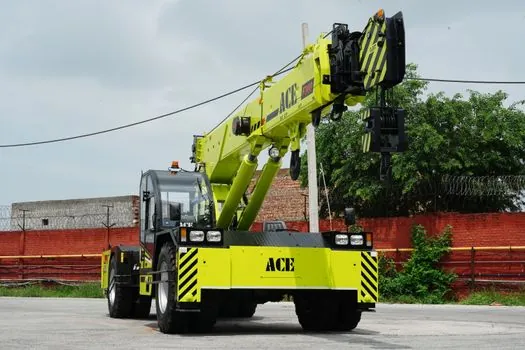
Under LOLER Regulation 9, the default intervals split by equipment class are concrete and easy to apply on a fleet. The 6-month class covers everything that lifts people (MEWPs, passenger and platform lifts, person-carrying construction hoists) plus every lifting accessory in the chain: chains, chain slings, wire rope slings, textile and webbing slings, shackles, hooks, eyebolts, swivels, spreader beams, lifting frames, and forklift fork arms treated as accessories [S3][S7]. The 12-month class covers the machines themselves: overhead travelling cranes, mobile cranes, vehicle-mounted loader cranes, fixed hoists used for goods only, jib cranes, davit systems, vehicle inspection lifts, and goods-only tail lifts [S2][S3][S4]. Forklift trucks are a useful edge case: the truck is on a 12-month cycle, the fork arms on a 6-month cycle, because the forks are classed as a lifting accessory rather than part of the chassis [S3].
Written examination schemes: when 12 months is not enough
A written examination scheme under LOLER 9(3)(c) is the only legal route away from the 6 and 12-month defaults, and it has to be in writing, prepared by a competent person, and available for inspection; a verbal arrangement does not qualify [S3]. The scheme can specify shorter or, exceptionally, longer intervals, but only where the competent person can defend the change against the actual duty cycle, environment, and failure consequences. A quarterly interval is a realistic outcome for a loader crane working a corrosive quarry or port atmosphere, while stretching an overhead crane to 18 or 24 months under heavy load is very hard to justify [S3]. For context on the wider asset regime (PUWER, daily checks, servicing) that runs alongside any LOLER scheme, the construction machinery and equipment entry covers the parallel duty structure.
Who this interval regime is for, and who it is not for
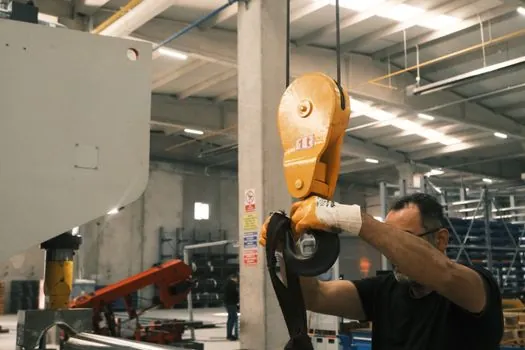
This 6/12-month regime applies to dutyholders in Great Britain who provide, control, or use lifting equipment at work, including transport and logistics operators, delivery fleets, retailers, removal companies, vehicle rental and leasing businesses, warehouse operators, contractors, and self-employed drivers who use a tail lift or loader crane as part of their work [S4]. It is not a substitute for the driver's pre-use check, the technician's servicing, the PUWER inspection of the broader vehicle, or the manufacturer's warranty programme, and a clean LOLER paper does not discharge any of those [S1][S2]. It is also not the regime for non-work lifting (private use), for equipment outside Great Britain (Northern Ireland and other jurisdictions set their own rules), or for lifting accessories that are not actually in service. The duty attaches to the person who has control of the equipment, which on a hired-in loader crane can be the hirer rather than the owner; the contract has to make this allocation explicit [S2][S4].
Common compliance failures and the cost of getting it wrong
The most frequent HSE finding is the wrong interval: applying 12 months to a chain sling, missing the 6-month cycle on a person-carrying MEWP, or assuming a current examination covers the daily check [S3]. Other recurring failures are missing the LOLER report's next-due date, no written scheme on file where a non-default interval is claimed, late notification of a serious defect to the enforcing authority, and using the same engineer who services the crane to sign the LOLER examination, which the ACOP explicitly rules out because they would be assessing their own work [S1]. The consequences run from improvement and prohibition notices through to prosecution, and the underlying failure mode is always the same: a worn hook, a cracked sling eye, a fatigued pin, or a hydraulic hose let go on the day a thorough examination was 11 months overdue [S5]. For comparison with how compliance gaps show up in adjacent procurement decisions, see the duplex stainless lead times note, where a missed inspection window has the same root cause as a missed procurement call-off: nobody logged the next-due date.
Putting it on one asset: the parallel duty map
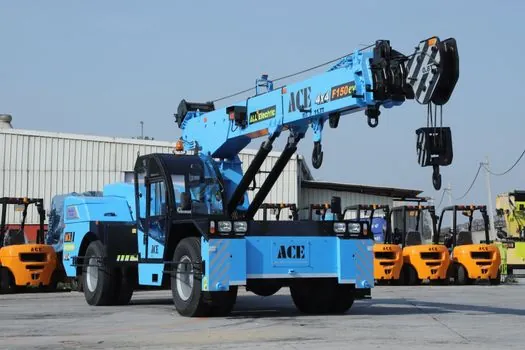
On a single truck-mounted loader crane, four regimes run side by side and each produces its own record. The driver does a documented pre-use check before every shift covering controls, overload protection, e-stops, and hydraulic hoses. The technician services the crane to the maker's schedule and signs it off. The competent person issues the LOLER Report of Thorough Examination at the 12-month interval for the crane itself, while the slings, shackles and hooks on the same vehicle are on a 6-month LOLER cycle. PUWER sits over the whole platform as the general work-equipment duty [S1][S2][S4]. A clean report on one layer does not satisfy the other three, and the dutyholder is the one person who has to keep all four records aligned to the same asset. For an example of how multiple inspection regimes get reconciled against a single chassis, the truck-mounted concrete pump reference covers the same three-layer logic (PUWER + LOLER + operator checks) on a related vehicle.
The next trackable node for any fleet is the LOLER Report of Thorough Examination: the next-due date stamped on the current report is the binding deadline, and any change away from 6 or 12 months must be supported by a written examination scheme signed by a competent person and held on file. If a vehicle is hired rather than owned, the contract must name who controls the lifting equipment and therefore who carries the LOLER duty for the period of hire, and that allocation should be checked before the next service interval falls due.