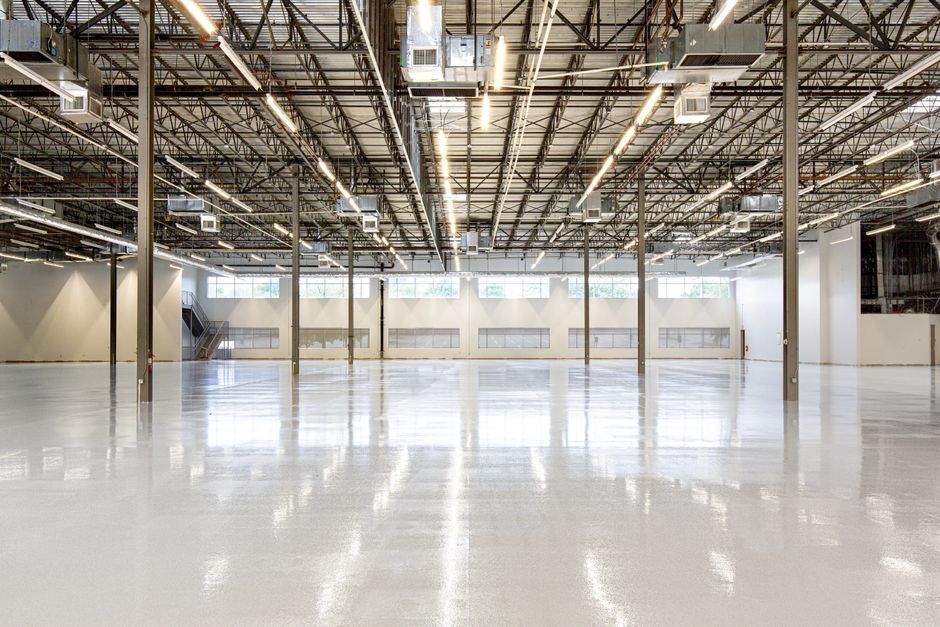
A cleanroom slab admixture package is judged on four hard metrics: w/c ratio, bleed water, drying shrinkage at 28 days, and amine/alkalinity emissions — not on compressive strength alone.
Cleanroom ISO 14644-1 Class 5 and Class 6 construction has driven admixture suppliers to publish dedicated cleanroom datasheets since 2024; the dominant product families in 2026 are polycarboxylate ether (PCE) HRWRs, calcium-sulfonate-based SRAs, and viscosity modifiers (VMA) for flatwork [S3][S4]. Traditional lignosulphonate and melamine redurcers are no longer specified for sub-0.45 w/c slabs because they bleed ammonia at high dosage, fouling HEPA filters.
Why Standard Water Reducers Fail a Cleanroom Slab
ASTM C494 Type A and Type D mid-range water reducers allow w/c down to ~0.50; cleanroom specifiers require w/c ≤ 0.42 to meet the 50-year design service life of slab-on-grade foundations under raised-access floors carrying process tools [S1].
Air-entraining admixtures (ASTM C260) are deliberately minimized in cleanroom slabs because the entrained air voids shed particulate over the slab service life; where freeze-thaw exposure exists, AEA dosage is typically capped at 3.0–4.0% air content versus the 5.0–7.5% used in exterior slabs [S3]. Premiere Concrete Admixtures publishes a product line that explicitly separates "interior controlled-environment" accelerators from "exterior" accelerators, reflecting this market split [S3].
Admixture Family Comparison for ISO Class 5–7 Slabs
Specifying all three together is the 2026 default for semiconductor fab and bio-pharma cleanroom slabs: the PCE carries the water reduction, the SRA carries the volume-change control, and the VMA carries the segregation margin during long pumped placements where retarders are also used. A useful framework for triaging dose ranges is laid out in the Industrial-Facility Concrete Admixture Spec Map: 2026 Selection Guide; the dose windows transfer directly to cleanroom duty.
Selection Criteria: PCE Macromonomer Chemistry

For cleanroom slabs placed in summer ambient conditions above 30 °C, an HPEG-based PCE with slump retention of 90+ minutes is the conservative pick; for winter placements under 15 °C, an EPEG or TPEG-based PCE with a Type C accelerating component is preferred [S4]. Slab flatness (FF/FL numbers tied to ACI 117) and final floor finish tolerance depend heavily on this slump-life profile, since re-dosing plasticizer on site is a frequent cause of strength variance and surface dust.
Compatibility With Cement, SCM, and Curing Regime
Specifiers should request a pre-batch mortar flow test (ASTM C1437) at 0.35 w/c before field pour.
Compatibility with concrete curing compound is the second often-missed variable: solvent-based curing compounds leave residual hydrocarbon film that off-gases for 6–12 months and forces cleanroom commissioning delays. Water-based wax or resin curing compounds compatible with PCE-modified slabs are the cleanroom default; where a penetrating sealer is later specified, the curing compound must be verified chemically compatible by the admixture supplier [S1].
Dose Limits, Failure Modes, and Field QA

PCE overdose above 1.8% solids introduces segregation and surface bleeding that raise floor dust counts; the field signature is a closed surface skin over fluid paste, then a bleed layer 30–90 minutes after placement. SRA overdose above 2.5% by cement weight slows early strength gain by 10–20% and extends the time before the slab can be loaded by a ride-on power trowel — this conflicts with the concrete vibrator and concrete batching plant cycle targets most slabs are designed to. [S4]
Field QA requires spread (ASTM C1437) at 30-minute intervals through the pour, plus a unit-weight check (ASTM C138) on every truck, plus an air-content check (ASTM C231) on the first and last truck of each shift. When these deviate more than ±20 mm or ±15 kg/m³ from the mix-design target, the truck must be re-blended or rejected — this is where the admixture spec meets the concrete admixture dose-window decision in real time.
Supplier Landscape and 2026 Procurement Signal
Beacon Chemical, a gypsum-additive and concrete-admixture manufacturer, lists aliphatic superplasticizer, melamine water reducer, and lignosulphonate product lines as of 2026-07-31 — useful for precast and dry-mix applications but not the primary 2026 cleanroom-slab HRWR source [S1]. Binzhou Chengli Building Materials (Shandong) and similar Chinese trading-tier manufacturers offer concrete admixture export SKUs but do not publish cleanroom-specific ISO 14644 datasheets as of 2026-07-12; for cleanroom duty, the specifier should require third-party ISO 14644-1 Class 5 or Class 6 validation of the finished slab, not only the admixture datasheet [S2].
The procurement signal to watch through Q4 2026 is whether PCE raw-material supply (HPEG/TPEG/EPEG3000) stabilizes — the macromonomer market has been tight since 2024, and EPEG3000 in particular has been allocation-constrained per PCATech guidance [S4]. Premiere Concrete Admixtures' 19-year presence in the U.S. market and dedicated dispenser-system service is a logistics data point, not a spec signal, but matters for project execution timelines [S3].
Track two nodes through the next 60 days: (1) ASTM C494 revision ballots covering long-age PCE compatibility with high-SCM mixes, and (2) any new ISO 14644-7 annex addressing admixture off-gassing limits for Class 5 cleanroom commissioning. Cross-reference the dose windows in this article with the Alloy Steel Selection Map for Medical Devices: 2026 Spec Guidance framework if the cleanroom supports a medical-device line, since bio-burden and particulate limits share the same sub-floor slab specification logic.