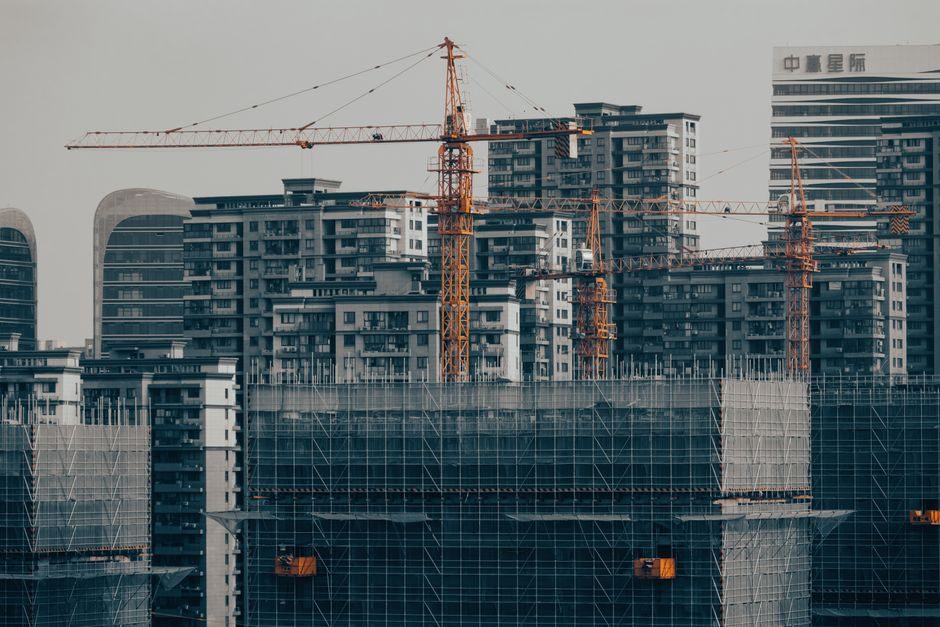
A 2026 climbing-formwork buy is governed first by the structure being poured and second by the crane or hydraulic capacity the site can supply; crane-jumped systems such as Doka 150F remain the default for vertical-walled cores under 80 m, while automatic hydraulic platforms (ACS) own the territory above 100 m and on bridge pylons, dam lift-pours and cooling-tower shells [S9][S4].
Three structural variables — wall height, taper or radius, and repetition count — decide the formwork family; once those are fixed, the decision tree compresses to panel material (steel framed vs 6061-T6 aluminum), platform width (typically 1.65 m working deck), and whether the climbing unit is free-standing frame, rail-guided, or full hydraulic ACS. The 2026 supplier field spans European system houses (Doka, Faresin, CSC, Scaffco) and Chinese aluminum specialists offering monthly capacity of 150000 m² [S1][S2][S3][S7].
Three Climbing Formwork Families Compared on Decision Criteria
Frame / modular free-standing systems (Scaffco SPF 50, CSC M/L) carry the wall loads through a triangulated steel or aluminum frame and are repositioned by crane between pours; SPF 50 uses a 5 mm aluminum-steel angle profile and is rated for wall, column, tunnel, beam, bridge, shaft, dam, pillar and cooling-tower applications [S1]. CSC's M/L panel system is vertically or horizontally stackable, accepts plywood facings for monolithic cast finishes, and traces to a Pontex design from the late 1970s still in serial production [S3].
Crane-lifted climbing formwork (Doka 150F) adds a 1.65 m wide fully-railed working platform and a 0.70 m roll-back of the form face, giving rebar clearance without untying the platform; it is a single-crane-lift-per-cycle system aimed at vertical-walled cores and shear walls on mid-rise commercial towers [S9]. Automatic Climbing Systems (ACS / self-climbing) replace the crane with an on-board hydraulic cylinder climbing on a rail fixed to the previously poured slab, so the pour-strip-then-climb cycle becomes weather- and crane-independent; reference lists name Millau Viaduct, Hardanger Bridge, Rajiv Gandhi Sea Link and the Heinrich Hertz Tower among ACS-built structures [S8][S4][S6].
Selection Criteria: Wall Geometry, Repetition and Cycle Time
Wall geometry is the first gate. Straight vertical walls of constant thickness are the easy case — any of the three families handles them. Tapered pylon shafts (bridge cables-stay towers) and circular cooling-tower shells force ACS with curved form panels because frame systems cannot reset geometry between pours without re-anchoring; cooling-tower and pier applications are explicitly listed for both Scaffco SPF 50 and Chinese 6061-T6 aluminum climbing systems [S1][S5]. Repetition count is the second gate: a 30-pour corewall at 4 m lift height pays back the ACS premium; a 6-pour shear wall on a low-rise project does not.
Cycle time per lift is the third gate and the one procurement typically mis-models. A crane-lifted 150F cycle runs 30–45 minutes of crane time plus rebar close-in; an ACS cycle runs 15–25 minutes of hydraulic stroking with no crane dependency, which on a tower-crane-constrained urban site is the difference between one pour floor per 3-day cycle and one per 2-day cycle. Material choice feeds back into cycle time: a 6061-T6 aluminum ACS panel (1 m × 2 m typical) is light enough to be hand-jacked into final position, whereas a steel-framed panel at the same size needs the crane even for fine alignment [S5][S9].
Panel Material: Steel Framed vs 6061-T6 Aluminum
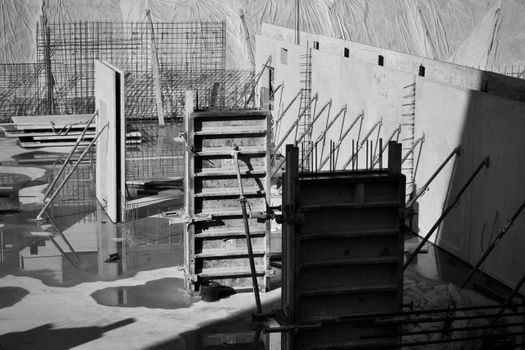
Steel-framed panels (Scaffco SPF 50 angle profile at 5 mm, CSC M/L galvanized) win on impact tolerance, on-site repairability and long life under high repetition — a galvanized steel panel can sustain 200+ pours if the facing is replaced; aluminum panels cap out around 100–150 pours before facing replacement becomes the main cost line. Steel panels are also the right answer where the concrete placing pressure exceeds the 60–80 kN/m² range typical of standard cores, because the frame stiffness holds panel deflection below the 2 mm tolerance that architectural fair-faced finish demands [S1][S3].
6061-T6 aluminum climbing systems dominate where panel weight governs the cycle. Reference Chinese climbing-system suppliers quote a 6061-T6 alloy construction with pre-assembly inspection as standard, applications covering core wall, cooling tower, tunnel, dam, pier and underground liner, and a headline capacity of 150000 m²/month from a single Shanghai-served supply chain [S5][S7]. The trade-off is concrete pressure: aluminum face sheets and 6061-T6 walers are usually rated to a lower placing pressure than equivalent steel systems, so the specifier should confirm allowable pressure (often quoted in kN/m²) before accepting aluminum on a deep-corewall with high concrete columns and high pour rates. The same aluminum-vs-steel weighting shows up in scaffolding selection decisions, where load class and system type drive a comparable cost-per-cycle trade-off.
Hydraulic ACS Subsystems: Rail, Anchor, Bracket and Stroke
An automatic climbing system is not a single product but four coupled subsystems, and Okorder's reference build names them: bracket system, hydraulic system, anchor system, and the climbing rail [S4]. The rail is fixed to the structure adjacent to the slab edge, the bracket system carries the formwork and working platform, the anchor system transfers fresh-concrete and self-weight into the previously cured slab, and the hydraulic system provides the climbing stroke. A typical ACS lift stroke is one pour height (3.5–4.5 m on residential, up to 6 m on dam and pier pours), and the platform retracts clear of the slab edge for rebar fixing and closing-form operations [S4][S6].
Three engineering points matter when reading an ACS datasheet. First, the anchor cone pattern: ACS anchors sit in sleeves cast into the previous lift, and their pull-out capacity is the single number that limits how high the system can be cycled before re-anchoring. Second, the hydraulic power pack redundancy: a single-pack ACS is exposed to weather stoppages, dual-pack systems allow one pack to be serviced without halting the climbing cycle. Third, the platform width and load class — a fully railed 1.65 m wide platform with edge-to-edge rebar access is the de-facto 2026 baseline for tower cores, matching Doka 150F's working-deck spec on the crane-jumped side [S9]. For procurement teams already specifying truck-mounted concrete pumps to feed the same pour, the ACS cycle time is what sets the pump utilisation target.
Application Mapping: Corewalls, Bridges, Dams, Cooling Towers, Piers
Corewalls in high-rise residential and commercial towers (typical lift 3.5–4.5 m, repetition 20–60 pours) are the volume driver and are almost exclusively ACS in 2026 — the wall thickness is small (250–600 mm), the repetition is high, and the tower-crane is already committed to rebar and table-form lifts on the floor plates, so freeing it from the corewall cycle pays for the ACS premium within 6–10 pours [S4][S9]. Bridge pylons and cable-stay towers are the second ACS stronghold: tapered geometry rules out modular panel resets, and the pour height of 4–6 m with high repetition on each leg matches ACS stroke directly [S8].
Dams, cooling-tower shells, piers and tunnel liners are the third cluster. Faresin Building's hydraulic climbing platform is explicitly aimed at "very elevated heights like skyscrapers, bridges and dams", which is the cleanest 2026 statement of the high-rise / heavy-civil crossover [S2]. Chinese aluminum ACS suppliers likewise list core wall, cooling tower, tunnel, dam, pier and underground liner as a single application set, suggesting the same hydraulic platform is being repurposed across these geometries with geometry-specific form-face kits [S5]. Scaffco's SPF 50, by contrast, lists the same application set but on a free-standing frame — meaning low repetition or one-off civil structures where crane dependence is acceptable [S1].
Standards, Safety Gates and Site Constraints
Climbing formwork sits at the intersection of formwork (EN 12812 / DIN 18216 load classes), scaffolding (EN 12811 platform and edge-protection requirements), and machine safety for the hydraulic ACS (EN 14502-1 for crane-lifted platforms, machinery directive 2006/42/EC for self-climbing hydraulic units). The 1.65 m wide fully-railed working platform referenced for Doka 150F is the typical EN 12811-1 platform-class expression of these rules [S9]. Anchor systems for ACS use cast-in sleeves and high-strength ties whose characteristic resistance is verified per project, and the 2026 supply chain (Doka, Faresin, CSC, Scaffco, plus the Chinese aluminum houses) ships with project-specific anchor layouts rather than a single catalogue value.
Site constraints to capture in any 2026 RFQ: tower-crane reach and pick capacity (decides whether ACS or crane-jumped is even feasible), slab-edge geometry (sets rail-fix details), wind exposure at the working-deck height (governs tie-down frequency and platform stability bracing), and the pour-rate capability of the concrete pump feeding the climbing face — the latter links the climbing-formwork spec back to a concrete-pump selection decision, and pour rate times lift-cycle time sets the wet-concrete pressure the form face must resist.
Cost Levers and Sourcing Path
Three cost levers dominate the 2026 climbing-formwork buy. First, panel material: 6061-T6 aluminum ACS panels carry a higher unit price than steel-framed panels but cut cycle time and crane time, so the crossover sits around 25–35 lifts per panel. Second, repetition and rental: ACS is overwhelmingly rented with a per-lift price plus mobilization, so the buy-vs-rent decision is essentially decided by project count — a single project rents, a multi-year regional program buys. Third, Chinese supply-chain capacity: at the published 150000 m²/month supply capability from a single Shanghai-served Chinese supplier, panel lead times for aluminum ACS are measured in weeks rather than the months typical of European system houses, which compresses the mobilization schedule for export projects [S7].
For the procurement team, the cleanest 2026 sourcing path is: fix the wall geometry and repetition count first, decide ACS vs crane-jumped, then run a paired RFQ to a European system house (Doka 150F, Faresin SCREEN, CSC M/L or Scaffco SPF 50) and a Chinese aluminum ACS supplier with the same pour-rate and lift-height spec, and compare on per-lift cost including mobilization, anchor system, hydraulic pack, and dismantling. The two sourcing-track signals to track over the next 6–12 months are (a) whether European system houses move to publish standardized ACS kitting per wall-geometry class — Doka 150F's current product page is a strong indicator of the template — and (b) whether Chinese aluminum ACS suppliers expand published allowable concrete-pressure ratings to match steel systems, which would close the remaining material gap on deep-corewall pours [S9][S7].
For component-level specifications, see climbing formwork, linear guide, and crossed roller guide.