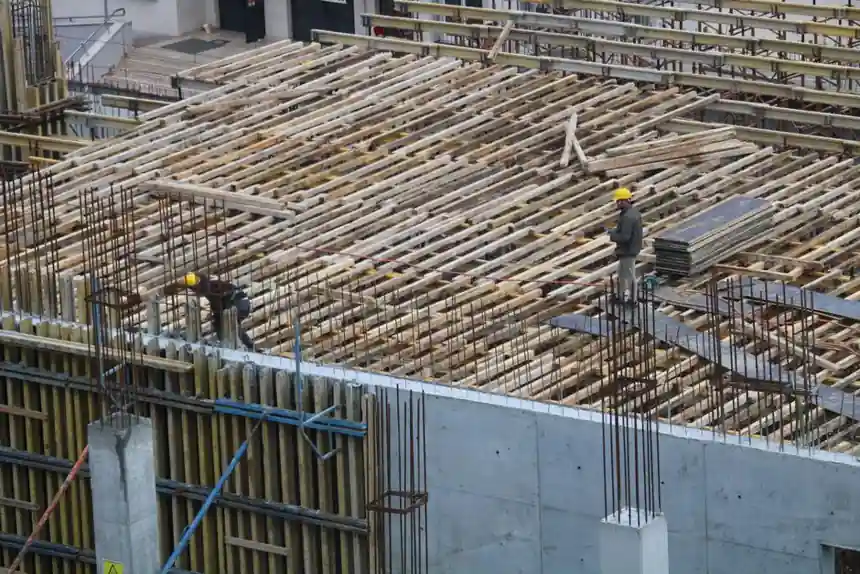
Climbing formwork normally achieves a 3–5-day cycle per floor, with a five-day cycle demonstrated on a 35-level residential tower [S1][S2][S3].
The cycle covers reinforcement, form closing, concrete placement, strength verification, climbing, realignment and inspection, with project geometry, crew, weather and slab sequencing governing the actual duration [S2].
3–5 Days Per Typical Floor Cycle
Doka identifies observed cycle times of 3–5 days and states that these intervals have a considerable effect on overall project progress [S1]. The same range appears in an independent explanation of climbing formwork, which describes a normal cycle as three to five days [S3].
The five-day end of that range is not merely theoretical. Future Form states that jumpform construction proceeds through repeatable cycles and that cycle time is project-specific [S2].
A planning model that assumes a seven-day cycle is also common because it allows concrete curing to use the weekend, but that is a broader production allowance rather than the normal three-to-five-day benchmark [S6]. Teams preparing the workface should distinguish the full calendar allowance from the time consumed by individual operations.
What Each Floor Cycle Contains
A climbing-formwork cycle contains six coordinated operations: reinforcement and form preparation, concrete placement, verification of required concrete strength, climbing of the forms and platforms, realignment of the system, and inspection before the next pour [S2].
The climb itself is not the duration that governs the floor cycle. Once the concrete below meets the designer’s strength requirement, hydraulic or mechanical equipment raises the assembly, and the forms are aligned for the next lift [S2]. MEVA describes self-climbing equipment as a system lifted without a crane, using hydraulic rams to raise the scaffold and formwork [S7].
Automated or self-climbing systems can reduce formwork-related crane lifts, but the tower crane remains part of the wider construction sequence [S2]. The lifting mechanism is therefore one component in a process controlled by reinforcement placement, embeds, concrete, inspection, access and structural readiness.
Variables That Set the Real Cycle Time
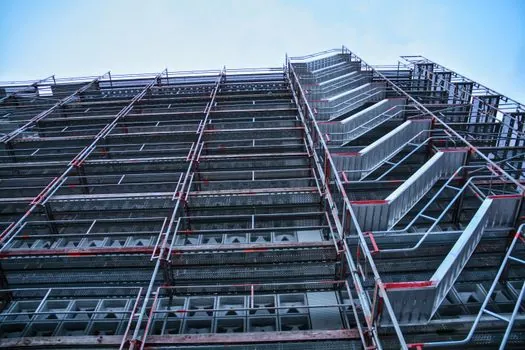
Five variables materially separate a planned five-day cycle from a seven-day working allowance: core geometry, crew organization, weather, slab coordination and the time required to reach the specified concrete strength [S2]. Geometry includes wall cross-section changes, wall inclination and the number of storeys, all of which affect system selection [S1].
Crew capability is another constraint. A normal three-to-five-day cycle assumes a trained, specialized crew, while faster operation requires more specialized preparation and execution [S3].
Concrete strength and engineering approval determine when climbing can proceed, independent of how quickly the mechanical system itself can move [S2]. This distinction matters when evaluating schedules: a faster hydraulic ram does not justify climbing an inadequately cured lift or bypassing inspection.
Jumpform Versus Automatic Climbing Formwork
Jumpform and automatic climbing formwork can both achieve a five-day core-wall cycle, but their operating descriptions and site requirements differ. The comparison should be based on typical duration, available project evidence, lifting method and dependency on specialist crews, not on the word “automatic.” [S2]
This comparison does not make the systems interchangeable. Site geometry, attachment design, lifting loads, concrete sequencing and the selected supplier’s engineered method determine which system can be used safely [S2][S4].
System Selection and Crew Planning
Climbing formwork is suited to repetitive vertical concrete elements such as lift shafts, stairwells and high-rise cores, where the same geometry recurs over many storeys [S2]. It is less suitable where a structure changes geometry frequently, requires many one-off form configurations or lacks a stable core that can support the climbing sequence.
The climbing formwork system must be selected from the building geometry, construction sequence, load paths and access requirements, rather than from cycle time alone [S1]. Doka’s high-rise planning material identifies storey count, wall cross-section, inclination, core, floors, props and façade as relevant project variables [S1].
Cycle commitments also require an explicit workface plan covering reinforcement, form closure, concrete placement, strength verification, climbing, alignment and inspection [S2]. A nominal five-day cycle that omits curing, access or slab handover is not a five-day production cycle.
Safety, Inspection and Sourcing
Climbing formwork must remain anchored to the structure during operation, and the engineered anchor arrangement and climbing procedure define the safe working method [S4]. Doka’s project guidance requires compliance with applicable local safety regulations and the system’s Instructions for Assembly and Use, and it warns against combining equipment from different manufacturers without manufacturer advice [S1].
For procurement and site planning, the technical file should identify the climbing mechanism, hydraulic or mechanical components, anchor arrangement, working-platform configuration, guardrails, lifting points and operating procedure [S4]. The SKE 50 Plus documentation examined in that report covers platform components, climbing components, anchors, railings, hydraulic components, lifting operations and access between platform levels [S4].
Contractors should also compare actual operating instructions with project-specific safety rules, local regulations and the engineer’s approval criteria [S1][S2]. Platform loading and wind constraints remain separate design checks, not assumptions embedded in a five-day schedule.
The practical planning target is a five-day floor cycle for a well-sequenced climbing core, while retaining three to five days as the normal benchmark and allowing a seven-day calendar cycle where weekend curing or downstream slab work controls the pace [S1][S2][S3][S6].