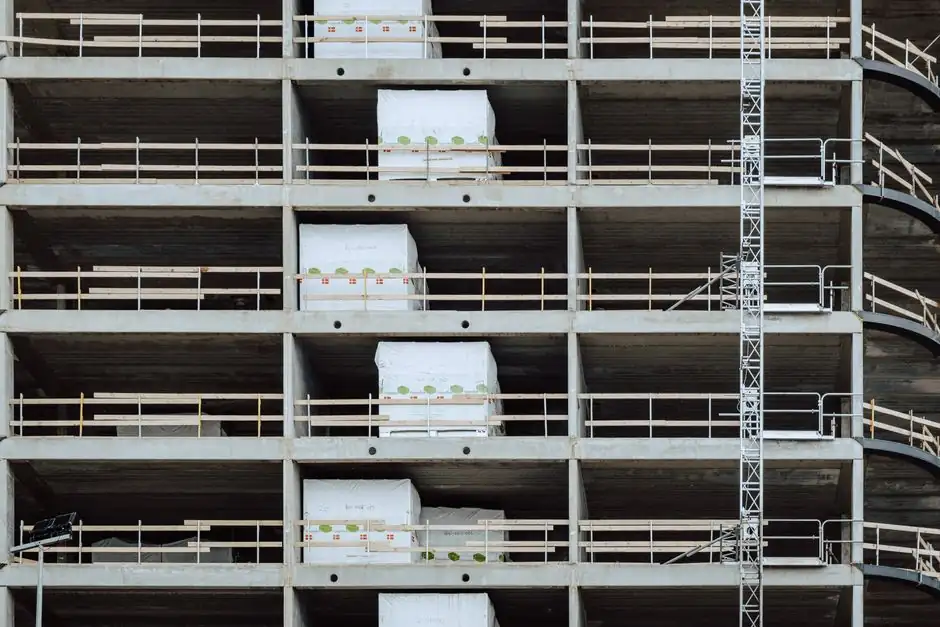
Self-climbing formwork uses hydraulic jacks to lift the system without the need for cranes [S2].
For high-rise core walls, compare climbing systems against scaffold on cycle time, crane dependence, geometry flexibility, working platform, and total installed cost.
Decision Criteria for Core-Wall Temporary Works
Climbing formwork is a wall formwork assembly carried on a climbing scaffold, while conventional scaffolding mainly supplies access and working platforms around the core [S1][S2]. The selection should follow the wall geometry, pour sequence, crane availability, and number of repeated levels.
Climbing formwork suits cores, elevator shafts, shear walls, and other tall vertical structures that rise ahead of the floor slabs [S2][S3]. Scaffolding is the practical alternative where the core changes shape frequently, access is required at many elevations, or the temporary works must serve several trades rather than one repetitive wall-pour sequence.
A high-rise core exposes the system to vertical concrete pressure, lateral wind loads, the dead load of the wall formwork, and repeated handling of the working platform [S1][S3]. The core contractor must therefore treat geometry stability, lifting, anchorage, access, and edge protection as one temporary-works system rather than selecting a platform in isolation.
Climbing Formwork Types and Operating Logic
Self-climbing formwork uses hydraulic jacks to lift the system without the need for cranes [S2]. Crane-dependent climbing formwork is repositioned by a tower crane and is commonly applied to non-slab walls, dams, cooling towers, and similar structures [S1].
That arrangement supports one-sided structures such as dams and sluices, but it creates a distinct load path that must be designed for the completed concrete beneath the working level.
Comparison by Cycle Time, Capacity, and Integration
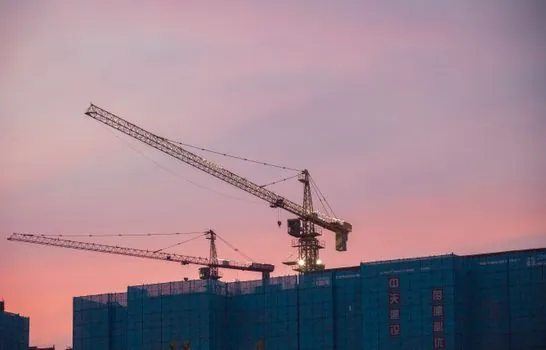
On crane dependence, self-climbing formwork removes crane lifts for repositioning, whereas crane-climbing formwork requires the tower crane to reach the next suspension point [S1][S2]. On geometry, climbing formwork is strongest when the core repeats with limited dimensional changes; modular scaffolding is more adaptable when openings, offsets, or irregular elevations change the access arrangement [S3][S4].
On working access, modern climbing formwork systems comprise a large wall formwork mounted on a climbing scaffold, with two climbing brackets creating a working platform to align and support the panels [S1]. On investment, climbing formwork has a higher equipment and engineering burden, while scaffolding is usually more practical for limited scope or irregular work, although the research does not provide a universal cost threshold [S2].
For repeated construction, climbing formwork can remove scaffolding and temporary-work duplication while supporting steady vertical pours [S3][S5]. For lower initial commitment, conventional scaffolding is easier to phase with localized work, but it does not itself provide the wall-forming function or the same integrated climbing sequence.
Concrete, Geometry, and Surface-Finish Constraints
Climbing formwork is most efficient where wall geometry and the construction sequence repeat, because it is designed to move upward in stages through successive pour cycles [S2][S6]. Climbing formwork is particularly suitable for seamless walls and tall vertical structures such as skyscrapers, high-rise residential buildings, airport control towers, and lift shafts [S1].
Slip formwork is a separate option for continuous upward pouring and uniform cross-sections, while tunnel formwork combines wall and slab casting for repetitive residential layouts [S2][S4]. These systems should not be treated as interchangeable with climbing formwork: their movement principle, concrete placement sequence, and load transfer differ.
Aluminum modular formwork can withstand 60 kN/m² concrete side pressure and support one-time whole pouring and forming of both vertical and horizontal structure [S3]. Those figures describe aluminum panel formwork, not a climbing system, so they should not be transferred directly to climbing-platform design.
Where Scaffolding Remains the Better Choice
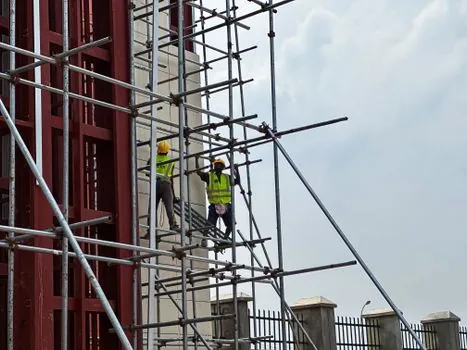
Scaffolding remains preferable when the core has irregular geometry, short-duration access needs, or multiple simultaneous work fronts that cannot follow a uniform climb sequence [S3]. It also fits work packages that need access but do not justify a dedicated climbing formwork investment, provided that erection, ties, loads, and fall protection are independently designed.
In that case, a crane-climbing system may fit where crane cycles are available, while a self-climbing system better controls crane dependence and can support continued work in windy conditions [S1].
For technical checks on the climbing alternative, platform capacity, bracket limits, anchor selection, wind limits, and tie spacing require separate engineering review. The climbing formwork platform load capacity guide and climbing formwork wind load ratings and bracket limits should be used as focused references, not as substitutes for a project-specific temporary-works design.
Safety, Weather, and Whole-Lifecycle Selection
Climbing formwork combines formwork, brackets, suspension shoes, and a working platform, so its critical checks include bracket load transfer, suspension, alignment, concrete pressure, and stability [S1]. The climbing brackets are attached to preset anchors during the first pour, after which suspension shoes and screws support the lift to the next point [S1].
Integrated platforms and guardrails improve access control at height, but they do not remove the need for wind limits, safe access, competent inspection, and controlled lifting [S2][S4]. Self-climbing systems can permit work during unsuitable wind conditions for crane operations, but that does not mean climbing is permitted at any wind speed; the approved operating envelope must come from the engineered system and site rules [S1].
Measure the decision over the complete wall cycle: erection and anchoring, reinforcement fixing, form closure, concrete placement, stripping, lifting, reset, inspection, and final removal. Select climbing formwork when a repeatable core justifies that workflow and planned reuse. Select conventional scaffolding when flexibility, phased access, or lower initial commitment outweighs the productivity of an integrated climbing cycle.
The next project-specific checks are the number and repetition of core pours, wall-opening changes, tower-crane demand, planned working loads, wind exposure, and the reuse horizon for the climbing equipment.